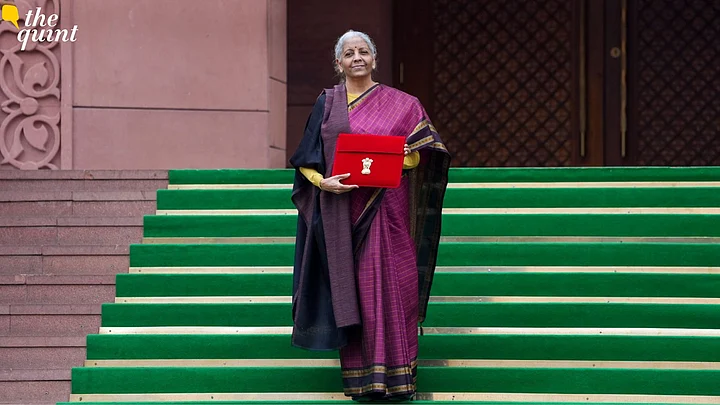
Finance Minister Nirmala Sitharaman, presenting the Union Budget 2026 on 1 February, announced three core ‘kartavyas’ (duties) to guide India’s economic and social policy.
According to The News Minute, Sitharaman emphasised that the government’s approach is inspired by these three kartavyas, aiming to empower the poor and disadvantaged while maintaining economic momentum.
The first kartavya is to accelerate and sustain economic growth by enhancing productivity and competitiveness.
The second is to fulfil the aspirations of the people and build their capacity.
The third is to ensure every family, community, region, and sector has access to resources and opportunities.
These priorities were articulated during the first budget presentation at Kartavya Bhavan.
She stated, “The first kartavya is to accelerate and sustain economic growth by enhancing productivity and competitiveness and building resilience to volatile global dynamics.”
As noted in an article by The Hindu, the second kartavya focuses on fulfilling the aspirations of citizens and building their capacity, making them strong partners in India’s path to prosperity.
The third kartavya, aligned with the vision of ‘Sabka Saath, Sabka Vikas’, is to ensure inclusive access to resources and opportunities across all segments of society.
As reported by Hindustan Times, Sitharaman’s speech marked her ninth consecutive budget presentation, a record in Indian parliamentary history.
The budget session began with traditional protocols, including a meeting with President Droupadi Murmu and a Cabinet approval at Kartavya Bhavan, before the formal address in the Lok Sabha.
As per The News Minute, the government’s strategy is to ensure Aatmanirbharta (self-reliance) and to drive the budget with the energy of youth (Yuvashakti).
Sitharaman, in her speech, highlighted the importance of balancing ambition with inclusion, especially in the context of global uncertainties and technological transformation.
Key interventions under the first kartavya include scaling up manufacturing in strategic sectors, rejuvenating legacy industries, creating champion MSMEs, infrastructure expansion, ensuring long-term security, and developing city economic regions as analysis showed.
The budget also proposed a ₹10,000 crore scheme to support container manufacturing and initiatives for rare-earth corridors in mineral-rich states.
“Our government has decisively and consistently chosen action over ambivalence, and we have pursued far-reaching structural reforms, fiscal prudence and monetary stability, while maintaining a strong thrust on public investment,” Sitharaman said.
Additional details on the budget’s focus on infrastructure and capital expenditure were highlighted in expert reviews. The government aims to maintain a high growth rate, with capital expenditure projected at ₹11.2 lakh crore and a continued emphasis on fiscal discipline and debt reduction.
The three kartavyas, as outlined by Sitharaman, are intended to serve as guiding principles for policy and reform, ensuring that growth is both robust and inclusive as details emerged from the budget’s sectoral announcements.
Note: This article is produced using AI-assisted tools and is based on publicly available information. It has been reviewed by The Quint's editorial team before publishing.