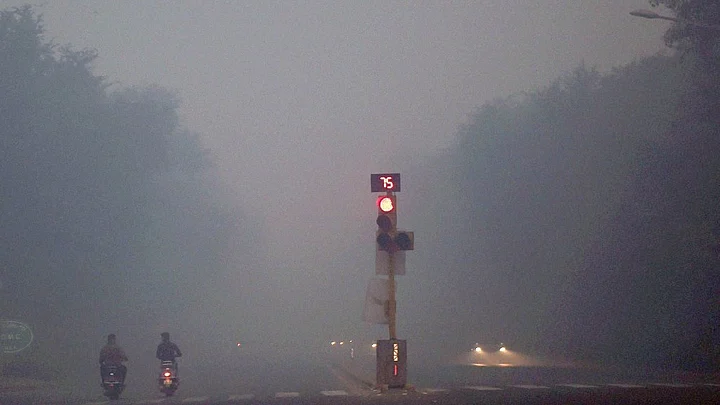
Delhi’s air quality continues to be impacted by high levels of sulphur dioxide, with recent findings indicating that coal-fired power plants within a 300-kilometre radius are the primary contributors.
Despite regulatory frameworks mandating emission controls, a significant portion of these plants remain exempt from installing flue gas desulphurisation systems, resulting in unchecked SO₂ emissions affecting the National Capital Region.
According to The Indian Express, an analysis of 37 coal plant units near Delhi-NCR revealed that 20 units are emitting sulphur dioxide above the Ministry of Environment, Forest and Climate Change’s prescribed limits.
The report highlights that the largest share of these emissions originates from plants classified as Category C, which have been explicitly exempted from installing flue gas desulphurisation (FGD) technology.
Recent coverage revealed that while Delhi’s government has implemented advanced monitoring systems for dust and particulate matter at construction sites, sulphur dioxide emissions from coal plants remain largely unmitigated due to regulatory exemptions.
The city’s Dust Portal 2.0, launched to track PM10 and PM2.5 emissions, does not address SO₂, which is primarily generated by fossil fuel combustion in power plants.
As reporting indicated, Delhi’s administration is focusing on digital and AI-driven solutions to monitor dust pollution, but the challenge of sulphur dioxide persists due to the lack of mandatory FGD installation in most coal-fired units outside the immediate NCR and critically polluted zones.
The analysis found that out of an estimated 154 kilotonnes of SO₂ emitted annually by units with available data, 90 percent comes from plants without FGD, and 81 percent specifically from Category C plants.
The report identified Rajpura, Talwandi Sabo, Rajiv Gandhi TPS, Guru Hargobind TPS, Harduaganj, and Ropar as major emitters operating without FGD systems. In contrast, Dadri and Mahatma Gandhi thermal power plants, which have installed FGD, recorded significantly lower SO₂ outputs.
“Thus, to reduce the substantial amount of SO₂ emitted and its contribution to particulate matter formation in India’s most polluted region, the mandatory installation of FGD must be extended to all coal-fired power plants in India to reduce pollution and human health impacts, regardless of category,” the study recommended.
Midway through the decade, India’s coal power plants were given two years to install FGD technology, but after four deadline extensions and a major rule dilution, most plants remain non-compliant.
The 2021 notification divided plants into three categories, with only those near Delhi-NCR or in critically polluted areas required to comply by 2027.
The majority, classified as Category C, were fully exempted from installing any emission control technology as details emerged.
International comparisons show that India, despite having only about a fifth of China’s coal capacity, emits nearly three times more sulphur dioxide, attributed to the low adoption rate of FGD systems—just 12 percent of Indian plants have them installed. In countries like China and the United States, widespread FGD adoption has led to significant reductions in national SO₂ output according to analysis.
While Delhi’s government has prioritised dust and particulate matter control through AI-powered monitoring at construction sites, experts emphasise that unchecked SO₂ emissions from coal plants continue to pose a significant health risk.
The report calls for real-time, publicly accessible emission monitoring data and the extension of FGD requirements to all coal-fired power plants, regardless of their location or category as coverage revealed.
“Real-time online continuous emission monitoring data must also be made available to the public to verify compliance,” the study stated, underscoring the need for transparency and stricter enforcement.
Note: This article is produced using AI-assisted tools and is based on publicly available information. It has been reviewed by The Quint's editorial team before publishing.