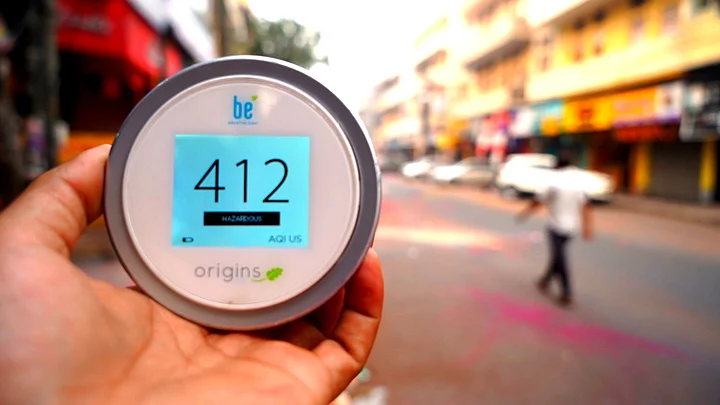
On 15 December 2025, the Air Quality Index (AQI) in Delhi NCR crossed the 400 mark, categorising the air quality as "severe." This prompted the Commission for Air Quality Management (CAQM) to implement Stage 4 of the Graded Response Action Plan (GRAP), which includes restrictions on outdoor activities and a shift to hybrid classes in schools across the region.
The AQI was recorded at 457 at 6 am, with visibility dropping significantly in various parts of the city, affecting daily life and travel plans, according to Hindustan Times.
In response to the deteriorating air quality, schools in Noida, Ghaziabad, and Delhi have switched to a hybrid mode of education. Classes for students from pre-nursery to Class 5 will be conducted entirely online, while students in Classes 6 to 9 and Class 11 will follow a hybrid model, allowing for both online and in-person attendance as reported by The Indian Express. The decision aims to minimise students' exposure to the hazardous air quality.
The CAQM's Stage 4 restrictions also include a ban on construction and demolition activities, suspension of industries using non-approved fuels, and limitations on vehicle entry into the city.
These measures are intended to mitigate the severe pollution levels that pose health risks, particularly to children outlined in the report by Deccan Herald.
Visibility in Delhi has been severely affected, with reports indicating that it dropped to as low as 50 meters at Indira Gandhi International Airport. This has led to advisories from airlines regarding potential flight delays and disruptions, the publication said in its report. The airport authorities have urged passengers to check with their airlines for the latest updates on flight schedules.
The situation has raised concerns among parents and educators about the balance between health and education. Many parents are advocating for a complete shift to online classes to protect their children from the harmful effects of pollution. However, some argue that in-person learning is essential for effective education the report noted.
As the air quality remains in the "severe" category, the Supreme Court is set to hear a plea regarding the air pollution crisis in Delhi NCR on 17 December 2025. The court has previously emphasised the need for effective implementation of existing pollution control measures stated in the report.
Residents of Delhi NCR are bracing for continued hazardous air quality, with experts indicating that the current weather conditions, including low wind speeds and temperature inversions, are contributing to the persistent smog. The situation is expected to remain critical unless significant changes occur in weather patterns or pollution control measures the publication further reported.
Note: This article is produced using AI-assisted tools and is based on publicly available information. It has been reviewed by The Quint's editorial team before publishing.