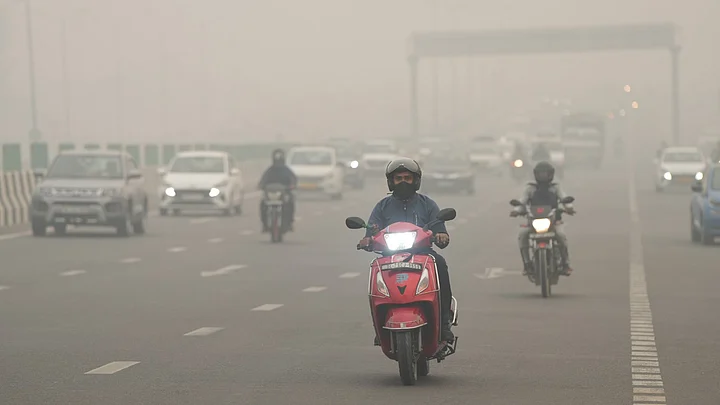
Delhi has approved a new Electric Vehicle (EV) policy that eliminates tax exemptions for hybrid vehicles and sets 1 April 2028 as the deadline after which only electric two-wheelers will be eligible for registration in the city.
Petrol and petrol-ethanol two-wheelers will no longer be registered from that date. The policy aims to accelerate the transition to zero-emission vehicles and reduce vehicular pollution in the capital.
According to The Indian Express, the Delhi government’s new framework removes proposed tax exemptions for strong hybrid vehicles, focusing all incentives on electric vehicles. The policy is designed to phase out petrol-run bikes and promote electric mobility, with a clear timeline for implementation.
As highlighted by The Indian Express, experts are divided on the policy’s approach. Some describe the mandate to switch to electric two-wheelers, three-wheelers, and school buses as a significant step for Delhi’s air quality.
Others express concern about the readiness of charging infrastructure and the abrupt removal of hybrid incentives, suggesting a more gradual transition could have been considered.
Direct purchase and scrapping incentives are central to the new policy, coverage revealed. Buyers of electric two-wheelers can receive subsidies based on battery capacity, with the highest incentives available in the first year of the policy.
Additional scrappage incentives are offered for owners replacing older BS-IV or below vehicles with new EVs within six months of policy implementation.
“The government should have given incentives on strong hybrids, so that there could have been at least a gradual transition towards EVs,” one policy expert stated, reflecting concerns about the lack of a transition bridge for consumers.
While the policy targets Delhi, analysis showed that neighbouring Gurgaon has not matched Delhi’s pace in EV adoption, despite its own subsidies and tax exemptions. In Gurgaon, electric two-wheelers accounted for only 2.23 percent of registrations in FY 2025-26, compared to a much higher share of petrol vehicles.
In the middle of the debate, reporting indicated that Delhi’s government plans to address infrastructure gaps by installing over 30,000 new EV charging points across the city during the policy period.
The current network includes 5,884 charging stations and 8,912 charging points, with further expansion planned to support the transition.
Buyers of electric two-wheelers with an ex-factory price below Rs 2.25 lakh are eligible for tiered subsidies, as details emerged. The maximum subsidy is Rs 30,000 in the first year, reducing in subsequent years. Scrappage incentives of Rs 10,000 are available for eligible two-wheelers, and road tax and registration fee exemptions continue for EVs.
“Every EV delivers a double dividend—it gives our children cleaner air while reducing India’s dependence on imported fossil fuels. It’s not just an environmental choice; it’s an economic and strategic investment in an Atma Nirbhar Bharat,” said Delhi Transport Minister Ashish Sood.
At the end of the policy period, further review is expected to assess the effectiveness of the measures and the progress of the transition to electric mobility in Delhi.
Note: This article is produced using AI-assisted tools and is based on publicly available information. It has been reviewed by The Quint's editorial team before publishing.