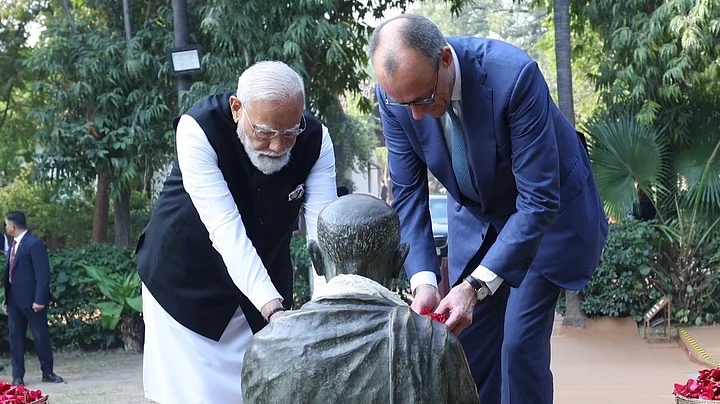
German Chancellor Friedrich Merz arrived in India for his first bilateral visit outside the NATO and European Union space. He met Prime Minister Narendra Modi in Ahmedabad, Gujarat, on 12 January 2026. The visit began with a tour of the Sabarmati Ashram. Further events scheduled are participation in the International Kite Festival, and bilateral discussions at Mahatma Mandir in Gandhinagar. The agenda covers business, migration, and strategic partnership review, with a delegation of 25 German CEOs accompanying the Chancellor.
According to The Indian Express, Chancellor Merz’s visit is considered a strong signal of the deepening Indo-German relationship. The German Ambassador to India, Philipp Ackermann, highlighted that this is Merz’s first bilateral trip outside Europe and the United States, underlining India’s growing significance in German foreign policy. The Chancellor’s itinerary includes meetings with Indian business leaders and visits to educational and industrial sites in Bengaluru.
As reported by Hindustan Times, Prime Minister Narendra Modi and Chancellor Merz will begin their engagements at the Sabarmati Ashram, followed by participation in the International Kite Festival at the Sabarmati Riverfront. The two leaders will then proceed to Mahatma Mandir for formal bilateral talks, where they are expected to review the progress of the India-Germany Strategic Partnership, which recently marked its 25th anniversary.
Chancellor Merz’s delegation includes CEOs from 25 major German companies, reflecting the emphasis on business and economic cooperation. Coverage revealed that the visit will also address migration, with both sides expected to discuss the ongoing migration agreement and opportunities for skilled Indian professionals in Germany. The German side has noted the success of Indian migration to Germany, with Indian workers reportedly earning 20% more on average than their German counterparts.
Business ties are a major focus, with bilateral trade between India and Germany reaching $50 billion in the previous year. Analysis showed that the trade relationship is relatively balanced, with Germany having a slight surplus in goods and India in services. The Indo-German Chamber of Commerce has reported increasing interest from German companies seeking to invest in India, with an average of two companies per week exploring opportunities.
“This is Chancellor Merz’s first bilateral visit outside of NATO and EU space. It's a very strong signal that the first time he travels outside of Europe and the United States is to India,” said German Ambassador Philipp Ackermann.
Security and logistical arrangements have been put in place for the visit. Following reports, a section of the western road of the Sabarmati riverfront in Ahmedabad will be closed to traffic on 12 January from 7 am to 12 pm to facilitate the movement of the Prime Minister and the German Chancellor. Alternative routes have been announced by the Ahmedabad City Police to manage public convenience and security.
Defence and security cooperation are also on the agenda, though no major announcements are expected during this visit. At the end, the German side indicated that ongoing negotiations on defence items, such as submarines, are progressing but will not be concluded during this trip. Both leaders are expected to initiate a process for a roadmap on future defence cooperation.
Education and migration will be discussed, with a focus on opportunities for Indian students and skilled professionals in Germany. Reporting indicated that German universities have expressed satisfaction with Indian students, and the visit is expected to further strengthen educational ties between the two countries.
Note: This article is produced using AI-assisted tools and is based on publicly available information. It has been reviewed by The Quint's editorial team before publishing.