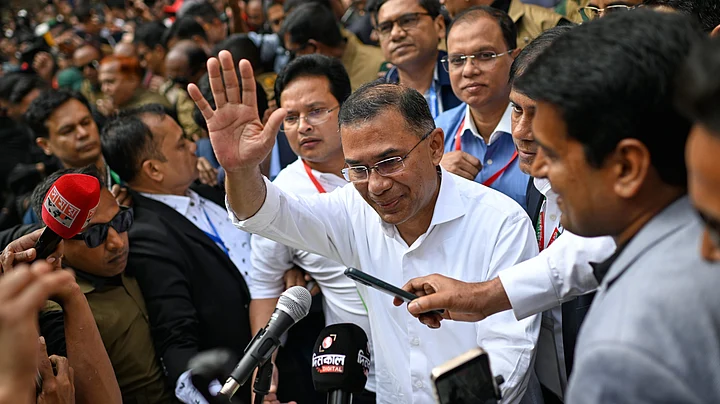
Bangladesh’s 13th national parliamentary election concluded on 12 February 2026, with the Bangladesh Nationalist Party (BNP) led by Tarique Rahman claiming victory. The election followed the ouster of former Prime Minister Sheikh Hasina in August 2024. Vote counting is ongoing, but preliminary results indicate the BNP has secured a majority of seats, positioning Tarique Rahman to become the next Prime Minister. Official confirmation from the Election Commission is awaited.
According to The Hindu, the United States congratulated the BNP and Tarique Rahman on their “historic victory.” The BNP’s Election Steering Committee announced plans for a press conference to discuss election developments, with a formal declaration expected after senior leaders return from their constituencies. The Election Commission is anticipated to make the official announcement after the remaining seats are declared.
As reported by Deccan Herald, initial trends show the BNP winning 151 constituencies, with Jamaat-e-Islami emerging as the main opposition, securing 43 seats. Tarique Rahman, who recently returned from nearly two decades of self-imposed exile, is set to lead the new government. The election was held alongside a national referendum on constitutional reforms.
As highlighted by Hindustan Times, by 8:30 am local time, the BNP-led alliance was leading in 198 seats, while the Jamaat-e-Islami-led alliance trailed with 62 seats. The BNP has publicly claimed a majority and urged supporters to offer prayers instead of holding victory rallies. Several senior BNP leaders, including Salahuddin Ahmed and Mirza Abbas, have secured seats. The National Citizen Party, formed after the student-led uprising, won six seats.
As noted in an article by The Guardian, the BNP’s victory follows a student-led uprising that toppled Sheikh Hasina’s government. By 4 am local time, the BNP had secured 185 seats in the 300-member parliament, crossing the majority threshold. The election was widely regarded as the first free and fair poll in over 17 years, with a voter turnout of 60.69% reported by the Election Commission. Postal votes saw an 80.11% participation rate.
"This victory was expected. It is not surprising that the people of Bangladesh have placed their trust in a party... capable of realising the dreams that our youth envisioned during the uprising," said Salahuddin Ahmed, a leading BNP committee member.
As further details confirmed, the BNP and its allies reportedly won 211 of the 299 constituency seats, while the Jamaat-e-Islami alliance secured 70 seats. Official results from the Election Commission are still pending. The BNP’s social media posts have celebrated the party’s performance, and Jamaat-e-Islami’s leader has stated his party will respect the results.
Analysis showed that the BNP is projected to form the government with a two-thirds majority if official results confirm current trends. The referendum held alongside the election addressed constitutional reforms, including term limits for the Prime Minister and increased judicial independence. Voter turnout was reported at approximately 60% by the end of polling.
Vote counting began immediately after polls closed, and coverage revealed that the BNP was confident of forming the government by winning more than two-thirds of seats. The Election Commission deployed nearly one million security personnel, marking the largest security operation in the country’s electoral history.
"We are confident of forming the government by winning more than two-thirds of seats," stated Mahdi Amin, spokesperson for the BNP’s central election steering committee.
On the night of the election, reporting indicated that the BNP had taken the lead in over 120 seats, with Jamaat-e-Islami leading in more than 30. The election was the first since the Awami League was banned from contesting following Sheikh Hasina’s ouster. The referendum results are expected to shape future governance, with reforms such as a bi-cameral parliament and reinstatement of the caretaker government system under consideration.
Note: This article is produced using AI-assisted tools and is based on publicly available information. It has been reviewed by The Quint's editorial team before publishing.