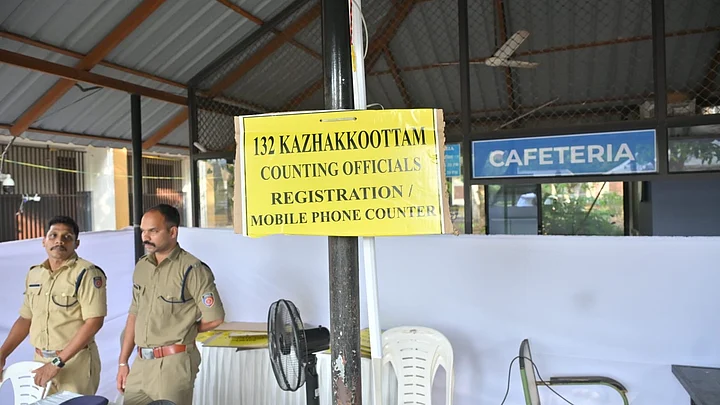
The Bharatiya Janata Party (BJP) and its alliance, the National Democratic Alliance (NDA), have made only marginal gains in the 2026 Kerala Assembly elections. As of the latest counting trends, the NDA is leading in two constituencies, while the Congress-led United Democratic Front (UDF) has established a decisive lead across the state. The Left Democratic Front (LDF), led by the Communist Party of India (Marxist), is trailing significantly, marking a major shift in Kerala’s political landscape.
According to Deccan Herald, with more than half of the votes counted, the UDF is leading in approximately 100 seats, the LDF in 38, and the NDA in two. This outcome underscores the BJP’s continued struggle to expand its legislative presence in Kerala, despite its national prominence and recent successes in other states.
As reported by Financial Express, the early counting trends confirm that the UDF has crossed the majority mark in the 140-member Kerala Assembly, while the BJP’s performance remains limited to a small number of constituencies. The NDA’s inability to make significant inroads is notable, especially when contrasted with its sweeping gains in West Bengal and its targeted strategies in other regions.
Election data indicated that the BJP’s prospects were affected by several factors, including the central government’s amendments to the Foreign Contribution (Regulation) Act, which impacted its outreach to Christian voters. The UDF, by contrast, consolidated support among both Christian and Muslim communities, further limiting the NDA’s electoral opportunities.
In the context of Kerala’s political history, analysis showed that the BJP’s limited gains reflect longstanding challenges in the state, where the party has struggled to convert vote share into assembly seats. Despite national strategies that have succeeded elsewhere, Kerala’s electorate has remained resistant to the BJP’s advances.
The NDA was ahead in two seats, while the UDF was leading in at least 96 and the LDF in around 42 constituencies.
While the BJP’s performance in Kerala remains modest, coverage revealed that the election was marked by gains for rebel and dissident candidates, particularly those with past affiliations to the CPI(M) who aligned with the UDF. This further fragmented the vote and contributed to the NDA’s limited success.
In key districts such as Kozhikode, reporting indicated that traditional strongholds of the LDF were under threat, but the BJP did not emerge as a major contender in these pivotal contests. Instead, the primary battle remained between the UDF and LDF, with the NDA’s influence restricted to isolated pockets.
"The moves by the BJP government at the centre to amend the Foreign Contribution (Regulation) Act hit the prospects of BJP in wooing Christian vote banks, UDF got the backing of both Christian and Muslim votes."
Despite the BJP’s targeted efforts and national visibility, further updates confirmed that the party’s inability to secure more than two leads in Kerala stands in contrast to its performance in Assam and West Bengal, where it either retained or expanded its legislative footprint.
Note: This article is produced using AI-assisted tools and is based on publicly available information. It has been reviewed by The Quint's editorial team before publishing.