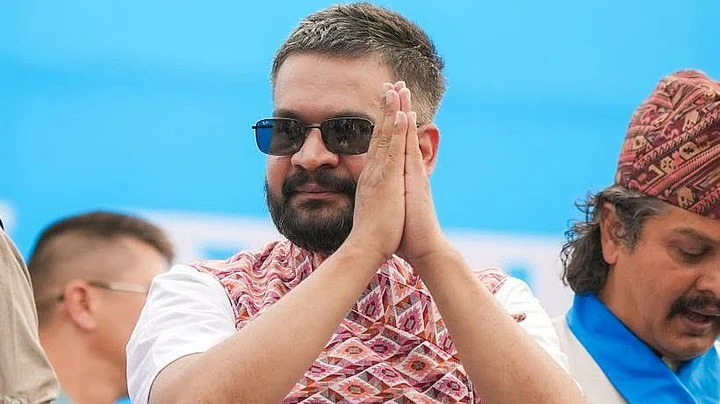
Balendra Shah, popularly known as Balen Shah, is on course to become Nepal’s youngest Prime Minister following a decisive performance by his Rastriya Swatantra Party (RSP) in the country’s general elections.
The RSP, established only three years ago, has won 18 seats and is leading in 99 others, marking a significant shift away from Nepal’s traditional political establishment. Voter turnout was approximately 60 percent, with strong participation from young voters. The elections are the first since last year’s Gen Z-led protests, which resulted in the resignation of former Prime Minister KP Sharma Oli.
According to The Indian Express, Nepal’s electorate has rejected the old guard, clearing the way for Balen Shah and the RSP to take the helm. Shah, a 35-year-old rapper-turned-politician and former Kathmandu mayor, secured a substantial lead over his rival KP Sharma Oli in the Jhapa-5 constituency, a region previously considered a stronghold of the former Prime Minister.
As reported by Financial Express, the RSP’s surge is attributed to widespread support from Gen Z voters, who played a pivotal role in last year’s protests demanding action against corruption, improved governance, and an end to nepotism. Shah’s campaign leveraged digital platforms and anti-establishment messaging to mobilise young urban voters, resulting in what officials described as “unprecedented” energy at polling stations.
As highlighted by The Hindu, the RSP’s performance has disrupted the dominance of established parties in Nepal’s politically fragile landscape. The Nepali Congress has won four seats and is leading in 11, while the Communist Party of Nepal (Unified Marxist–Leninist) has secured one seat and is ahead in 11 others. The Nepal Communist Party and the Shram Sanskriti Party are also trailing behind the RSP in the current count.
Early coverage indicated that Balen Shah’s impending victory would make him the youngest Prime Minister in Nepal’s history. The RSP’s rise is seen as a generational shift, with the party’s success reflecting the electorate’s desire for new leadership and a break from decades of rule by established parties.
“The Rastriya Swatantra Party (RSP), born just four years ago, has altered the syntax of Nepali politics as it heads towards an electoral landslide, with early trends putting it far ahead of Nepal’s established parties that have ruled the country for decades,” the report stated.
In the aftermath of the Gen Z protests on 8 and 9 September 2025, which led to KP Sharma Oli’s resignation, President Ramchandra Paudel dissolved the House of Representatives and appointed Sushila Karki as caretaker Prime Minister as detailed in election coverage. The main demands of the protests included anti-corruption measures, better governance, and generational change in leadership.
Election Commission data confirmed that approximately 18.9 million voters were eligible to elect 275 members of the House of Representatives, with 165 seats filled through direct voting and 110 through proportional representation as subsequent analysis showed. The RSP’s strong showing in both direct and proportional contests underscores the party’s broad appeal across Nepal’s diverse electorate.
“Shah’s party is widely believed to have strong support from Gen Z voters. His growing popularity is closely linked to the wave of youth anger that sparked last year’s protests across Nepal,” the election summary noted.
India’s Ministry of External Affairs has expressed its intention to work with Nepal’s new government to further strengthen bilateral ties, emphasising the importance of stability in the Himalayan nation as diplomatic statements indicated. The outcome of Nepal’s election is being closely monitored in India due to regional security, developmental cooperation, and concerns over external influences.
Voter turnout was particularly high among young people, with officials attributing the smooth conduct of the polls to increased voter awareness, cooperation from political parties, and robust security arrangements as election officials confirmed. The RSP’s victory is widely interpreted as a mandate for change and a new direction in Nepalese politics.
“Initial estimates suggest that Gen Z voters brought what authorities described as ‘unprecedented’ energy to the election process,” the summary concluded.
Note: This article is produced using AI-assisted tools and is based on publicly available information. It has been reviewed by The Quint's editorial team before publishing.