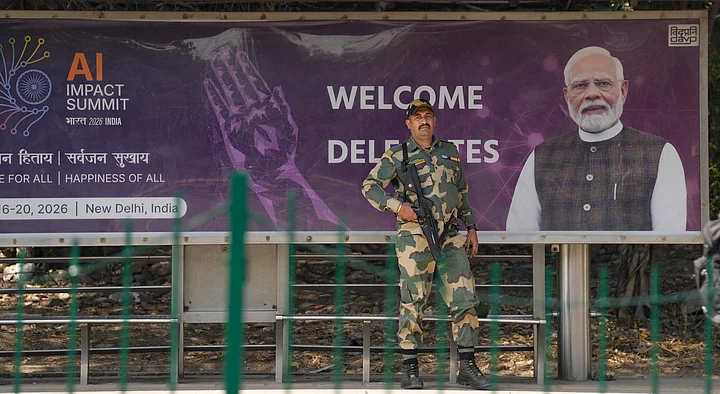
The opening day of the India AI Impact Summit in New Delhi saw significant logistical challenges, including overcrowding, long queues, and confusion among attendees. Many participants, including exhibitors and international delegates, reported difficulties accessing basic amenities and faced sudden venue clearances due to security protocols. The event, which drew over 2.5 lakh registrations, was inaugurated by Prime Minister Narendra Modi and featured global technology leaders.
According to Deccan Herald, Union Minister Ashwini Vaishnaw acknowledged the overwhelming response to the summit, stating that more than 3 lakh people had registered and that all sessions were overflowing. He emphasised the unprecedented scale of interest and noted that the government is planning significant infrastructure to support sovereign AI models in the future.
As reported by The Indian Express, the chaos was exacerbated by the simultaneous arrival of a large crowd and VVIP movements, including Prime Minister Narendra Modi’s visit. Security arrangements, which were based on previous large-scale events, struggled to accommodate both general attendees and VVIPs. Officials later decided to implement additional help desks and briefings to improve crowd management for the remaining days.
Coverage revealed that participants faced hours-long waits, limited access to food and water, and some reported theft of products from exhibition stalls. Social media was filled with complaints about the lack of digital payment options and sudden closures of exhibition areas, which left many stranded outside. Organisers had not issued a public response to these complaints at the time of reporting.
As highlighted by Deccan Herald, opposition leaders criticised the government for what they described as “rank mismanagement” and “global embarrassment.” Congress President Mallikarjun Kharge and other political figures pointed to failures in basic arrangements, including food, water, and security, and called for the government to learn from other large-scale technology events in India.
“Exhibitors are left without food and water, their products are stolen, Digi Yatra miserably fails, laptops, personal electronic devices and even bags are prohibited, only cash instead of digital/UPI payment is accepted, and founders are made to pay huge sums without basic facilities, among many other reasons of distress,” Mallikarjun Kharge stated.
In the middle of the event, reporting indicated that the Ministry of Electronics and Information Technology had not anticipated such a large turnout, leading to oversubscribed visitor passes and standing-room-only venues. Some attendees also reported difficulties with digital entry systems and restricted access to certain areas due to security sanitisation.
At the end of the first day, further details emerged about the lack of clear communication from staff and security, with many participants expressing frustration over inconsistent instructions and sudden changes to the schedule. Social media posts highlighted the contrast between official celebrations and the on-ground reality of disarray.
During the summit, statements confirmed that Ashwini Vaishnaw addressed concerns about deepfakes and the need for stronger regulation, but did not issue a formal public apology for the logistical issues. He reiterated the government’s commitment to improving future events and ensuring better infrastructure for large-scale technology gatherings.
“There is a very strong response. More than 3 lakh people have registered. All sessions are overflowing. There is a response about AI Summit among all the people. There is a lot of excitement,” Ashwini Vaishnaw said.
International perspectives, as analysis showed, recognised the summit’s ambition to place India at the centre of global AI discourse, despite the operational setbacks. The event’s scale and intent were widely acknowledged, but the need for improved management was a recurring theme among both domestic and international observers.
Note: This article is produced using AI-assisted tools and is based on publicly available information. It has been reviewed by The Quint's editorial team before publishing.