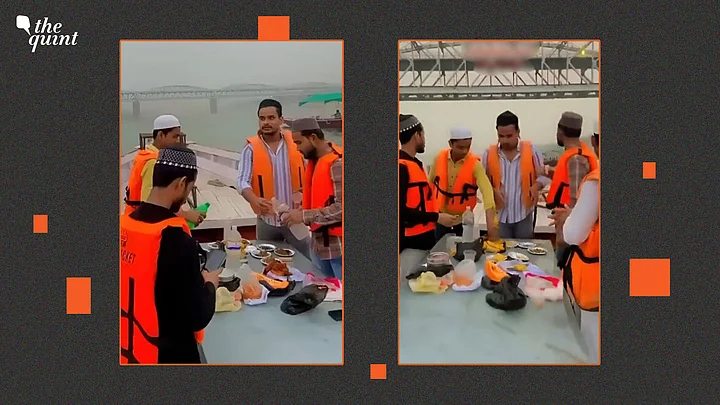
Eight of the fourteen men accused in the Ganga Iftar row case were granted bail by the Allahabad High Court in May 2026. The accused had been arrested after a video surfaced showing them breaking their fast and consuming non-vegetarian food on a boat in the river Ganga in Varanasi. The incident led to allegations of hurting religious sentiments and other offences under the Bharatiya Nyaya Sanhita and the Water (Prevention and Control of Pollution) Act, 1974.
According to Bar and Bench, the bail was granted by two single-judge benches, with Justice Rajiv Lochan Shukla and Justice Jitendra Kumar Sinha each hearing separate petitions. The accused had previously been denied bail by a magistrate and a sessions court before approaching the High Court.
As reported by Live Law, the High Court observed that while the alleged act could hurt the sentiments of Hindus, the accused had shown "genuine remorse" in their affidavits. The court also noted that the extortion allegations against the accused appeared "suspicious" and were brought up belatedly during the investigation.
The case originated from a complaint filed by Rajat Jaiswal, the Varanasi city unit president of the Bharatiya Janata Yuva Morcha, after a video of the Iftar gathering went viral on social media. The complaint alleged that the accused consumed chicken biryani and discarded its remains in the river, which was described as "extremely unfortunate and condemnable" as coverage revealed.
The accused were initially booked under several sections, including 298 (defiling a place of worship), 299 (malicious act with intent to outrage religious feelings), 196(1)(B) (promoting enmity), 270 (public nuisance), 279 (fouling water of a public spring or reservoir), and 223(B) (disobedience of an order duly promulgated by a public servant) of the Bharatiya Nyaya Sanhita, along with section 24 of the Water (Prevention and Control of Pollution) Act, 1974. Later, more serious charges such as Section 308(5) BNS (extortion under threat of death or grievous hurt) and Section 67 of the Information Technology Act were added as analysis showed.
The prosecution argued that the accused had desecrated the river and attempted to disturb communal harmony by uploading the video online. The State submitted that the Ganga is not only a revered Hindu goddess but also a lifeline for northern India, and the alleged act had caused public outrage. The defence countered that the accused were poor weavers with no intention to hurt religious sentiments and that the extortion allegation was introduced late in the investigation as further details emerged.
"While the alleged act could hurt Hindu religious sentiments, the accused demonstrated 'genuine remorse' in their sworn affidavits," the court stated in its order.
The High Court acknowledged the significance of the river Ganga and the concerns about religious harmony. However, it found that the evidence did not support the extortion charge strongly enough to deny bail. The court also recognised the rapid spread of information via social media and its potential to escalate incidents as reporting indicated.
With the latest orders, eight of the fourteen accused have now been granted bail, while the petitions of the remaining accused are still pending before the High Court. The case continues to be monitored by the judiciary, with further hearings expected in the coming weeks as proceedings continue.
Note: This article is produced using AI-assisted tools and is based on publicly available information. It has been reviewed by The Quint's editorial team before publishing.