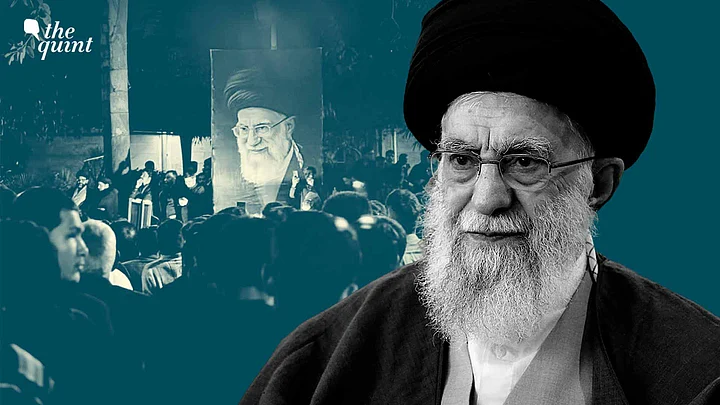
The Allahabad High Court has refused to entertain a public interest litigation (PIL) seeking statewide restraint on police action regarding the display of portraits of Shia leaders, including Ayatollah Khamenei and Ayatollah Sistani, on private property. The bench cited vague statements in the petition and clarified that legal remedies are available to the petitioners. The plea, filed by Majlis Ulema-e-Hind, alleged that police were removing peaceful posters from private premises and requested judicial intervention to prevent interference.
According to The Hindu, the court observed that the PIL lacked specific details and failed to provide concrete instances or evidence of unlawful police action. The bench stated that generalised allegations without substantiation could not form the basis for a statewide directive against law enforcement agencies.
As highlighted by The Indian Express, the petitioners argued that the removal of portraits of prominent Shia figures from private property infringed upon the community’s rights to religious expression. However, the court maintained that if any individual’s rights were violated, they could seek redress through appropriate legal channels rather than a blanket order.
“The petition is based on vague statements and does not disclose any specific cause of action. Legal remedies are available to the aggrieved parties,” the bench stated during the hearing.
The plea by Majlis Ulema-e-Hind had called for a statewide restraint on police machinery from interfering with the display of portraits of Shia leaders, particularly Khamenei and Sistani, on private property. However, further analysis showed that the court was not convinced that a general order was warranted in the absence of specific, substantiated complaints.
The bench concluded that the petitioners could approach the appropriate forum if they faced any concrete instance of rights violation, rather than seeking a broad directive. The court’s decision underscores the principle that judicial intervention must be based on clear facts and evidence, not on general or hypothetical grievances as details emerged.
“If any person is aggrieved by any specific action of the police, the law provides adequate remedies which may be availed,” the court reiterated in its order.
At the end of the hearing, officials confirmed that the PIL was dismissed without issuing any direction to the police, and the petitioners were advised to pursue individual legal remedies if necessary.
According to The Hindu, Ayatollah Ali Khamenei, former Supreme Leader of Iran, was killed in a US-Israeli strike on Iran on 28 February. His death led to a week-long funeral procession across multiple cities in Iran and raq, attended by millions of mourners and several foreign dignitaries. The funeral concluded with his burial on Thursday, marking the end of a significant period of mourning for the Shia community.
Note: This article is produced using AI-assisted tools and is based on publicly available information. It has been reviewed by The Quint's editorial team before publishing.