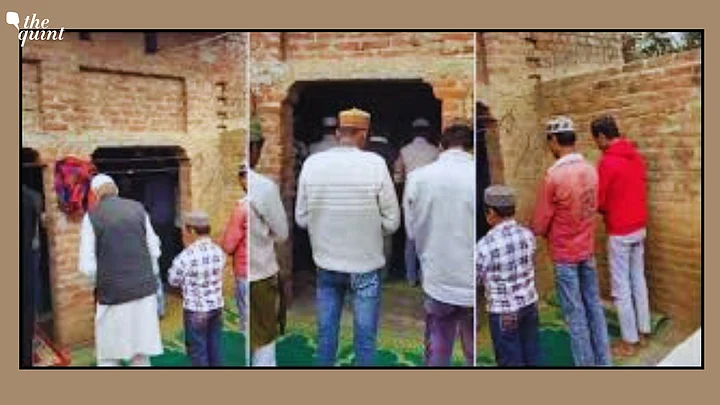
The Allahabad High Court has issued contempt notices to the District Magistrate and Senior Superintendent of Police of Bareilly for allegedly preventing individuals from offering namaz inside a private residence in Mohammadganj village. The court’s action follows a petition by Tarik Khan, who sought protection of his right to conduct prayers on private property, citing a previous High Court order affirming this right. The matter is scheduled for further hearing on 11 March 2026, with all coercive proceedings against the petitioner stayed until then.
According to Live Law, the contempt notices were issued after the officials allegedly flouted the High Court’s 27 January order in the Maranatha Full Gospel Ministries case, which clarified that no permission is required to offer religious prayers within private premises. The petitioner, Tarik Khan, had previously been detained by police for offering namaz in a vacant house, despite the absence of any legal prohibition on such activity within private property.
As reported by Hindustan Times, the High Court’s bench, comprising Justices Atul Sreedharan and Siddharth Nandan, directed the state counsel to seek instructions and posted the matter among the top ten cases for the next hearing. The petitioner’s counsel argued that the prayers were strictly confined to private premises and that the authorities had failed to act on representations submitted after the January order.
As highlighted by The Indian Express, the court reiterated that the right to conduct prayers on private property is protected under Article 25 of the Constitution of India. The January order specified that only if a religious gathering spills onto public property would police permission be required. The court also stayed any coercive action against the petitioner until the next hearing.
“The petitioner has the right to conduct the prayer as per his convenience at his own private premises without any permission from the state government,” the High Court observed in its earlier order.
Further details indicate that the petitioner had submitted representations to the district authorities both in person and by registered post, seeking permission to offer prayers during Ramzan. Despite the High Court’s clear ruling, the officials allegedly did not respond, prompting the contempt proceedings.
The sequence of events began on 16 January, when several individuals were detained after offering namaz in a private house. The property owner confirmed that the gathering was permitted and confined to her premises. The High Court’s stay order has since allowed prayers to resume, though local tensions have persisted.
Community tensions have been reported in the aftermath, with some residents objecting to the resumption of prayers and expressing concerns about the use of private homes for religious gatherings. Police have stated that the situation remains under control and that no one will be allowed to disturb public order.
“We have never interfered with religious practices as long as they do not violate established norms. Our concern is only to ensure that no residential property is clandestinely converted into a notified place of public worship without due process,” a senior police official stated.
Legal analysis emphasised that the High Court’s January ruling applies to all religious groups, provided activities remain within private premises. The court’s current proceedings focus on ensuring compliance with this legal standard and upholding constitutional rights.
Note: This article is produced using AI-assisted tools and is based on publicly available information. It has been reviewed by The Quint's editorial team before publishing.