Every few years, the internet discovers something ancient and declares it a “movement”. Yoga was quietly doing its thing for centuries until it became “wellness.” Ayurveda simmered in kitchens and clinics until it was rebranded as “biohacking.” And now, community spiritual gatherings have entered their rebrand era. Welcome to the age of Bhajan Rave.
The term has travelled fast, fast enough to earn a shoutout from Prime Minister Narendra Modi himself. In the 130th episode of Mann Ki Baat, he praised what he called “Bhajan Clubbing,” saying,
Our Gen-Z is taking to Bhajan Clubbing… it is spirituality and modernity merging beautifully, particularly keeping in mind the sanctity of the Bhajans.PM Modi
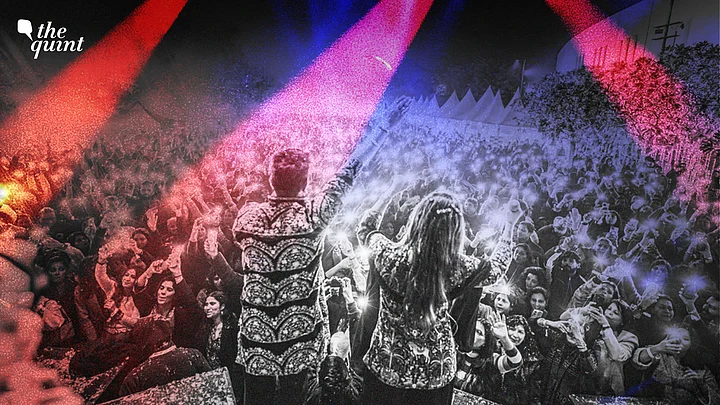
Scroll long enough and you’ll find the visuals: Gen Z bodies swaying under fairy lights, eyes closed, hands raised, chanting Govinda Jaya Jaya like it’s a Coldplay chorus. No alcohol. No smoke. No after-party regrets. This, apparently, is what a generation chasing the “sober high” looks like.
But here’s the inconvenient cultural truth: nothing about this is actually new.
So What Is This “Bhajan Rave,” Really?
A rave, in general, refers to a large music-led gathering typically centered on electronic music, designed for high-energy dancing, immersive sound, and collective participation.
Culturally, it functions as a space for youth expression, community formation, and alternative nightlife outside formal or institutional settings. Gen Z, predictably, has stretched this template in every possible direction. From Mango Raves like the one hosted by brand XCTY at a Delhi cart with DJ Ayri spinning while mango drinks circulate freely to Coffee Raves popping up across Amsterdam, Paris, and now Mumbai, Delhi, and Chennai, the logic remains the same: rave energy, minus the intoxication. Get high on the vibe, not the substance.
Similarly, Bhajan Rave is simply devotional singing in community dressed in contemporary clothes. Bhajans and Kirtans fused with concert acoustics, ambient lighting, live bands or DJs, and the emotional architecture of a music gig. These gatherings don’t happen inside temple mandaps but in cafés, community halls, rooftops, and early-evening club spaces. People sing, chant, clap, sway, and sometimes cry. Phones come out. Reels get made. And then social media becomes abuzzed about the ‘new phenomenon’.
The experience is deliberately positioned as a clean rave where no alcohol, no substances and lewdness are allowed; lest spirituality take a backseat. The high comes from repetition, rhythm, and collective release. In a generation exhausted by hangovers of all kinds from emotional to economic, this feels restorative.
But if you zoom out, this format is deeply familiar.
Before Rave, There Was Satsang
Long before Gen Z discovered bhajans through Instagram algorithms, India perfected the art of collective transcendence through sound. Bhakti movements across centuries have used music as a way of participating in community events. For centuries, kirtans, bhajans, qawwalis, Baul songs and Sufi sama functioned as mass emotional gatherings designed to be community-oriented, immersive and strangely none of these are quiet affairs. Loud, immersive, emotional, and sometimes, also ecstatic experiences. Take qawwali, for instance, never a solo act, always a collective experience. Performed in the charged presence of an audience, often within Sufi shrines, it is designed to move people emotionally, even spiritually. Or consider the jagrata: an all-night vigil across North India where communities stay awake till dawn, singing bhajans together, fueled by rhythm, devotion and shared endurance. They basically walked so Bhajan Rave could run.
The parallels go deeper than just the act of community spirituality; these traditions regularly produce altered emotional and spiritual states without substances, without intoxication, without external stimulants.
Even globally, human beings have always used collective sound as a tool of belonging from gospel choirs to Gregorian chants. While these sound-led gatherings were always rooted in the community, the scale of their amplification was different. Earlier, the audience was limited to neighbors, word of mouth, and whoever could be physically called into the circle. Today, the moment is recorded, edited, captioned, and circulated. It travels the internet, acquires a name, and gets marketed as something unique and new.
Why Gen Z Is Claiming It Now
The current surge in interest in bhajans isn’t really accidental, it’s a result of the times we are in. Gen Z is growing up amid relentless digital noise, economic precarity, pandemic aftershocks, and fractured social bonds. Traditional religion often feels hierarchical and alienating. Conventional nightlife feels hollow, expensive, and unsustainable. Somewhere between doomscrolling and burnout, this generation is looking for spaces that feel like a community without being moralising, spiritual without being suffocating. Bhajan raves fit neatly into that gap.
Bhajan rave is gaining momentum in India, with acts like Delhi-based Keshavam Band emerging to create bhajans specifically designed for high-energy, collective listening. Keshavam Band was formed with the intention of presenting devotion in a way that resonates with today’s generation. Their idea was not to follow the conventional bhajan format, but to create a live-band experience in rock style.
We were doing the same concept in wedding and private gatherings from past two years, as the band’s performance started gaining visibility, invitations began coming in organically. Once audiences and organizers experienced the impact of a devotional rock setup on stage, Keshavam started receiving offers for bhajan concerts, as we did the India's first bhajan clubbing concert. The consistent live response played a big role in opening up these opportunities.Keshavam Band
But also, across the world, alternative rave formats have steadily folded themselves into local cultural calendars. In London, Morning Gloryville, a sober, early-morning rave complete with DJs, yoga mats and zero alcohol is now a regular thing. In the US, Daybreaker turned pre-work dance floors into a movement, while global gatherings like Earthdance have long demonstrated how music-led, substance-free collectives can thrive at scale.
Bhajan rave feels massive today not because it suddenly appeared, but because platforms finally noticed what communities were already doing. But beneath the hype, the core remains stubbornly old-school: people seeking meaning together.