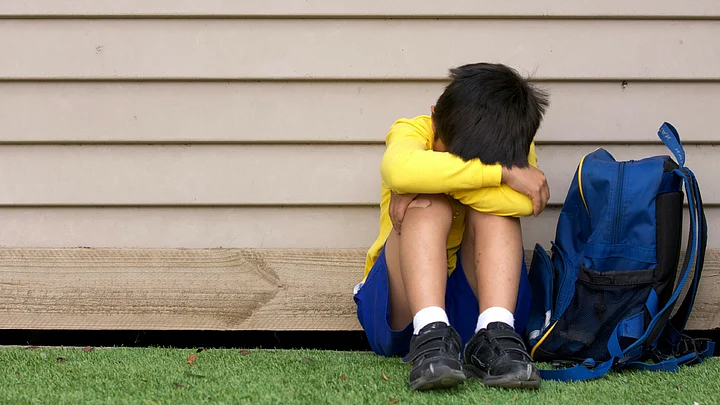
The ‘happily ever after’ fairytales were unfair to the boys, too.
While the young ladies were portrayed as damsels in distress waiting around to be rescued, the young men were imagined as the perfect heroes. They charmed the ladies, rescued them, and promised to take care of them, forever and always.
The ladies who fell for these tales found out the price we had to pay for the refuge, while the men found out the price they had to pay for their bravado.
Interestingly, in March, the month of Women’s Day celebrations, I was invited to watch screenings of documentaries on – men.
The Destructiveness of “Boys Don’t Cry”
The Mask You Live In, a documentary by Jennifer Siebel Newsom explores the limiting definitions of masculinity in America.
It shows how boys are programmed early on to the code of masculinity by ‘destructive phrases’ like ‘boys don’t cry’ and ‘man up’, and how this damaging narrative makes boys see their own vulnerability as illegitimate. In the fear of humiliation, they keep these feelings buried deep, and are thus unable to develop the vocabulary to express these feelings.
Burying a part of their own humanity has consequences. Many more men than women are diagnosed with behaviour disorders, abuse medical stimulants, have alcohol and drug addictions. Many more men commit violent crimes, many more take their own lives.
Anuradha Das Mathur, Founder Dean, Vedica Scholars Programme for Women who screened the film on Women’s Day at their campus said,
We want to draw attention to how damaging stereotypes are to men as well – and therefore, why men and women should ally and come together to smash stereotypes and create an equal world.
Amit Lakhani, Head of the Delhi Chapter of Save Indian Family (SIF) (a group of 40+ NGO's in India and overseas that opened the only all-India-helpline for men in 2014) says:
Men in India are conditioned to believe that if they show their vulnerability, they aren’t considered ‘man enough’. It makes them seem incapable of handling their responsibilities. When women are going through a bad phase, they talk; men don’t. Most don’t even talk about their medical issues. They don’t seek help.
Jackson Katz offers a paradigm shift in the way women’s issues of discrimination, abuse and violence are talked about. He argues that labelling these issues as just ‘women’s issues’ is part of the problem because...
...the focus remains only on the woman. The men are taken out of the conversation. And, thus, don’t feel the need to pay attention, when these are centrally men’s issues.
Men’s and women’s lives are entangled. The discourse around gender equality is strengthened if men engage with women. As we ask women to stand up against the cultural stereotypes forced on them, we need to ask the men too, to sit down and talk about the stereotypes that limit them. Behind the masks, men too live with self-doubt, fear of failure, rejection, and abuse.
What does it mean for them to be a ‘man’? To be boxed into the masculinity code? The pressure to be ‘someone’? To be the provider? To measure up?
How Patriarchy Hurts Men
Gender stereotypes offer privilege and disadvantage to men and women in different ways.
When more men are able to break the silence about conforming to being a ‘man’, they will in the process give countless other men the permission to embrace their vulnerability too.
Increasing the Maternity Paid Leave for Indian women from 12 to 26 weeks – yet, still leaving men with no paternity leave, reinforces the stereotype that men don’t want to, nor need to be there for their child. Many fathers who do want to spend more time with their newborns can’t afford to take leave, or else don’t want to be ‘seen’ taking leave. Loving and nurturing a child helps the child in visible ways, but, caring and nurturing heals the carer’s deep invisible wounds in ways, unimaginable. Many men are deprived of this healing because they are seen only as the ‘financial’ provider.
Mod (The Turn) is a sensitive documentary, where Pushpa Rawat follows a young bunch of boys, who hang around the water tank, near her home in Ghaziabad, Uttar Pradesh. The water tank is their ‘space’ where they get together to talk, gamble, smoke and rap. When the boys eventually open up to Rawat’s innocent curiosity, their vulnerability breaks all stereotypes of what lower middle class boys ‘would be’.
Mothers should try to understand their son’s feelings as much as their daughters. And, the expectation they have of their sons should be equal to the expectations of their daughters.Pushpa Rawat
Ankita Puri, founder of Healtheminds, an online counselling site where users can log in anonymously, says:
55% callers are male. They interact with the therapist through video chat or radio chat. The issues they talk about are regardless of gender. They talk about depression, stress, relationships, office politics, issues that affect both men and women.
Patriarchy kills and abuses men much more than women. There is dire need to teach men about how their roles are harming them. Men need to be trained to focus upon their well being, too. And, understand that women are capable of doing it for themselves.Jyoti Tiwari, Head of the Delhi Centre of Confidare Community Centre for Men
The battle against patriarchy makes it necessary to have the conversation about the struggles of men. For, when we enable men to be better, we also make it better for the women.
The fact that women are speaking for men, that these documentaries on men’s issues were made by women, shows that more and more women agree.
Patriarchy hurts men and women equally.
(Sudeep Kohli is a writer and a brand consultant. She also teaches creative writing.)