
ADVERTISEMENTREMOVE AD

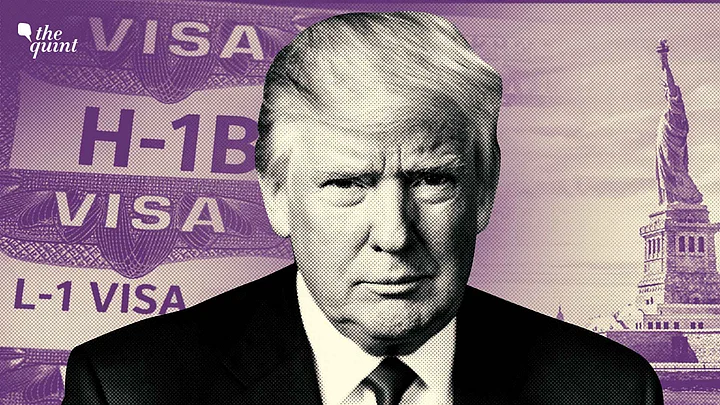
Trump's $103,000 H-1B Fee is a Way to Bypass Court Defeat. How Will It Play Out?

The $103,265 fee is carefully constructed to survive the legal challenge that killed its predecessor.

Published
story-hero-img
i
Aa
Aa
Small
Aa
Medium
Aa
Large

On 19 September last year, US President Donald Trump issued a presidential proclamation imposing a $100,000 fee for H-1B visas filed on or after 21 September 2025. The administration justified this under sections of the same presidential powers used to restrict the entry of certain non-citizens during national emergencies.

The immigrant community immediately pushed back. The legal objection was fundamental: the president used entry-restriction authority to impose what was functionally a tax or a fee—something only Congress has the power to do. Courts agreed.

On 8 June this year, the US District Court for the District of Massachusetts struck down the $100,000 fee in California et al. v. Mullin. The court found that the administration lacked legal authority to impose the fee through a presidential proclamation.

Only 85 payments were made under the proclamation before it was blocked—a number that itself speaks to the chilling effect it had on H-1B filings. The government's request to stay the ruling pending appeal was denied.

Now, within weeks of the court's ruling, the Department of Homeland Security (DHS) has published a Notice of Proposed Rulemaking, proposing a $103,265 fee for all H-1B visas through the formal notice-and-comment rulemaking process under the Administrative Procedure Act.

The shift in legal strategy is deliberate and significant. Rather than relying on the presidential powers which the court found insufficient, the DHS is now invoking its authority to set a fees recovering the full costs of immigration adjudication and naturalisation services and its authority to reimburse other agency appropriations for immigration-related expenses.

In plain terms, the DHS has switched from a proclamation to a bureaucratic process specifically to insulate this fee from the same legal vulnerability that killed the $100,000 proclamation fee.

Trump's $103,000 H-1B Fee is a Way to Bypass Court Defeat. How Will It Play Out?

  1. 1. Is This Legally Stronger?

    The proclamation fee failed because the president used entry-restriction authority to generate revenue. A rulemaking is on firmer statutory footing as Congress expressly authorised fee-setting to recover the full costs of adjudication services.

    However, the critical legal question remains: can a fee this disconnected from the actual cost of processing a single petition still be called a "fee"?

    The proposed $103,265 is not calculated based on what it costs the US Citizenship and Immigration Services (USCIS) to adjudicate one H-1B petition. It is calculated by dividing $8.77 billion in total government costs spread across six agencies by 85,000 petitions. Only 34.2 percent of that revenue goes to the USCIS. The remaining 65.8 percent funds the Executive Office for Immigration Review, the Department of Labor, the Immigration and Customs Enforcement (ICE), the Department of State, and the Customs and Border Protection.

    Critics will argue and courts may agree that a charge this disconnected from the service being provided is not a fee at all, it is a tax. And only Congress can impose taxes.
    Expand
  2. 2. The Double Fee Risk Is Real

    Perhaps the most alarming provision in this rule is language buried in the preamble, which states: "The proposed fee, when required, would be in addition to any other applicable fees or payments, including any separate payment obligation required by a presidential proclamation."

    The DHS explicitly acknowledges that if the First Circuit Court of Appeals reverses the Massachusetts court's ruling and reinstates the $100,000 proclamation payment, employers could be required to pay both simultaneously.

    That would mean more than $203,000 in government fees alone to sponsor a single H-1B worker before attorney fees or any other filing expenses. This is not hypothetical. The DHS wrote it directly into the rule.
    Expand
  3. 3. The Cost Allocation Raises Serious Questions

    A close look at where the money actually goes raises further concerns.

    H-1B cap-subject petitioners are being asked to fund $2.96 billion for immigration court operations, including:

    • 8,400 new court positions

    • $1.21 billion for Department of Labor wage enforcement, H-2A, H-2B, and PERM (Program Electronic Review Management) programmes

    • $1.05 billion for ICE-vetting operations and the Student and Exchange Visitor Program;

    • $484 million for State Department consular operations, refugee resettlement programmes, and fraud detection.

    These are programmes with little to no direct connection to an H-1B petition. The DHS's sole justification for this sweeping cost transfer is that H-1B employers have the "ability to pay". That reasoning, while administratively convenient, is legally untested at this scale and scope. 
    Expand
  4. 4. The Impact on Small Employers Is Devastating 

    The DHS's own regulatory analysis confirms that 76 percent of small entities filing H-1B visas would face a cost increase exceeding one percent of their annual revenue the threshold DHS itself uses to define significant economic impact.

    The DHS considered whether to exempt small employers from the fee and refused to do so, arguing that exemptions would create perverse incentives and lead to revenue shortfalls.

    That reasoning is thin. The practical consequence is that H-1B sponsorship becomes the near-exclusive domain of large corporations, further consolidating access to global talent among the few employers who can absorb a $103,265 fee per petition.
    Expand
  5. 5. Applicability and Timeline

    This rule, if finalised, would apply to all 85,000 H-1B visas filed on or after the rule's effective date. Unlike the $100,000 proclamation fee which exempted certain individuals who were already present within the US, this proposed rule contains no such exemption. All petitioners, regardless of their physical location or current immigration status, would be subject to the fee.

    The rule was published on 25 August, opening a 30-day public comment period. No implementation date has been set as the rule must complete the full notice-and-comment rulemaking process before it can take effect. The rule does not apply retroactively, and it does not apply to cap-exempt petitions filed by universities, non-profit research organisations, or government research institutions.
    Expand
  6. 6. The Bottom Line

    The DHS has done what any determined agency does when a court blocks its preferred policy: it found a new legal pathway and moved quickly. The $103,265 fee is not arbitrary; it is carefully constructed to survive the legal challenge that killed its predecessor.

    But being more legally defensible does not mean legally sound. The core tension whether a charge of this size and scope qualifies as a lawful fee or an unauthorised tax will almost certainly be litigated. Courts will decide whether Congress's grant of fee-setting authority extends this far. 

    Until that question is resolved, employers face a painful reality: plan for a cost structure that may exceed $200,000 per H-1B hire or begin fundamentally rethinking their hiring strategies. The 30-day public comment window is the only immediate opportunity for employers, attorneys, and advocacy groups to place their objections on record. That window should not be wasted. 

    (Sai Srinivas Reddy Bhumireddy is an Attorney at Law, licensed in the State of Indiana, US, practicing in Immigration Law, Family Law, and Personal Injury. This is an opinion piece and the views expressed are the author's own. The Quint does not endorse or is responsible for them.)

    Expand

Is This Legally Stronger?

The proclamation fee failed because the president used entry-restriction authority to generate revenue. A rulemaking is on firmer statutory footing as Congress expressly authorised fee-setting to recover the full costs of adjudication services.

However, the critical legal question remains: can a fee this disconnected from the actual cost of processing a single petition still be called a "fee"?

The proposed $103,265 is not calculated based on what it costs the US Citizenship and Immigration Services (USCIS) to adjudicate one H-1B petition. It is calculated by dividing $8.77 billion in total government costs spread across six agencies by 85,000 petitions. Only 34.2 percent of that revenue goes to the USCIS. The remaining 65.8 percent funds the Executive Office for Immigration Review, the Department of Labor, the Immigration and Customs Enforcement (ICE), the Department of State, and the Customs and Border Protection.

Critics will argue and courts may agree that a charge this disconnected from the service being provided is not a fee at all, it is a tax. And only Congress can impose taxes.
ADVERTISEMENTREMOVE AD

The Double Fee Risk Is Real

Perhaps the most alarming provision in this rule is language buried in the preamble, which states: "The proposed fee, when required, would be in addition to any other applicable fees or payments, including any separate payment obligation required by a presidential proclamation."

The DHS explicitly acknowledges that if the First Circuit Court of Appeals reverses the Massachusetts court's ruling and reinstates the $100,000 proclamation payment, employers could be required to pay both simultaneously.

That would mean more than $203,000 in government fees alone to sponsor a single H-1B worker before attorney fees or any other filing expenses. This is not hypothetical. The DHS wrote it directly into the rule.

The Cost Allocation Raises Serious Questions

A close look at where the money actually goes raises further concerns.

H-1B cap-subject petitioners are being asked to fund $2.96 billion for immigration court operations, including:

  • 8,400 new court positions

  • $1.21 billion for Department of Labor wage enforcement, H-2A, H-2B, and PERM (Program Electronic Review Management) programmes

  • $1.05 billion for ICE-vetting operations and the Student and Exchange Visitor Program;

  • $484 million for State Department consular operations, refugee resettlement programmes, and fraud detection.

These are programmes with little to no direct connection to an H-1B petition. The DHS's sole justification for this sweeping cost transfer is that H-1B employers have the "ability to pay". That reasoning, while administratively convenient, is legally untested at this scale and scope. 
ADVERTISEMENTREMOVE AD

The Impact on Small Employers Is Devastating 

The DHS's own regulatory analysis confirms that 76 percent of small entities filing H-1B visas would face a cost increase exceeding one percent of their annual revenue the threshold DHS itself uses to define significant economic impact.

The DHS considered whether to exempt small employers from the fee and refused to do so, arguing that exemptions would create perverse incentives and lead to revenue shortfalls.

That reasoning is thin. The practical consequence is that H-1B sponsorship becomes the near-exclusive domain of large corporations, further consolidating access to global talent among the few employers who can absorb a $103,265 fee per petition.
ADVERTISEMENTREMOVE AD

Applicability and Timeline

This rule, if finalised, would apply to all 85,000 H-1B visas filed on or after the rule's effective date. Unlike the $100,000 proclamation fee which exempted certain individuals who were already present within the US, this proposed rule contains no such exemption. All petitioners, regardless of their physical location or current immigration status, would be subject to the fee.

The rule was published on 25 August, opening a 30-day public comment period. No implementation date has been set as the rule must complete the full notice-and-comment rulemaking process before it can take effect. The rule does not apply retroactively, and it does not apply to cap-exempt petitions filed by universities, non-profit research organisations, or government research institutions.
ADVERTISEMENTREMOVE AD

The Bottom Line

The DHS has done what any determined agency does when a court blocks its preferred policy: it found a new legal pathway and moved quickly. The $103,265 fee is not arbitrary; it is carefully constructed to survive the legal challenge that killed its predecessor.

But being more legally defensible does not mean legally sound. The core tension whether a charge of this size and scope qualifies as a lawful fee or an unauthorised tax will almost certainly be litigated. Courts will decide whether Congress's grant of fee-setting authority extends this far. 

Until that question is resolved, employers face a painful reality: plan for a cost structure that may exceed $200,000 per H-1B hire or begin fundamentally rethinking their hiring strategies. The 30-day public comment window is the only immediate opportunity for employers, attorneys, and advocacy groups to place their objections on record. That window should not be wasted. 

(Sai Srinivas Reddy Bhumireddy is an Attorney at Law, licensed in the State of Indiana, US, practicing in Immigration Law, Family Law, and Personal Injury. This is an opinion piece and the views expressed are the author's own. The Quint does not endorse or is responsible for them.)

Speaking truth to power requires allies like you.
Become a Member
Monthly
6-Monthly
Annual
Check Member Benefits
×
×