
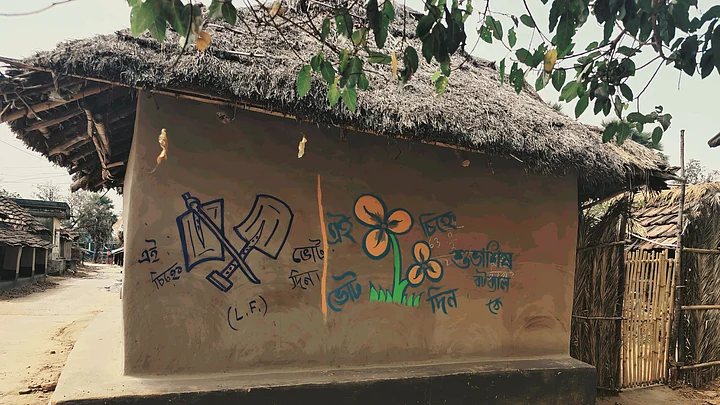
In the Ramnagar village in West Bengal's Bankura district, Rani Adhikari Lai works hard at the only tubewell to fill a steel bucket with what looks like red water. "Are you from Kolkata?", asks Rani when she meets The Quint's reporter. "Please come and see how we live. You will understand the difference", she continues, without waiting for an answer.
Rani, is one of the 1,300 residents of Ramnagar, a village which seemed like the microcosm of all civic issues in the district. There was no water, no drainage, no gas, run-down, cramped huts, and most importantly, no jobs. A more accurate thing to say is that Ramnagar, in a nutshell, represents all the problems that the entire district of Bankura has with the ruling Trinamool Congress dispensation in West Bengal. It also explains why in the 2019 Lok Sabha elections, the Bharatiya Janata Party won both parliamentary seats in the district, taking leads in all twelve assembly segments.
The district with a scheduled caste population of approximately 32 percent and scheduled tribe population of 10 percent, was the crowning glory of the party’s massive Junglemahal haul in 2019. Since then Trinamool has tried to gnaw its way back in the district, as the BJP tried to hold on to their 2019 numbers.