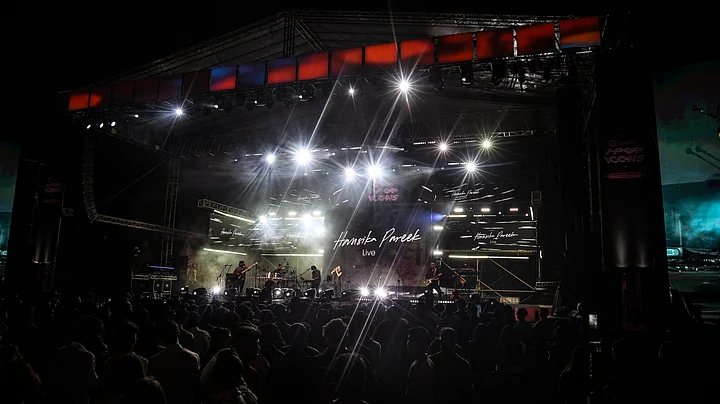
Some evenings carry a quiet sense of recognition, as if a scene that has been forming in fragments finally shows its shape. Spotify’s I-Pop Icons Live in Mumbai felt like one of those evenings. The event unfolded with the familiar pulse of pop concerts, yet something in the room suggested a shift. It became clear that Indian pop, shaped for years through playlists and headphone rituals, has gathered enough weight to stand as its own cultural current.
The night assembled artists who have come to define this moment. King opened with the assurance of someone aware of how far his songs travel. “Maan Meri Jaan” still moves through listeners’ lives like a steady presence. Armaan Malik brought his signature blend of melody and global reach, shaped through collaborations with artists across borders. Jonita Gandhi carried the fluidity of a multilingual approach that mirrors how this generation listens. Aditya Rikhari’s “Sahiba” remained the quiet giant in the set list, a song that has lived on the charts for more than eighteen weeks through sheer listener loyalty.
Rising voices filled the night with their own textures. Kushagra’s steady climb, Hansika Pareek’s growing audience, and Sanju Rathod’s continued push for Marathi pop all added to the sense that I-Pop has room for many languages and stories. Rathod’s “Gulabi Sadi,” the first Marathi track to cross one hundred million streams on Spotify, felt like a sign of how listeners are shaping the landscape through choice rather than trend chasing.
Spotify’s I-Pop ecosystem helped set the stage long before the event existed. The I-Pop Icons playlist, launched in August 2024, already has more than four hundred twenty eight thousand followers. Its companion playlists, whether built around moods or moments, show how pop today moves through emotional life rather than industry categories. Dhruvank Vaidya, Head of Music and Podcast at Spotify India, described the rise of I-Pop as steady and meaningful, shaped by artists who continue to expand their styles and fan bases.
The event’s partnership with AJIO added a visual layer to the evening. Their Experience Zone, especially the GlamCam, drew a constant crowd. It framed the audience in the same expressive energy that pushes artists forward. AJIO described the attendees as “fashion-forward” and deeply connected to contemporary culture, and the scene around the GlamCam confirmed that observation. People documented their time at the concert in ways that felt natural to the ecosystem of I-Pop. Music, fashion, and identity blended into a shared experience rather than separate parts of the night.
As the performances settled into memory, the significance of the evening became easier to see. I-Pop is finding its shape through slow accumulation rather than sudden upheaval. The genre has moved into the daily lives of listeners, across cities and languages, through songs that fit into personal routines as easily as they fill concert venues. The artists who stood onstage carried both the confidence of this growth and the responsibility of its direction.
By the end of the night, the story felt less like a celebration of rising stars and more like a clear view of a movement that has been building in plain sight. I-Pop has entered a phase where listeners treat it as a natural part of their musical landscape. The momentum feels steady, the community feels present, and the path ahead looks shaped by artists who continue to find new ways of speaking to their audiences.
In Mumbai, that path felt visible for a brief moment, illuminated by familiar voices and the shared glow of thousands of listeners who already consider this music their own.