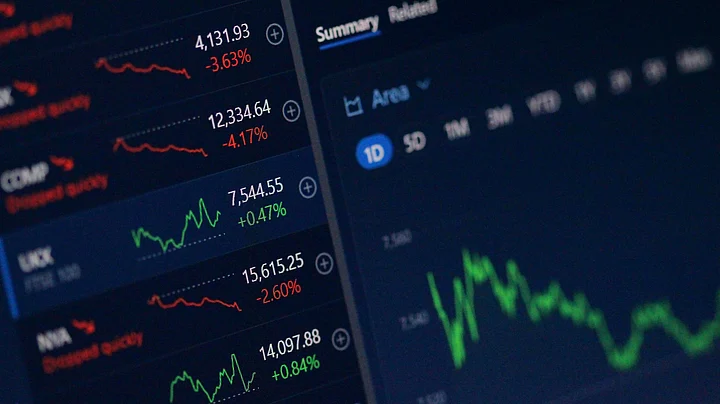
A new financial year usually gets you thinking about saving more, investing better and getting your finances in order. But at the same time, the news is hard to ignore. With geopolitical tensions in the Middle East and rising crude oil prices back in focus, markets have been anything but calm.
If you’ve been checking your portfolio more often lately or wondering whether it’s better to pause investing for a while, you’re not alone.
But before you hit pause, have you asked yourself if uncertainty really means you should stop investing? Let’s find out.
Why do markets become volatile during global uncertainty?
Markets are driven by what investors expect will happen in the future. Investors don’t just look at how companies are doing today but how they might perform in the next few years. When something big like a war or a pandemic happens, the collective instinct is to move capital from "risk-on" assets to "risk-off" assets.
When people see others selling, they don’t want to be left behind. What starts as “I might miss out” quickly turns into “I might get stuck if I don’t sell now.” As everyone rushes for the exit at once, 'sell orders' overwhelm 'buy orders'. This creates a liquidity gap, where even small trades can cause massive price jumps because there aren't enough buyers on the other side to stabilize the movement. In fact, many investors set 'stop-loss' orders that automatically sell a stock if it hits a certain price. During a dip, these trigger a cascade of selling.
Is it normal to feel unsure right now?
Yes, completely. When markets fluctuate, it’s natural to feel uneasy because your money is involved. Waiting for things to settle is a very common reaction. But remember, volatility is a normal part of how markets work.
A big reason the stock market moves so much is that different businesses react differently to what’s happening in the world. Fidelity Investments points out that during a global crisis, people might stop going on vacation (impacting travel companies), but they still pay their electricity bills and buy groceries (keeping utility and food companies steady). This tug-of-war between different industries is what causes the market to feel like a rollercoaster.
However, data from J.P. Morgan shows that even when the market drops, it has historically recovered almost 100% of the time. Because of this, experts at S&P Global note that these dips are actually like a store-wide sale. This becomes a chance for you to buy stocks of big companies at a lower price before the market eventually bounces back.
What you should do instead
Instead of trying to predict the market, focus on what you can control. Whether it’s buying a home, funding education or planning retirement, don’t let these plans change with market movements. The key is to stay consistent. Investing regularly can help smooth out the impact of volatility over time.
One of the biggest challenges for investors today is staying calm during market swings. That’s where having a clear plan makes a difference. Structured investment solutions like HDFC Life Click 2 Invest are designed to help with this. They offer life cover that adds a layer of financial security, along with features that can help you stay on track with your long-term financial goals.
| Feature | What’s in it for you |
|---|---|
| 13 fund options | Lets you choose investment options that match your risk appetite and financial goals |
| Option to receive fund value at maturity or in instalments¹ | Gives you flexibility to take the payout the way it suits your future needs |
| Partial withdrawals from funds² | Helps you access money for important financial needs or emergencies |
| Flexible premium payment options | Choose to invest regularly, for a limited period, or through a one-time Single Pay option |
² Partial withdrawals can be made after completion of 5 policy years, provided the Life Assured is at least 18 years of age.
Focus on the plan, not the panic
Pausing your investments might feel like the safer choice in the moment, but it can slow down your progress in the long term. Assess your needs, follow a plan and stay invested.
Instead of asking whether you should stop investing, it’s more useful to ask if you have a plan that helps you stay invested even when markets are uncertain and understand its potential returns. Because in the long run, it’s not the ups and downs that matter, it’s how you respond to them.