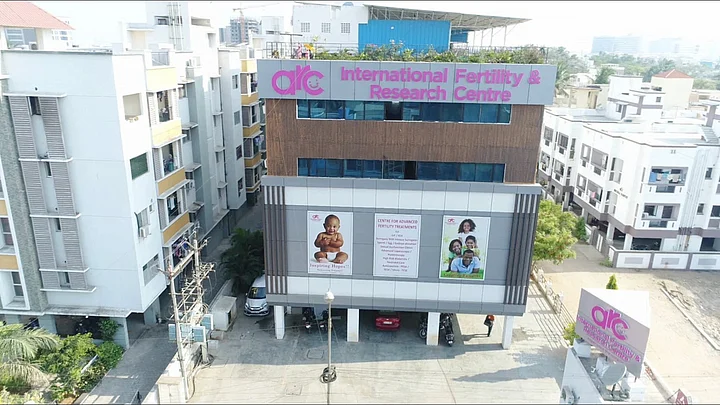
After more than a decade of heartbreak and repeated IVF failures abroad, a 42-year-old woman from the United Kingdom has achieved pregnancy following treatment at ARC Fertility Hospitals, a fertility hospital in Chennai.
Married for 15 years, the woman had undergone eight failed IVF cycles in the UK, along with two pregnancies that ended in miscarriage. Going through the plight of back to back failed attempts, surrogacy had begun to look like their only hope.
When she arrived at ARC Fertility Hospitals, doctors discovered issues that had been overlooked and went undiagnosed during her previous treatments, including a uterine septum and cervical stenosis, a medical condition that can significantly affect implantation.
ARC Fertility doctors then performed corrective surgeries to resolve existing hindrances and further evaluations revealed hydrosalpinx (a medical condition where one or both fallopian tubes become blocked and filled with fluid) this was also treated with laparoscopic surgery.
Unlike her earlier treatments in the UK, the doctors at ARC Fertility Hospital, suggested trying with her own eggs (something she had not attempted before). Through the right method of ovarian stimulation and ICSI using her husband’s sperm, four healthy blastocysts (early stage embryos) were created and frozen. Procedures such as ERA (Endometrial Receptivity Assay) and Lymphocyte Immunotherapy (LIT) also performed to prevent implantation failure.
Proper diagnosis plus tailor-made approach the 42 year old conceived. She is now 30 weeks pregnant, with her own gametes and experiencing a happy pregnancy.
“This case highlights the importance of accurate diagnosis and patient-specific treatment is important for positive outcomes. Many couples are advised to consider surrogacy too early. With the right evaluation, natural parenthood is possible even in complex situations.”Dr. S. Mahalakshmi, Chairperson & Managing Director of ARC Fertility Hospitals
ARC Fertility’s approach demonstrates how India has become a global destination for advanced fertility care, attracting patients from across the world. For international couples and older women facing repeated failures, this success story offers hope that with persistence, personalised care, and ethical treatment, parenthood can still be achieved.