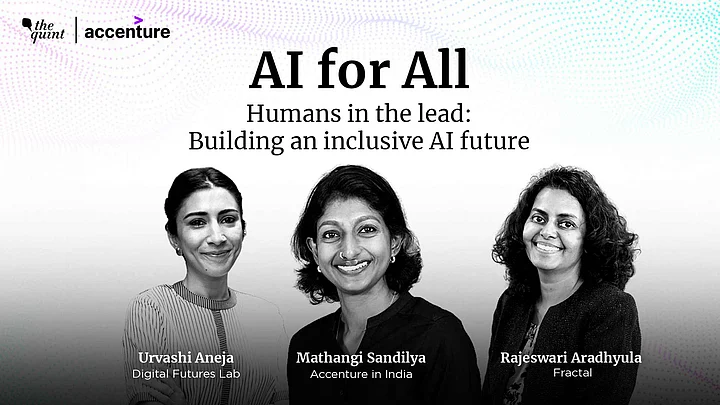
Over the past few weeks, we kept coming back to this one thought- AI is moving fast and so should the conversation around how we build it responsibly. Through AI for All – Humans in the Lead: Building an Inclusive AI Future, a collaboration between The Quint and Accenture in India under Reinvent with Accenture, we explored what it really takes to build AI that works for everyone.
Through this journey, we uncovered a set of ideas that challenge how we think about technology, inclusion and responsibility. Here are some key takeaways:
1. It starts with who leads AI
One thing that really stood out in the conversation was this idea that AI isn’t just about the tech. It’s about the choices behind it. Like Mathangi said, the future of AI won’t be shaped by algorithms alone, but by the people making them.
It changes the role of humans too. We’re not just along for the ride, we’re the ones making these calls. And with that comes responsibility, especially for the people designing and building these systems.
2. Inclusion must start at the design stage
Another idea that came across was that inclusion has to be built in from the beginning.
That means designing with different perspectives in mind, thinking ahead about how people will actually use these systems and considering real-world impact early on. Because the earlier inclusion is built in, the more meaningful it becomes.
3. Inclusion is not just about access
AI systems are always optimising for something but what that “something” is depends entirely on human decisions.
As Rajeswari pointed out, building AI is a moral decision. It requires asking harder questions about impact, outcomes and who ultimately benefits.
4. Inclusion that works for everyone
Another key takeaway was that inclusion cannot be reduced to simply giving people access to technology.
As Urvashi pointed out, access is only one part of it. What really matters is whether people can actually use these technologies in a way that benefits them. It moves the conversation beyond just the tools to things like skills, awareness and the larger systems that shape how technology is experienced.
5. The future of AI depends on the choices we make today
As AI becomes more embedded in everyday life, the real challenge is the intention with which it is being built. The choices we make now will decide whether it opens up opportunities or widens existing gaps. Which is why this moment talks about responsibility.
Watch the full panel discussion to hear perspectives on building inclusive AI, the role of human decision-making and why responsibility and intent matter at every stage.
AI will keep evolving. It’ll get more powerful, more present and more woven into how we live and work. But its future will be shaped by intent, by responsibility and by the people behind it. Because building AI for all isn’t a one-time goal. It’s an ongoing commitment we have to make with every step of the way.