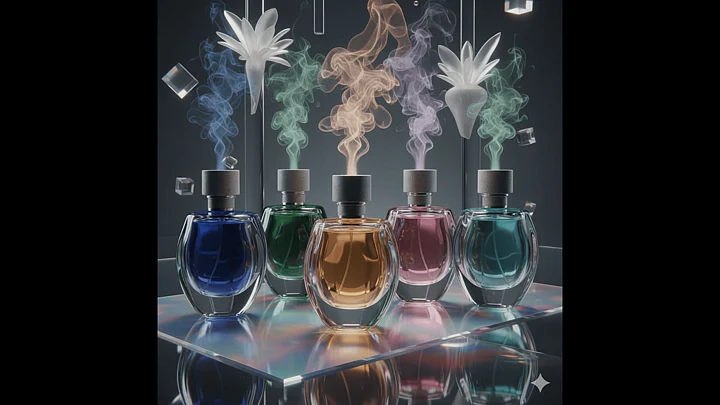
A silent revolution is sweeping in the glittering aisles of high-end shopping in Mumbai, Delhi and Bangalore. Whereas fast fashion brands are reducing the number of people who visit their outlets, the niche perfumery shops are experiencing unprecedented growth. The most sophisticated women in India are making a conscientious decision, she is not spending her luxury money on fashionable clothes according to the season, but on something much more personal and lasting, the signature perfume.
This change is not just a change in the shopping habits. It is an indicator of a paradigm shift in the concept of luxury as defined by sophisticated Indian women, who are identity expressive and self-invested.
The Fatigue of Fast Fashion
The fast fashion has lost its glamour significantly. Anything that used to promise the democratization of style now is a hollow feeling: collections of the same clothes, trends promoted by influencers and dying away in a few weeks, and an uneasy awareness of environmental destruction. To women with a sense of authenticity and lasting quality the fast fashion cycle has become a tiring affair instead of an exhilarating one.
Furthermore, during the time of remote jobs and work timetables, the standard wardrobe has become outdated. The stress to keep on changing the wardrobe has reduced. Indian women are posing an interesting question to themselves; why would you spend money on that statement blazer that you will only wear a few times when you can spend money on a signature scent that you wear daily?
The Case for Niche Perfumery
Niche perfumery offers what fast fashion never could—true exclusivity. These are fragrances created by independent perfumers or small houses, often using rare ingredients and unconventional compositions. Unlike designer perfumes marketed to millions, niche fragrances are deliberately limited in distribution and production. When you wear a niche perfume for women, you're virtually guaranteed that no one else in the room shares your scent.
This is a very deep psychological exclusion. A unique and recognizable perfume will be your signature in the professional and social world where personal branding is important in the workplace and in other social places than a handbag or a pair of shoes. It is the feeling that stays with you once you are out of a meeting, the smell that is linked only to your being there.
The investment proposal is also very strong. The average niche fragrance selected costs between 15,000 and 40,000 one or two designer handbags or three shopping sprees at the fast fashion store. Nevertheless, as opposed to clothes that age or wear off, a good perfume remains in the same character over a couple of years. The price in the wear turns out to be incredibly cheap when one bottle can be used with you throughout the seasons, events, and the stages of your life.
The Change towards Sensual refinement
The palates of Indian women are becoming finer. No more content with sweet, easy-peasy scents that take up most of the perfumery, they are demanding intricacy, smoky ouds, green vetivers, leathery accords, and surprise fire combinations of spices. They are reading perfume labels like wine lovers read terroir and that Mysore sandalwood is not the same as Australian, Turkish rose is not the same as Bulgarian rose.
This education can be facilitated by sampling, perfume classes and online forums where women discuss their fragrance experiences. It becomes a personal discovery itself, learning what families of scents appeal to your personal chemistry, what perfumes work with your work or personal life and how scent can change your mood and self-esteem.
The best perfume for women, in this context, isn't determined by advertisements or celebrity endorsements but through personal exploration and connection. It's deeply subjective, almost intimate—a form of self-knowledge that transcends trends.
Luxury Meets Sustainability
Fast fashion is becoming unpalatable due to the environmental consciousness, which makes niche perfumery more attractive. A large number of niche houses are focused on sustainable sourcing, helping small-scale farmers, utilizing recyclable packaging, and having transparent supply chains. This congruence is significant to the values oriented Indian woman.
Also, this very reality of investing in less, better things, which is fundamental to conscious consumption, would work well with perfume. Creating a thoughtfully edited set of five unique smells is much more sustainable than shopping through dozens of mass-market fragrances, and a capsule wardrobe of nice clothes is much better than a wardrobe of trendy and disposable clothes.
The Secret of Being Not Seen
Something feels incredibly subversive about investing in a fashion accessory that cannot be photographed to the Instagram feed, that will not draw an admiration commentary by a random person, that will only serve your own gratification and the people in your close group. Making an invisible luxury is a self-assertion in our hyper-visual culture that requires validation.
The niche perfumery has a payout to the wearer, but not to the observer. It is self-indulgence, not your viewers- a drastic idea in a world that is obsessed with the need to be recognized externally. The Indian woman is a discerning lady who realizes this difference intuitively. She is not preoccupied with luxury eating anymore but with experiences and sensations which add significance to her every day life.
The Art of Personal Branding
Women in competitive professional practices are finding out that scent can generate strong associations. That unique smell becomes associated with competence or creativity, or leadership, whatever you are, though. It is neuromarketing in personal branding so that olfactory memory makes long-lasting impressions that visual presentation cannot produce.
Your signature fragrance is yours and yours alone unlike a designer dress which can be identified and copied an olfactory fingerprint that makes you stand out in very subtle and dramatic ways.
The Future of the Luxury Consumption
This shift in fast fashion to niche perfumery can be a characteristic of luxury consumption in India in the future. The more discerning women grow in their choices of where to channel their resources, whether financial, emotive or ecological, investments will be shifted toward consumable items which provide real value: quality and experience, rather than image, and attachment.
The unseen accessory, it happens, is the most visible thing of all, a statement of confidence, taste, an advanced idea of what luxury really is.