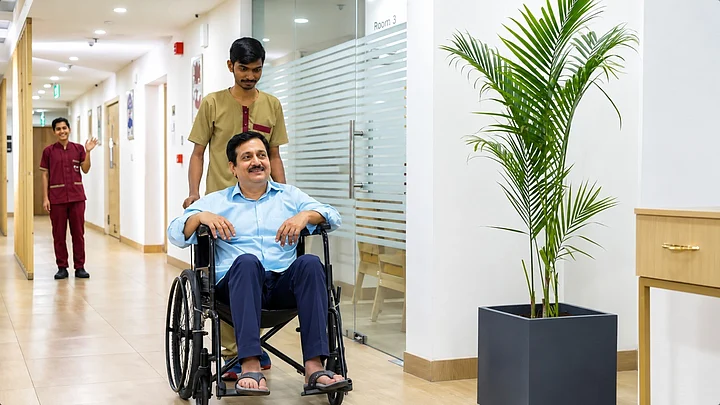
First thing that comes to a family's mind after their loved one is recovering from a paralysis attack. Will they be able to walk and move like before? Physiotherapy cannot always reverse paralysis completely, but it can help the patient regain a lot of movement. If the nerves are not fully damaged, the brain can slowly learn to control the muscles again. Physiotherapy for paralysis supports this with regular exercises and guided movement. So, can physiotherapy reverse paralysis? It depends on the cause, how much damage has happened and how early the treatment starts.
What Causes Paralysis and Affects Recovery?
Paralysis happens when the signals between the brain and the muscles get interrupted. As per the *research*, the most common cause is a stroke. Spinal cord injury, head injury, nerve damage and conditions like multiple sclerosis can also lead to paralysis. Recovery after the paralysis depends on where the damage was and how much did it affect the patient's body. Cases of partial paralysis have a much higher chance of recovery compared to a case of complete paralysis. This is why two patients with paralysis can have very different recovery stories.
How Does Physiotherapy Help with Paralysis Recovery?
Physiotherapy for paralysis recovery works by making the patient repeat the same movements again and again. With time, this helps the brain build new connections with the muscles. The physiotherapist uses paralysis recovery exercises like stretching, strengthening and assisted movement of the weak arm or leg. They also work on sitting balance, standing and walking. Mobility training for paralysis teaches the patient how to safely shift from the bed to a chair.
Can Physiotherapy Restore Movement Completely?
In some cases, yes. Patients who had a mild stroke or partial nerve damage can get back almost full movement with regular therapy. But this is not the case for every patient. When the damage is severe, some weakness may stay for life. Even then, physiotherapy is not a waste of time. It helps prevent stiff joints and weak muscles. It also helps the patient do more things on their own, like sitting up, turning in bed or walking with a walker. It is better to set small goals with your therapist.
When Should Paralysis Rehabilitation Begin?
Paralysis rehabilitation should start as early as the doctor allows it. Physiotherapy after stroke often begins in the hospital itself, once the patient is stable. The first few months after the attack are very important, as the brain is most ready to heal during this time. Delaying the therapy can lead to stiff joints and weak muscles. But it is never too late to start. Many patients still improve after a year with the right paralysis treatment and rehabilitation.
What Factors Influence Paralysis Recovery?
Recovery is different for every patient. The paralysis recovery timeline depends on the cause and size of the damage, the patient's age and how early the therapy started. How regularly the patient does the exercises also matters a lot. Support from the family plays a big role too. Other health problems like diabetes or heart disease can slow down the recovery.
How a Rehabilitation Centre Supports Paralysis Recovery
At a rehabilitation centre like Antara, neurological rehabilitation is led by a PM&R doctor. Physiotherapy, occupational therapy and speech therapy are all under one roof. Nurses are there 24x7 to help with turning the patient, bladder care and preventing bed sores. Grab bars and anti skid flooring lower the chances of a fall while moving the patient. The team also helps families with TPA and insurance claims.
Frequently Asked Questions
How long does paralysis recovery take?
It is different for every patient, and some see progress in weeks while others need months of rehabilitation for paralyzed patients.
Can paralysis recovery exercises be done at home?
Yes, but it is better to learn them from a physiotherapist first.
Is physiotherapy painful for paralysis patients?
It should not be painful. Some stiffness or tiredness is normal but tell the therapist if there is any sharp pain.
Conclusion
Physiotherapy for paralysis may not always reverse it completely, but it can make a big difference in the patient's life. It helps the body get stronger, keeps the joints healthy and slowly brings back independence. The most important thing is to start early and stay regular with the therapy. If your loved one is recovering from a paralysis attack, speak to a rehabilitation team as soon as possible. The right support at the right time can change how the recovery looks like.
This article is for general information only and is not a substitute for professional medical advice.