
World Water Day: India’s Taps Are Running. But Is the Water Safe?
Every conversation about water safety must also be a conversation about who bears the burden when systems fail.
advertisement
Between February 2025 and January 2026, contaminated tap water across Indian cities sickened more than 5,500 people and killed at least 34. Not from a river. Not from a well. From a tap—the infrastructure that was supposed to be the solution.
This World Water Day, the United Nations has chosen the theme “Where Water Flows, Equality Grows.” It is a compelling idea. Access to safe water is one of the most powerful levers for human equality we have: when clean water reaches a community reliably, children attend school more regularly, families are spared the crushing cost of waterborne illness, and women—who disproportionately bear the burden of water collection—reclaim hours of their lives.
The theme is right. But India’s water crisis forces us to ask an uncomfortable question beneath it: what exactly do we mean by safe?
For decades, the answer has been: water without pathogens. Chlorination, boiling, filtration, and sanitation campaigns have saved millions of lives and remain essential. The World Health Organization (WHO) estimates that unsafe water, sanitation, and hygiene still cause hundreds of thousands of diarrhoeal deaths globally every year. These battles are not over. But they have obscured a second, slower crisis that is now impossible to ignore.
The Contamination You Cannot See
Chemical contaminants—arsenic, fluoride, nitrate, chromium, cadmium, mercury—are invisible. They have no smell, no taste, no colour. Unlike bacterial contamination, which causes sudden, traceable outbreaks, chemical contamination works in silence.
The UN Environment Programme has documented that heavy metals such as mercury, lead and cadmium—released into water systems through industrial activity and mining—are highly toxic to both human health and ecosystems. This diffuse, delayed nature makes chemical contamination particularly difficult to govern. There are no dramatic outbreak headlines. There is only a steady, quiet accumulation of suffering.
Seen through the lens of this year’s World Water Day theme, the implication is stark: water inequality is not only about who has access to water, but about who receives water that is genuinely safe.
The Promise of Jal Jeevan Mission
India’s flagship Jal Jeevan Mission, launched in 2019, set out to deliver tap water connections to every rural household in the country. It is an ambitious, necessary programme, and it has dramatically expanded coverage.
But a 2025 parliamentary reply revealed a troubling gap between the pipe and its contents: among groundwater samples tested across India, nearly one in five—19.8 percent— exceeded permissible limits for nitrates. Arsenic exceeded safe limits in 3.1 percent of samples, and fluoride in 9.04 percent.
When a programme lays pipes into a contaminated aquifer, it does not solve the water problem. It risks becoming a delivery mechanism for contaminated water if quality monitoring does not keep pace with infrastructure expansion.
What Our Rivers Tell Us
India’s water crisis is not confined to groundwater. The country’s rivers are under severe ecological stress.
Untreated wastewater, industrial effluent, and agricultural runoff have transformed the Yamuna into a carrier of pollution.
The Yamuna is not alone. The Musi in Hyderabad and the Hindon in western Uttar Pradesh are in similar distress. When rivers lose their ecological flow, the consequences ripple outward: communities that depend on them for drinking water and irrigation face rising health risks, aquatic biodiversity collapses, and polluted rivers become yet another channel through which environmental inequality spreads.
The Cost Is Paid Mostly by Women
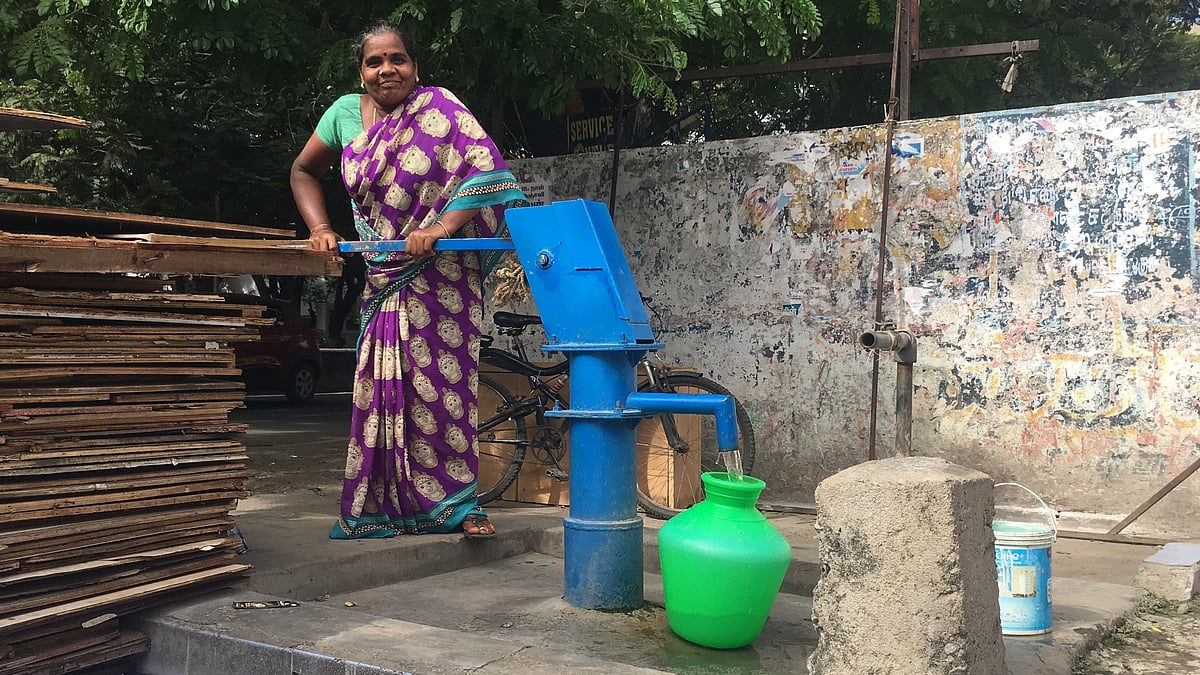
Every conversation about water safety must also be a conversation about who bears the burden when systems fail. In India, as across much of the world, that burden falls disproportionately on women and girls.
According to UNICEF India, close to 54 percent of rural women spend an estimated 35 minutes getting water every day—equivalent to the loss of 27 days’ wages over a year. When those water sources are contaminated, women also carry the weight of caring for sick family members, navigating the costs of treatment and absorbing the economic shock of illness in the household.
This is what makes water safety a question of social justice, not merely environmental policy. Contaminated water does not affect everyone equally. It compounds existing inequalities of gender, geography and class. The communities most exposed to chemical contamination are often those least equipped to test their water, afford alternatives or demand accountability from the state.
What the Body Keeps
The health consequences are severe and lasting. The WHO has established that long-term arsenic exposure causes skin lesions and cancers of the skin, bladder and lungs. Excess fluoride leads to dental and skeletal fluorosis—chronic pain, bone deformities, lives shaped by preventable suffering. High nitrate levels can cause methemoglobinemia, or “blue baby syndrome,” in infants, reducing the blood’s ability to carry oxygen.
That figure captures hospitalisation and treatment costs. It does not capture lost productivity, reduced cognitive development in children exposed to contaminated water in their earliest years, or the long-term erosion of human capital in the communities most affected.
Governance Is the Intervention
Other countries have demonstrated that this is solvable—but only when governance keeps pace with infrastructure. The European Union’s Water Framework Directive legally requires member states to monitor both microbial and chemical water quality and to publish the results publicly. The UK’s Drinking Water Inspectorate publishes annual compliance reports for every water supply zone in the country. In these systems, governance is not an afterthought to infrastructure—it is inseparable from it.
What India needs is not more pipes—it is surveillance that monitors chemical contamination alongside microbial indicators; laboratory capacity in contamination-prone regions as well as genuine integration across public health departments, groundwater authorities, pollution control boards and local utilities.
Reducing untreated sewage discharge, enforcing industrial effluent standards and restoring ecological flows in India’s rivers must become central to water policy.
The Question the Theme Demands We Answer
India has spent billions ensuring water reaches every home. That achievement is real and it matters. But the question we have not yet answered—the one that will define whether Jal Jeevan Mission is a public health triumph or not—is what exactly we are delivering.
This World Water Day, the theme tells us that where water flows, equality grows. That is true. But it is only true of safe water. When contaminated water flows through taps and sewage-choked rivers run through capital cities, the promise is incomplete. The infrastructure of access has been built. The infrastructure of safety—the testing, the standards, the accountability, the political and policy will to hold polluters to account—is waiting to be constructed.
34 people died from contaminated tap water in the past year. They had access. They did not have safety. Those are not the same thing, and India’s water policy must treat them differently.
(Urvashi Prasad is Former Director, NITI Aayog and Senior Fellow at Pahle India Foundation. She can be reached at @urvashi01. Shreya Anjali is a Public Health Professional, Pahle India Foundation. This is an opinion piece. The views expressed above are the author’s own. The Quint neither endorses nor is responsible for them.)
- Access to all paywalled content on site
- Ad-free experience across The Quint
- Early previews of our Special Projects
Published: undefined