'Assalamualaikum' is Part of Indian Cultural Lexicon, Don’t Limit it to Religion
Why does every utterance of “Inshallah” or "Assalamualaikum" have to carry exaggerated religious baggage?
advertisement
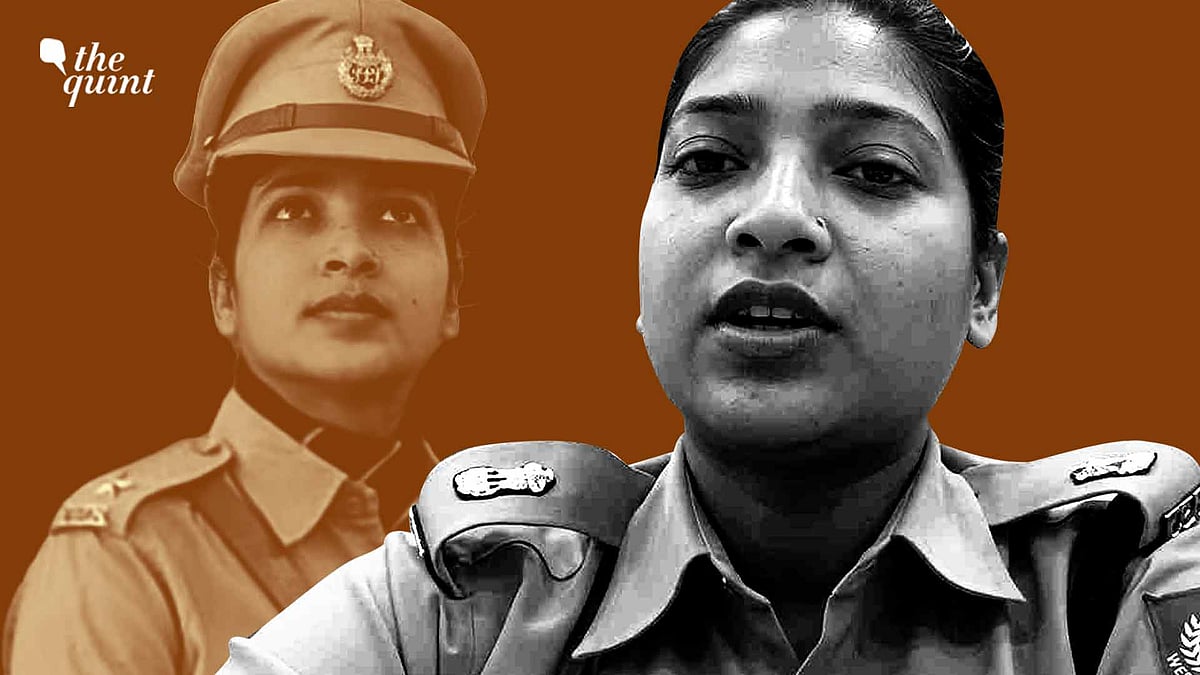
Last year, in October, when Gwalior city SP Hina Khan raised the “Jai Shree Ram” slogan to combat an unruly crowd that was weaponising the slogan against her—in an effort to reduce her identity to barely her religion—it became a moment of reckoning. Khan had to raise the slogan to “diffuse” the situation, to deny the crowd the privilege of taking advantage of her identity. A year later, another SP, now in West Bengal, is trapped in a similar discursive trap: the burden of identity.
On 13 September, West Bengal Indian Police Service (IPS) officer Bushra Bano shared a video on how Aligarh Muslim University’s Coaching Centre helped her in the Union Public Service Commission (UPSC) journey.
The talk was nothing more than a motivation for UPSC aspirants. However, what was supposed to be a gesture of inspiration fractured when, a few days later, the then-additional SP of Kharagpur was abruptly transferred to deputy commandant of the WB police.
The reason? Bano began her speech with "Assalamualaikum", used "Insha'Allah", and ended with "Jazakallah”. It was said that a serving officer should “maintain neutrality” and only utilise “national expressions” in the public domain. Notably, the same tweet denounced her for not using “Vande Mataram” or “Jai Hind”.
Muslims Face Selective Outrage
Indeed, according to the All India Services (Conduct) Rules of 1968, Rule 3(1A)(ii), all serving members should maintain political neutrality. But when does using a socio-cultural vocabulary become a political manoeuvre? One might examine Bano’s alleged “misconduct” against the established AIS conduct rules. Under rule 6, officers do not require previous government sanctions to participate in public media, provided that they observe the provisions of the rules and they do not misrepresent personal views as those of the government.
Contrast this with the 2018 case of the former Director General (Home Guards) of UP, Surya Kumar Shukla, who was filmed taking a public pledge in a 2018 video for the early construction of Ram Mandir in Ayodhya. Despite pushback from the IPS association for violating “neutrality, fairness and uprightness”, Shukla faced minimal repercussions, aside from a procedural explanation to the government, which he brushed aside with abstract claims of maintaining communal harmony. He even had the backing of the UP State Principal Secretary (Home), who stated there was no need to seek further clarification from Shukla.
What makes Shukla immune to action, even after visibly violating the code of conduct, whereas Bano is subjected to a transfer?
Notably, days earlier, West Bengal witnessed an extensive Gerua Samman Yatra march, with crowds waving saffron flags as they chanted “Jai Shri Ram” and “Santaner Joy Hok”. Leading the march was none other than the newly elected Chief Minister of West Bengal, Suvendu Adhikari, who issued a warning that he would not tolerate “anyone uttering words or derogatory comments about [saffron]”.
Reaching Jadavpur University, he stated that he knows “how to cleanse the campus of them”, referring to recent protests in favour of Palestine.
Islamophobia 101
This is, however, not an isolated event. In 2023, Prime Minister Narendra Modi installed a historic Tamil ‘Sengol’ in the Lok Sabha building. The PM sought the blessings of the Tamil high priests as they handed over the Sengol. After invoking the Gods through Ganpati Homam, he installed the Sengol amidst Vedic chants and nadaswaram.
In 2024, the PM inaugurated the Ayodhya Temple, stating that “Our Lord Ram will be in a grand temple”. From declaring a holiday to marking this as a “new era”, the tone for the country’s future was set.
In these moments, one couldn’t help but remember India’s first PM Jawaharlal Nehru’s displeasure at then-president Rajendra Prasad, who attended the inauguration of Somnath Temple.
The evolution in the dominant culture of the state makes us ask a critical question: What are the “neutral” and “impartial” values? Do we need to measure it against an eternal “other”?
Lastly, Assalamualeikum or Insha’Allah don’t represent Bano’s religious vocabulary, they are part of her cultural expressions. When many Indians casually say “Oh my God”, every time they are not essentially invoking any paradigmatic Christian connotation. Yet, the moment Allah or traditional Arabic greetings appear, they invoke suspicion.
Why does every utterance of Insha'Allah have to carry exaggerated religious baggage, when for millions across the subcontinent, it is merely a reflex in situations for expressing hope or future intent? Finding religious connotation in every invocation of Allah, instead of considering it as a constitutive component of a composite linguistic framework, portrays an anachronistic worldview that has neither any idea about India’s history nor about its embedded multiculturality.
(Halah Fathima is a writer and currently studies at Symbiosis School for Liberal Arts, Symbiosis International University. This is an opinion piece and the views expressed are the author's own. The Quint does not endorse or is responsible for them.