
Why the US Suddenly Declared the Iran War ‘Over’ Amid Legal Questions
The latest in a long struggle between Congress and the presidency over which branch of government can start wars.
advertisement
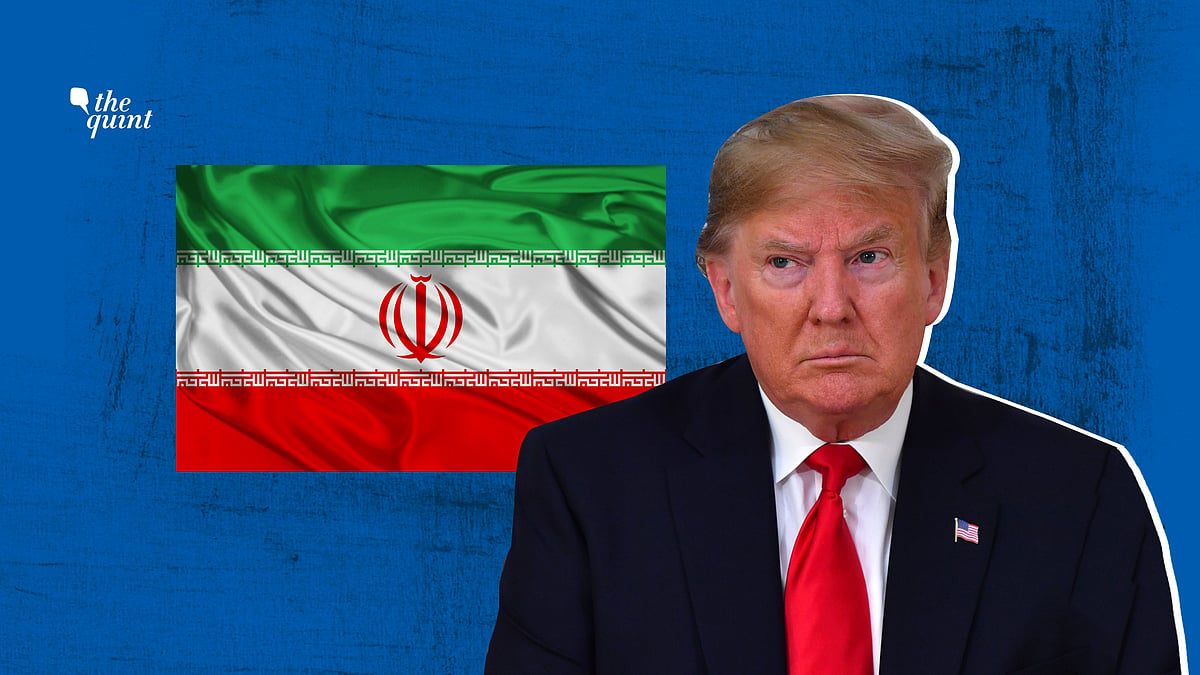
Operation Epic Fury is over. Or at least, that’s what the US secretary of state, Marco Rubio, announced on 5 May, describing any further US action in the Gulf as purely “defensive”.
Rubio’s insistence that the conflict the US and Israel launched on 28 February achieved its objectives is open for debate. But this change of tone and terminology is likely to reflect arguments that raged in the US Congress as the war approached the two-month mark at the end of April, about whether the Trump administration must seek congressional approval for the conflict as required by US law.
The US constitution splits war powers between the presidency and Congress. It gives Congress the power to raise armies and declare war but makes the president the commander-in-chief of the military. That means that, in theory, you need to get Congress to agree to fund and start a war and the president to agree to wage it.
Since the second world war, this system has been changing. The last time the US formally declared war was in 1942 against Bulgaria, Hungary, and Romania—having already declared war on Japan and Germany in December 1941. Since then, presidents have often plunged the country into hostilities on their own authority without getting a declaration of war from Congress.
Congress still needs to fund the military—but, with very few exceptions, the legislature has always done so. Individual members of Congress have generally been happy to let presidents take on the blame for starting wars. After conflicts have started, legislators have been unwilling to cut off funds for the troops in the field. As a result, Congress has given up much of its influence over decisions of war and peace.
Congress’s Long Retreat on War Powers
But not entirely. The high point of Congressional pushback was in 1973, during the tail end of the Vietnam war, which by then had become extremely unpopular. In this context, Congress challenged the executive branch by passing the 1973 War Powers Resolution (also known as the War Powers Act). It’s this law that is shaping the debate over Iran today.
To be sure, some presidents have asked Congress for a statement of political support before launching a major war, as they also had done before the War Powers Resolution was passed. For instance, George H.W. Bush did so before the Gulf war of 1990-91. But when doing so, presidents have generally maintained that they did so purely to ensure national unity, and not because the War Powers Resolution required it of them.
Presidents have also launched many interventions in which they ignored the resolution entirely—as Bush himself did in Panama in 1989.
Unpopular War
As a result, the resolution has never acted as a meaningful constraint on presidential war-making power. But things may be changing. The war in Iran is so unpopular that Congress asserting its authority over war powers more strongly than any time since the War Powers Resolution was passed. In the process, it is turning the resolution into something that might meaningfully affect the course of the war
In response to this political pressure, the Trump administration seems to be paying more attention to the requirements of the War Powers Resolution than most administrations before it.
The White House is too afraid of Republican opposition to ignore the resolution entirely, particularly when it knows that it may soon have to ask Congress for more funding for the war. Even the argument it made that the 60-day clock has paused during the ceasefire is an indication that it sees the clock as a legitimate thing in the first place.
If the war starts up again, Republicans will clamour for the administration to come to Congress for a declaration. This would probably trigger a major debate over the conditions that Congress wants to attach regarding strategy, goals and funding.
What this shows is that many of the checks and balances of the constitution only work when there is the political will to make them work.
(This article is republished from The Conversation under a Creative Commons license. You can read the original article here.)
- Access to all paywalled content on site
- Ad-free experience across The Quint
- Early previews of our Special Projects
Published: undefined