'Prahaar' Glorifies Ujjwal Nikam at the Cost of Historical Truth
'The untold story of Ujjwal Nikam' is the tagline of the new film. What is the public prosecutor’s 'told story'?
advertisement
Ujjwal Nikam is known to be the man every Maharashtra government—be it the Congress-NCP or the BJP-Shiv Sena—chooses to represent it in high-profile cases. The one who revels in the glare of the cameras. The one who was given a Rajya Sabha seat by the BJP after he lost the 2024 Lok Sabha elections.
But Nikam will also go down in history as the public prosecutor who invented the myth about Ajmal Kasab asking for and being fed biryani in jail.
It was the festival of Raksha Bandhan. It was reported that Kasab had asked why every man’s wrist was decorated and then expressed the wish that someone would tie him a rakhi.
Considering that the dominant feeling then was rage that instead of being hung in public, the only Pakistani terrorist to be captured alive during the 26/11 Mumbai terror attacks was getting a lengthy trial, one wonders what Nikam was worried about. At any rate, not all the sympathy could have changed the verdict, for Kasab had been caught on camera shooting at CST station.
This unnecessary lie deliberately uttered by the public prosecutor had far-reaching effects: it became a permanent taunt against every Muslim languishing in prison on often fake terror charges—and there were many in the years following 2008.
Deep Veneration
Prahaar revolves around Kasab’s trial, but does not show Nikam uttering that lie. On the contrary, he is shown debunking it.
This whitewashing is keeping with the entire film, which treats its hero as the ultimate superhero, a patriot to end all patriots. The only flaw depicted in his character actually works in his favour: he’s so dedicated to his work that he neglects his family.
And for him, as he keeps asserting, work is not just doing the duty of a public prosecutor, but upholding the reputation of the country as the 'world’s largest democracy.'
We are spared the word 'vishwaguru,' but there’s enough pontification by Nikam in court about how India has taught ethics to the rest of the world.
This glorification reaches absurd heights when Nikam is shown lecturing to the Pakistani government, in Islamabad, on the need for the two countries to disentangle from superpower rivalry, make peace with each other, and spend on education instead of on war.
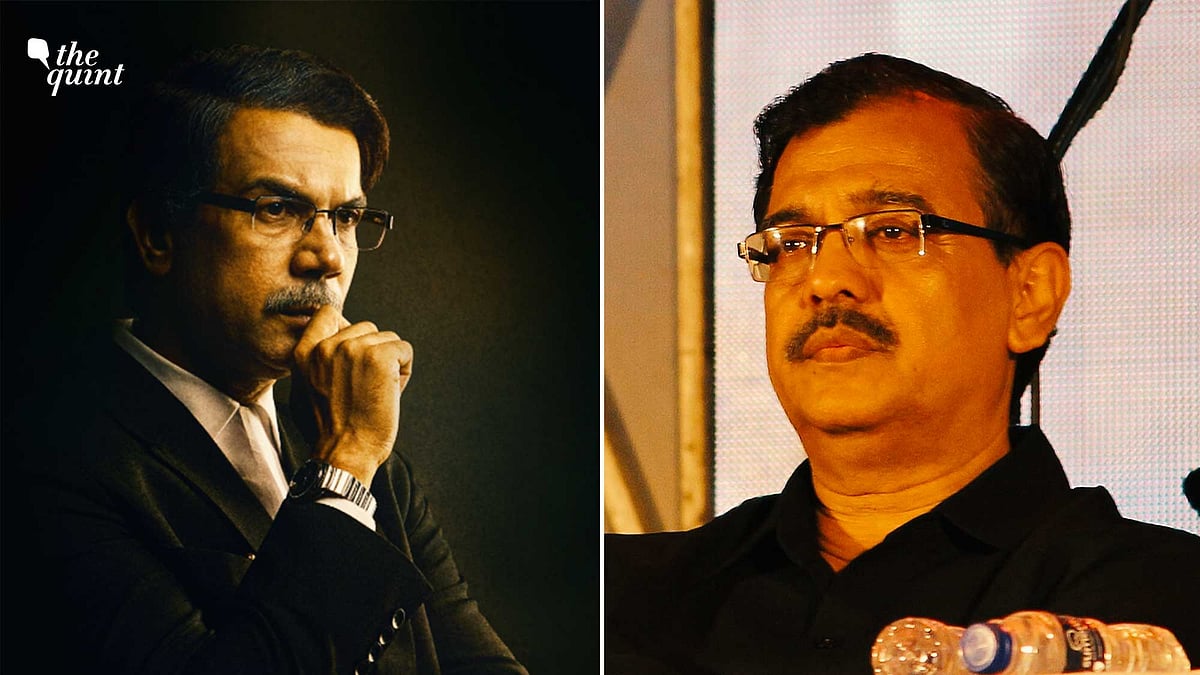
What makes this pompous hero likeable is the winsome quality that Rajkummar Rao, who manages to look and even walk exactly like Nikam, brings to the portrayal, a quality one would not associate with the real life Ujjwal Nikam.
When your hero has to be larger than life, truth has to be a casualty.
Selective History
The movie begins with Nikam as a reluctant hero of the 12 March 1993 bomb blasts trial. While his team celebrates the many convictions handed down, Nikam reminds them that the real conspirators sitting in Pakistan have not been caught.
But that narrative flies in the face of facts. Pakistan’s hand in the 1993 blasts had already been exposed. Unassailable evidence against Pakistan had been provided by Yakub Memon, who decided to leave the safety of Pakistan to return to life as an Indian in 1994 itself, in exchange for revealing everything about the blasts conspiracy hatched by his brother 'Tiger' Memon along with Dawood Ibrahim and the Pakistani establishment.
But the promise made to him by the Indian government was broken. Yakub was executed, the only 1993 blast accused to face this punishment. None of this is shown in the film, of course.
Nikam is shown not just as a patriot, but one whose actions are dictated by high moral principles. Thus he tells Kasab that merely getting him convicted wouldn’t be a victory for him. For him, the real victory comes when the criminal acknowledges that he has committed a crime.
The Real Kasab
The movie shows Kasab, who at the start of the trial is depicted as blasé and nonchalant, tormented towards the end, his suffering brought about by the victims he’s made to confront in the courtroom.
From a hospital bed, the 18-year-old had confessed everything to a cop, and scoffed at what he’d been taught by his recruiters: that Islam rewarded jehadis like him with jannat. "Kya sabaab (divine reward), saab?" he had asked bitterly, adding: "Hum bhi toh insaan hain" when the cop had asked him what he’d felt seeing the dead bodies of innocents around him.
The fact is that the public prosecutor didn’t have to do much in this open and shut case. The attack had been telecast live on national TV, making Kasab’s face familiar to every Indian. Transcripts of the instructions being sent by their Pakistani handlers to the terrorists during the attack had been published on the front page. Most importantly, Kasab’s long confession from a hospital bed had been telecast, watched by millions.
Lacking Conviction
The challenge in the trial lay in defending a man the world knew was guilty. Appointed by the court, advocate Abbas Kazmi met that challenge admirably.
For taking up Kasab’s defence, Kazmi paid a heavy price, with his own community shunning him.
Thankfully, some of this does come through in the film. Actor Sikandar Kher brings out the dignity that marked Kazmi’s conduct during the trial, but his character could have been better fleshed out, as also the judge’s personality. Justice ML Tahaliyani earned admiration for the way he handled this unusual trial.
But when the film is designed to elevate just one character, the portrayal of others will suffer. However, what’s most creditable is that the film neither demonises Kasab, nor makes him a caricature, though doing both would have been easy.
Many more facets about Kasab could have come out, such as his longing to see his mother; his surprise that Muslims too lived in India; and some had been killed in the attack. That would have made for a sensitive film, but then Nikam wouldn’t have been its superhero.
(Jyoti Punwani is a Mumbai-based journalist. This is an opinion piece and the views expressed above are the author’s own. The Quint neither endorses nor is responsible for the same.)