
How UGC Turmoil and Simmering Brahmin Anger Could Endanger Yogi
Yogi Adityanath is earning himself a reputation for being 'anti-Brahmin' which could jeopardise his position in UP.
advertisement
Uttar Pradesh, often considered the heartland of Indian politics, has always been a hotbed of political activity. But lately, the political climate of the state has become particularly heated. This state, which has been an impregnable fortress for the Bharatiya Janata Party (BJP) for the past 12 years, has now become its biggest challenge.
The reason is the Brahmin community, which has always been vocal in strengthening the BJP's base. Brahmins played a crucial role in bringing the BJP to power, but now this very community is becoming a major headache for the party. What is the root cause of this discontent, and how might it affect the 2027 Assembly elections?
Let us delve into this political drama.
After Yogi Adityanath became Chief Minister of Uttar Pradesh for the second time, accusations of the government neglecting the Brahmin community began to surface, and some events that have occurred in the recent months have further strengthened these allegations.
This meeting took place shortly after the appointment of Pankaj Chaudhary as the new state president of the BJP, and as soon as news of the meeting broke, Chaudhary advised the MLAs to stay away from such gatherings. The events that followed the meeting were even more interesting.
As news of the meeting spread in the media, a senior official in the Yogi government called some of the MLAs and demanded an explanation, but this only fueled the discontent. Some Brahmin MLAs publicly expressed their displeasure, and hashtags like #BrahminRevolt started trending on social media.
Clashing with the Shankaracharya
While this matter was still in news and discourse, a dispute arose between the administration and Shankaracharya Avimukteshwaranand on the day of Mauni Amavasya at the Magh Mela in Prayagraj. Allegations were also made that the Brahmin disciples accompanying the Shankaracharya had their sacred threads pulled and were severely beaten. This incident further inflamed the political climate in Uttar Pradesh. Avimukteshwaranand has previously been critical of the BJP government, both at the Centre and state.
Following this, the administration began issuing notices to the Shankaracharya, turning the matter into a direct confrontation between the Shankaracharya and Yogi Adityanath. The discontent among Brahmins regarding Adityanath's attitude towards them, which had been simmering since his "Kalnemi" remark, became even more pronounced.
This entire sequence of events damaged the BJP's Hindutva brand and significantly bolstered efforts to portray Yogi Adityanath, who had become a symbol of Hindutva, as anti-Brahmin.
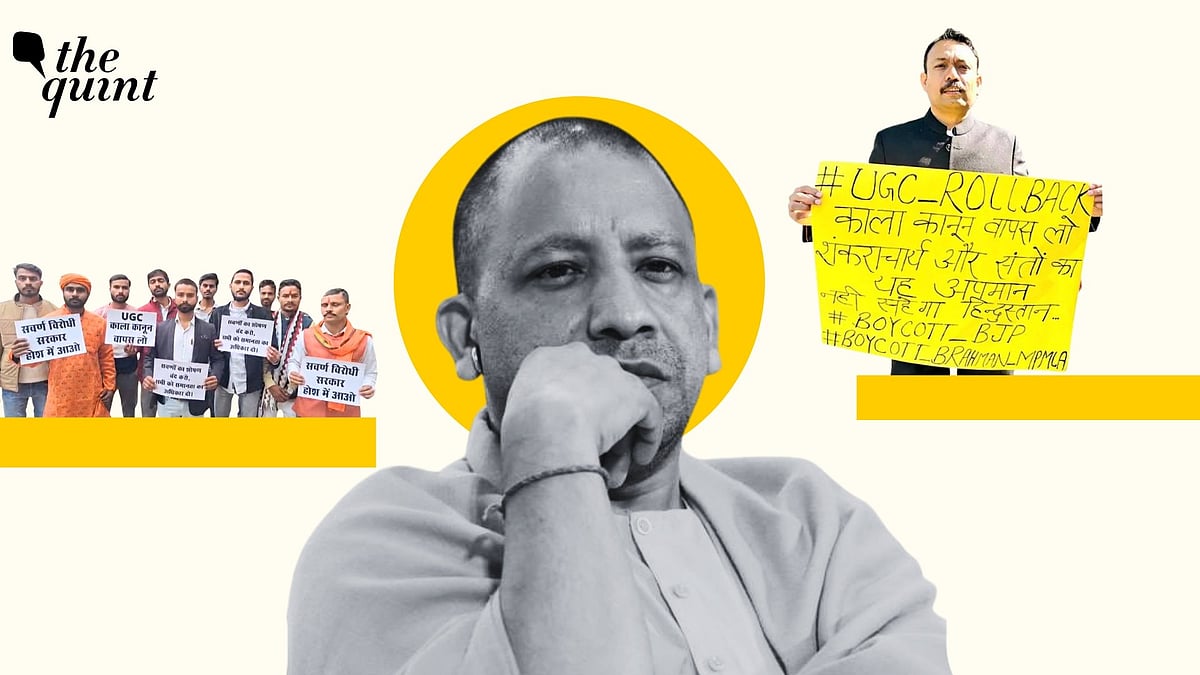
The unrest spread from social media to university campuses, and the entire BJP party was caught in the crossfire.
Reports of tensions between the Uttar Pradesh state government and the central government have been circulating for some time, but these two incidents have embroiled both Amit Shah and Yogi Adityanath.
In the UGC matter, several BJP leaders have started speaking out openly, and a flurry of resignations from local-level leaders has followed.
In the Shankaracharya versus Adityanath controversy, Keshav Prasad Maurya, considered to be from Amit Shah's camp, indirectly criticised the Yogi government's approach. As the controversy escalated, the anti-Yogi faction saw it as an opportunity to potentially remove Adityanath from power. Although Amit Shah gave no such indication during his Lucknow visit on 24 January, this possibility is still being discussed in political circles.
And it doesn't end at the state level. The UGC's new guidelines have also brought Narendra Modi into the crosshairs of the Brahmin community. Political analysts say this development has given Adityanath significant relief, and now Yogi's supporters are rebelling against Modi, portraying him as anti-upper caste.
The situation has become very interesting. The BJP's two biggest brands have come under attack from the party's most ardent supporters. Brahmins constitute about 10-12 percent of the population in Uttar Pradesh, a percentage that proves decisive in electoral calculations. Brahmin support was crucial to the BJP's victories in 2014, 2017, and 2022, but now they feel marginalised in the corridors of power. Brahmin MLAs and leaders are complaining of being overlooked due to the increasing dominance of Thakurs in key positions.
Shift in Brahmin Votes Could Jeopardise Yogi
Internal factionalism within the party has also intensified in the wake of these issues. Slogans of "I love you Yogi ji" were heard during the protests over the UGC issue while Modi supporters remained more vocal in the Shankaracharya case.
What impact could all of this have on Adityanath?
The CM's image is now being solidified as 'anti-Brahmin', which could prove politically fatal for him. There are discussions within the party about replacing him to appease the Brahmins. If this dissent continues, Yogi's position of power could be threatened.
Amidst divisions among supporters of Sanatana Dharma and reports of upper-caste rebellion, th next election appears to be a challenge for the BJP. If the party succeeds in appeasing the Brahmins, victory is possible, but the current political climate suggests that this path will not be easy without removing Adityanath from the Chief Minister's post.
A senior Brahmin party official, speaking on condition of anonymity, says that if the Chief Minister is not changed in Uttar Pradesh now, the damage is inevitable. Overall, the Brahmin card has once again become crucial in Uttar Pradesh politics, and this political drama could take even more interesting turns in the coming days.
(This piece has been translated from Hindi. Read the original piece here.)
(Dr Utkarsh Sinha is a senior journalist from Uttar Pradesh. This is an opinion piece, and the views expressed above are the author's own. The Quint neither endorses nor is responsible for these views.)
- Access to all paywalled content on site
- Ad-free experience across The Quint
- Early previews of our Special Projects
Published: undefined