
Critics of SIR & CEC Miss the Real Issue: India's Electoral System Needs Rehaul
India’s democracy cannot be protected merely by replacing one CEC with another.
advertisement
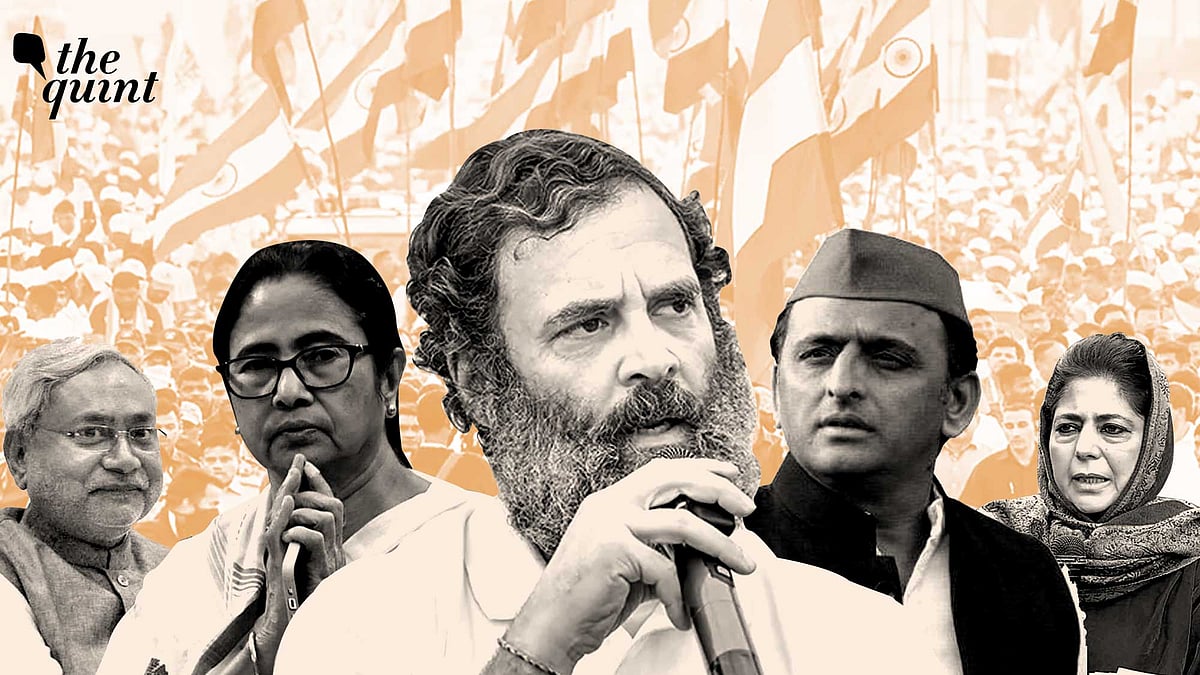
The agitation over the Special Intensive Revision (SIR) of electoral rolls and the Chief Election Commissioner (CEC) is focused on the wrong targets. Opposition parties have launched nationwide protests demanding CEC Gyanesh Kumar, seeking his resignation. They accuse him of favouring the ruling party, disregarding the views of other Election Commissioners, and arbitrarily deleting voters’ names from electoral rolls.
These concerns deserve scrutiny. But they obscure two fundamental problems: India’s Constitution vests sweeping electoral authority in the Election Commission of India (ECI) while the law governing appointments gives the Union government decisive influence over the selection of its top officials.
If critics genuinely want free and fair elections, they should stop treating SIR and the CEC as isolated problems. Instead, they should demand a fundamental overhaul of the laws governing the ECI. The problem is not merely who occupies the office or how a particular electoral exercise is conducted. It is the institutional design that leaves the system vulnerable to abuse.
The Problem Begins with ECI’s Exclusive Control
Article 324 of the Constitution vests the ECI with the superintendence, direction and control of electoral rolls for elections to Parliament, state legislatures, and the offices of President and Vice-President. Such centralisation of authority is neither healthy for a democracy nor practical for a large, diverse country like India.
The United States offers a contrasting model. State and local authorities maintain voter registration records and administer all elections, including federal elections. This decentralised arrangement avoids placing the administration of elections in the hands of a single institution. It also recognises a practical reality: elections must ultimately be administered locally, and local authorities are better placed to do so.
This does not mean American states can do as they please. They must comply with federal election laws, including the Voting Rights Act of 1965, the Voting Accessibility for the Elderly and Handicapped Act of 1984, and the National Voter Registration Act of 1993.
America’s electoral rolls have recently become the subject of a major political confrontation between state governments and President Trump’s administration. Since May 2025, the administration has sought access to state voter registration records, arguing that federal law authorises it to inspect them for accuracy. Several states have resisted, questioning the central government’s legal authority. This has resulted in more than 30 lawsuits, most of which have been dismissed by the courts.
The lesson for India’s Opposition is that electoral-roll management need not be monopolised by a single national authority. It should demand legislation giving state governments primary responsibility for maintaining and updating voter rolls, while empowering the ECI to conduct regular, independent audits. Such a system could reduce the need for massive, disruptive revisions conducted at short notice.
The Opposition should use the public discontent surrounding SIR to press for this fundamental reform. Otherwise, its demand to stop SIR altogether lacks a convincing legal foundation.
Revising electoral rolls is a legitimate responsibility; the real question is whether the process is fair, transparent and adequately safeguarded. A blanket demand to end revisions appears as arbitrary as the decisions the Opposition attributes to Gyanesh Kumar.
The Appointment Law Makes Matters Worse
The second fundamental problem concerns who appoints the officials responsible for overseeing elections.
For decades, the appointment process was largely controlled by the Prime Minister in the absence of a parliamentary law prescribing an independent selection mechanism. In March 2023, the Supreme Court ruled that, until Parliament enacted such a law, appointments should be recommended by a committee comprising the Prime Minister, the Leader of the Opposition in the Lok Sabha, and the Chief Justice of India.
This arrangement creates an obvious conflict of interest. It undermines confidence in the Commission’s independence, regardless of whether any particular appointee acts impartially.
The 2023 law was passed amid strong opposition protests. The government introduced the bill in the Rajya Sabha, which passed it by voice vote after opposition members staged a walkout. The Lok Sabha passed it days later, when most opposition MPs were absent following mass suspensions during the parliamentary session. A total of 146 opposition MPs were suspended across the two Houses during that Winter Session.
The Opposition should now demand a genuinely independent selection mechanism involving representatives of the government and opposition, the judiciary, and other credible constitutional or public institutions. The process should be transparent, and no single political party should be able to determine the outcome.
Reform the System, Not Just the Officeholder
India’s democracy cannot be protected merely by replacing one CEC with another or by challenging every controversial electoral decision as an isolated political battle.
The Opposition should campaign for two complementary reforms: decentralising the maintenance of electoral rolls while establishing national standards and oversight; and removing the Union government’s decisive influence over appointments to the ECI.
(Bhanu Dhamija is Founder and CEO of the Divya Himachal Group and author of ‘Why India Needs the Presidential System’. He can be reached @BhanuDhamija. This is a personal blog, and the views expressed above are the author’s own. The Quint neither endorses nor is responsible for the same.)
- Access to all paywalled content on site
- Ad-free experience across The Quint
- Early previews of our Special Projects
Published: undefined