
AAP’s Blue-Eyed Boy to Political Afterthought: What Happened to Raghav Chadha?
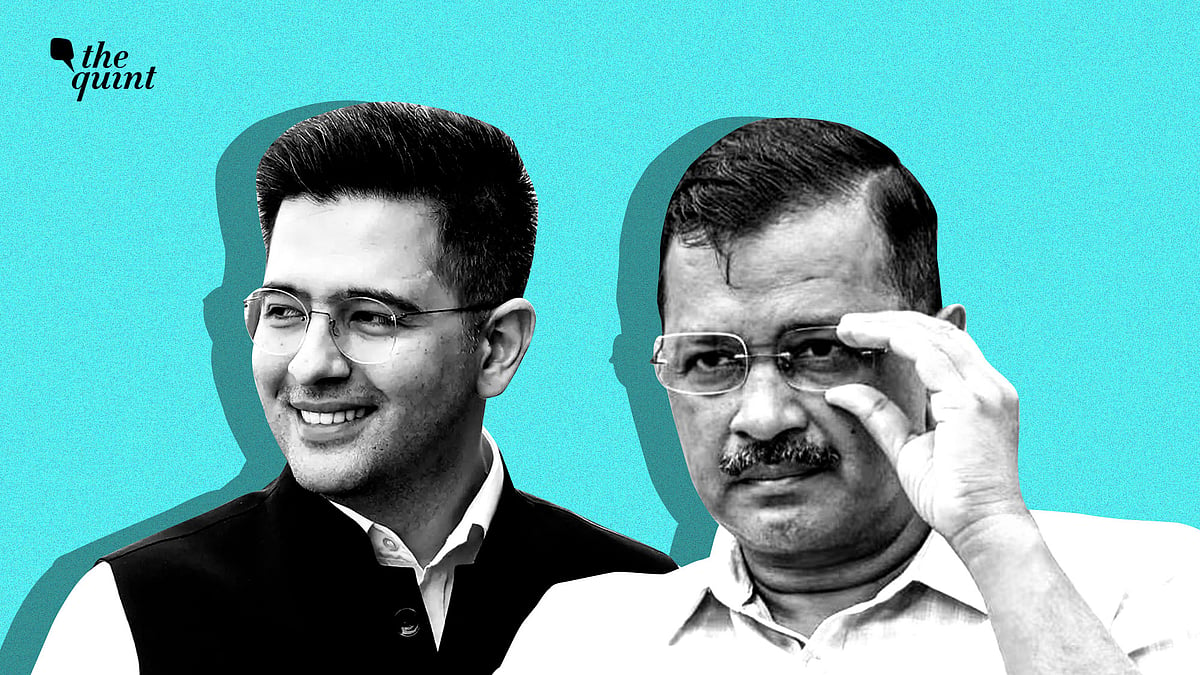
Raghav Chadha's trajectory underscores the harsh realities of loyalty and crisis management in Indian politics.
advertisement
(This piece has been republished from The Quint's archives in light of Raghav Chadha and six other MPs joining the BJP. It was originally published on 4 April, 2026.)
It was early May 2023, a seemingly ordinary day at the Aam Aadmi Party (AAP) office in Delhi. A senior leader received a call from a journalist at a leading English newspaper, informing him that the Enforcement Directorate (ED) had filed a chargesheet in the Delhi liquor policy case naming Rajya Sabha MP Raghav Chadha and Sanjay Singh.
The party offered no immediate comment as its legal team—already managing the bail applications of then Deputy Chief Minister Manish Sisodia and communication in-charge Vijay Nair—reviewed the document. They discovered that neither Singh nor Chadha had been named as accused or witnesses. Singh approached the court, where the ED admitted his name appeared due to an error. Chadha issued brief press statements and tweets but largely stayed silent.
Today, nearly three years later—just a month before May 2026—the AAP has removed Chadha as deputy leader in the Rajya Sabha, replacing him with Ashok Mittal, and issued strong internal statements against him. Chadha's current marginalised position within the party he once served as a key lieutenant has followed a series of key events.
Rise and Fall of a Once-Trusted Lieutenant
Raghav Chadha, a chartered accountant, joined the AAP in its formative years and quickly rose through the ranks as one of Arvind Kejriwal’s most visible and articulate faces. Chadha served as national treasurer, won a Delhi Assembly seat from Rajinder Nagar in 2020, and was appointed Vice Chairman of the Delhi Jal Board. In December 2020, he took on the role of Punjab co-incharge, later becoming Punjab Prabhari and playing a central part in AAP’s landslide victory in the 2022 Punjab Assembly elections. He advised Punjab Chief Minister Bhagwant Mann on policy matters, helping shape governance initiatives in education, health, and water.
In March 2022, Chadha was nominated to the Rajya Sabha from Punjab, becoming one of the youngest MPs in the Upper House. He gradually stepped back from day-to-day Punjab organisational work and was later made Gujarat co-incharge for the Assembly elections.
This ascent reflected the AAP’s reliance on young, professional talent. Chadha embodied the party’s early promise of clean, competent politics. However, cracks appeared after his name surfaced in the liquor policy probe, marking the beginning of a gradual distancing.
Liquor Scam Shadows and Growing Distance
Chadha’s name first appeared in an ED supplementary chargesheet in May 2023 related to the Delhi excise policy case, though he was not named as an accused and he denied any wrongdoing.
The mention stemmed from statements by businessman Dinesh Arora, who later turned approver. Arora’s initial references included Chadha in the context of certain meetings, but subsequent statements focused more on Sanjay Singh, who was arrested by the ED on 4 October 2023. Chadha faced no arrest, and the party navigated the crisis without formally implicating him.
Internal discomfort grew over Chadha’s relatively low-profile response during the escalating investigations. Even then, Kejriwal reportedly hesitated to take public action to prevent a public split.
Post-marriage, Chadha spent extended periods abroad, including in the UK for eye surgery around the time of Kejriwal’s 2024 arrest. Party leaders attributed his absence to medical reasons, but critics within the party highlighted his muted public response and prolonged stay. He later returned and met Kejriwal, yet interactions reportedly remained limited.
Some AAP leaders privately suggested that the marriage into a high-profile family, including connections to prominent figures in entertainment, may have heightened Chadha’s caution amid ongoing probes. This period also saw speculation about possible external pressures or vulnerabilities being exploited, though no concrete evidence of any quid-pro-quo has been publicly established with the Bharatiya Janata Party (BJP). The distance widened as Chadha appeared less aligned with the party’s combative crisis-management style.
Absence in Crisis and Electoral Marginality
The rift became more pronounced during major crises. When Kejriwal was arrested in 2024 ahead of the Lok Sabha elections, with several top leaders already in jail, the party urgently needed visible faces for protests and coordination.
Kejriwal reportedly expressed unhappiness, and Chadha received minimal campaigning responsibilities in the Lok Sabha elections, participating only sparingly.
In the 2025 Delhi Assembly elections, his role remained sidelined compared to his earlier high-visibility contributions. Chadha had been largely absent from internal party mechanisms for over two years, reportedly excluded from key decision-making groups and WhatsApp circles.
Despite his past advisory role with Mann, he stepped back from active Punjab affairs as well. After a Delhi court discharged Kejriwal, Sisodia, and 21 others in the excise policy case in February 2026—ruling that the prosecution failed to substantiate allegations of a criminal conspiracy—Chadha’s continued public silence stood out. While other leaders celebrated the clean chit and used it to rejuvenate the party’s narrative in Delhi and Punjab, Chadha did not join the chorus.
This pattern of absence during critical moments was in contrast with his earlier energetic defence of the AAP’s governance model, and it deepened perceptions of detachment. The party, focused on rebuilding momentum post-legal battles and gearing up for future contests like the 2027 Punjab elections, viewed his limited engagement as a liability.
Strategic Silence or Calculated Exit?
Chadha has maintained his Rajya Sabha tenure (until around 2028) while cultivating a more independent parliamentary image, raising issues such as gig workers’ rights, menstrual hygiene, traffic woes, bank charges, and “sarpanch pati” practices. He spent time experiencing gig economy conditions firsthand and highlighted exploitative “10-minute delivery” pressures, earning some public attention.
However, within the AAP, his focus on broader or general issues rather than aggressive party-specific attacks in Parliament has been seen as insufficient alignment. The party’s recent decision to remove him as deputy leader in the Rajya Sabha, requesting that he not be allotted speaking time from AAP’s quota—signals a clear break.
Chadha responded by posting a video declaring “Silenced, not defeated,” framing the move as an attempt to curb his voice on public issues.
Whether this represents a strategic drift, a calculated positioning ahead of 2027 Punjab polls, or the quiet unraveling of a once-close alliance remains open for debate.
Kejriwal’s sidelining of Chadha has helped him avoid a messy public confrontation while stripping Chadha of formal authority. Chadha retains his MP status and platform but has become a political afterthought in the party that propelled his rapid rise.
The trajectory—from Kejriwal’s blue-eyed boy and AAP Punjab architect to a figure on the margins—underscores the harsh realities of loyalty, timing, and crisis management in Indian politics. AAP continues to rejuvenate its organisation in Delhi and Punjab, emphasising collective discipline. Meanwhile, Chadha’s future path, independent or otherwise, will test whether his articulate advocacy can sustain relevance beyond the party fold.
(Sayantan Ghosh is the author of two books, Battleground Bengal and The Aam Aadmi Party, and teaches at St. Xavier’s College (Autonomous), Kolkata. Views expressed are the author's own. The Quint does not endorse or is responsible for them.)
- Access to all paywalled content on site
- Ad-free experience across The Quint
- Early previews of our Special Projects
Published: 04 Apr 2026,03:48 PM IST