Mad Sandhu's Death Must Force Punjab to Confront its Homophobia
When hate comments become hate crimes and vigilante justice rules, what remains of our social contract of tolerance?
advertisement
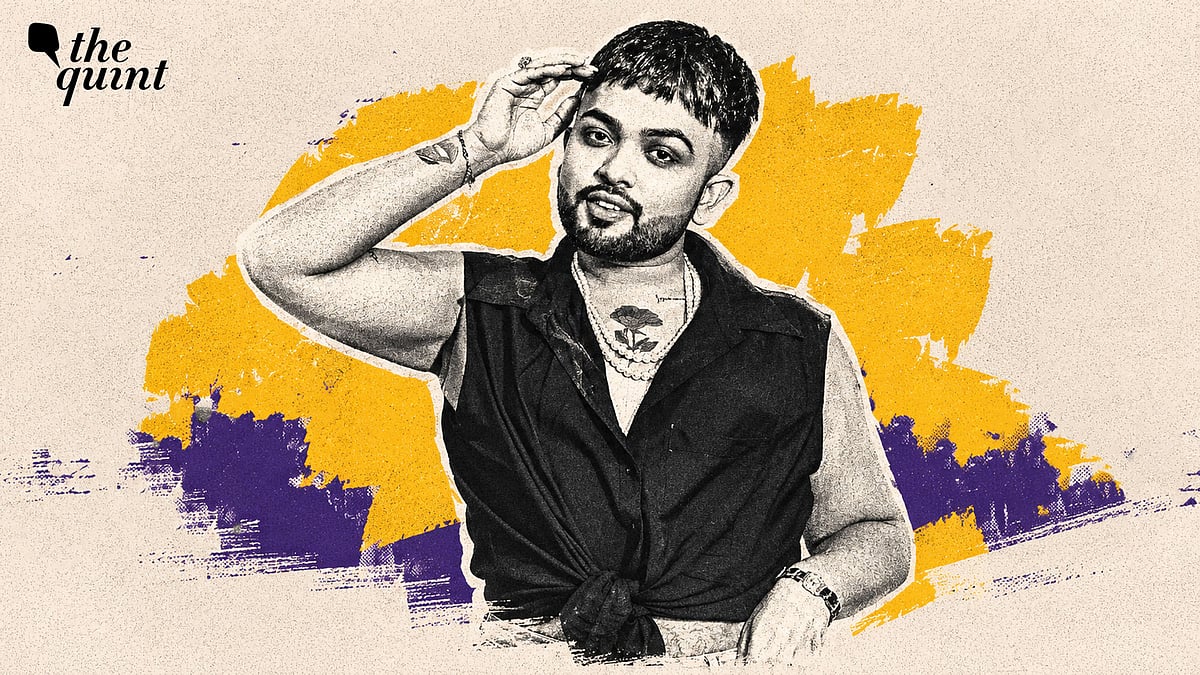
The 3 October killing of Punjabi influencer and makeup artist Mad Sandhu in Amritsar is not just another crime story. It is a tragedy that forces us to confront the kind of society we are becoming, and the conditions in which LGBTQIA+ people continue to live.
According to the police, a contract-killing angle is being investigated, and two people have been detained for questioning. Investigators are examining possible links to criminal networks and trying to establish who was behind the shooting. The investigation is ongoing, and the facts must emerge through due process.
But while the police investigate the crime, society must also confront the prejudice and hostility that shape the lives of people who are different from what it considers acceptable.
Mad Sandhu was openly gay and among the prominent LGBTQ+ personalities in the region. He worked as a makeup artist, appeared on podcasts, and spoke about makeup, the entertainment industry and gender issues.
Like many people who challenge conventional ideas of masculinity and gender expression, he was also subjected to trolling and homophobic comments.
Culture Wars Kill
Homosexuality is not new to Punjab or India. LGBTQIA+ people have always been part of our society, even when social conventions have forced many to conceal their identities. The problem is not their existence but our refusal to acknowledge it without ridicule or hostility.
Whatever the investigation ultimately reveals, no person’s sexuality or gender expression can justify discrimination, humiliation, or violence. Religion should not be invoked to deflect from the need to examine hatred and intolerance wherever they exist.
The consequences of intolerance extend beyond individual incidents. When LGBTQIA+ people fear revealing their identities, some enter marriages concealing who they are, often under enormous family and social pressure. Such situations can leave both partners vulnerable to years of emotional distress.
No one should be forced to come out before they feel safe, but no one should have to live in fear of being themselves either. The answer is not to ask queer people to hide. It is to build a society in which they can live openly, if they choose to, with dignity and security.
If protecting Punjab’s values is the objective, why do we not speak with the same urgency about gun culture, violent crime and sexual violence against women and children? These are serious threats to the safety and dignity of people in our society.
Someone choosing to live differently does not destroy a culture. Violence, hatred and the belief that we have the right to control or punish another person do far greater damage.
The Turning Tide of Public Acceptance
In its 2018 Navtej Singh Johar judgment, the Supreme Court decriminalised consensual same-sex relations between adults. Yet legal recognition has not automatically translated into social acceptance. LGBTQIA+ people continue to be mocked, judged, and discriminated against simply for being themselves.
We speak about inclusion while ridiculing people for their clothes, voices, appearance, sexuality or gender expression. We celebrate diversity in principle but often refuse to accept it when it appears in our own homes, neighbourhoods, and communities.
Sometimes, when we see someone on social media, we forget that there is an entire life behind the screen. Mad Sandhu was not merely an influencer or a makeup artist. He was someone’s son. There is a mother who has lost her child, a family that must now live with an absence that cannot be filled, and friends and loved ones who are grieving a loss that no social media post can repair. If he was also contributing to his family’s livelihood, the tragedy may carry an economic loss alongside the immeasurable personal one.
A headline lasts for a day. A family’s grief does not.
Photographs are shared, emotional tributes are written, and people speak about courage, humanity and acceptance. But the person who might have needed that kindness will never see those messages. Why do we wait until someone is gone before giving them the respect they deserved when they were alive? Acceptance means very little if it arrives only after a person’s death. If we genuinely believe that everyone deserves love, dignity and respect, we must demonstrate it while they are here to receive it.
Online Actions Have Offline Consequences
A society should be measured not only by how faithfully it preserves its traditions, but also by how safely and respectfully it allows every human being to live. We do not have to understand every person’s life to recognise their dignity. A person does not have to live like us to deserve the same right to live safely.
We also cannot ignore the role of social media in shaping public attitudes. Trolling has become so normalised that people often forget there is a real human being on the other side of thescreen. A comment may take five seconds to write, but its consequences can stay with someone for much longer.
Humiliation is routinely disguised as humour, and cruelty is excused as an expression of opinion. The freedom to express an opinion cannot mean that we abandon all responsibility for how we treat others.
At the same time, we must be careful not to treat unverified social media claims, including posts claiming responsibility for a crime, as established facts. The investigation must establish what happened, who was responsible and whether there were earlier threats or warnings. Public anger is understandable, but justice must be based on evidence.
The investigation into Mad Sandhu’s death must be allowed to take its course, and everyone found responsible must be held accountable under the law. The public has a right to expect a thorough investigation that establishes why he was targeted, who planned and carried out the crime, and whether any earlier threats were ignored. Justice means finding the truth, not simply finding someone to blame.
When Did We Lose Kindness?
But justice must also prompt us to examine the social conditions in which prejudice flourishes. We cannot respond to a tragedy with condolences and then return to the same habits of ridicule, exclusion and intolerance. We cannot mourn someone in public while remaining complicit in the everyday cruelty directed at people like them.
Mad Sandhu should not have had to die for people to remember that he was a human being. He should not have needed a tragedy for people to talk about acceptance, nor thousands of condolence messages to establish that his life mattered.
We do not have to agree with everyone. We do not have to understand everyone’s choices. But we must understand one fundamental truth: every person deserves to live without fear of being harmed for who they are.
Perhaps the biggest lesson from this tragedy is not only that we must demand justice after a murder. It is that we must learn to extend dignity, compassion and humanity before another life is lost.
(The author is a student of Khalsa College. This is an opinion piece and the views expressed are the author's own. The Quint does not endorse or is responsible for them.)