Devotees Ask Modi—Why Kill Cockroaches AND (Not IN) Delhi Gymkhana?
PM's devoted cohorts for 12 years—the Hindu/Hindi middle class & youth—have been thrown into confusion by two bans.
advertisement
Prime Minister Narendra Modi’s political tsunami hit India in May 2014. Two undercurrents had powered the storm that gave India its first majority government in 25 years. The Hindu-dominated, Hindi-speaking middle class was yearning for India to fling away a “middle income, middle aspiration” yolk. And India’s young voters were restlessly flailing for optimism and opportunities.
Modi spoke the language of disruptive change—not a continuum, but a decisive break from the glacial pace of the past. His invocation of achche din (upcoming good days) became the rallying cry that would make India great.
Make India Great 'Again'—A Strategy of Revivalism
Once in power, Modi added “again” to his “make India great” spiel. He excited a raw nationalism—as much backward as forward looking—among his core constituencies, the middle class and youth. He effectively wove revivalism, ethnicity, and religion into his brand of nationalism. India was ready to banish “centuries of slavery”, he thundered. With one stroke, he equated Muslim marauders like Ghazni, Ghori, bin Qasim, and Taimur with the stable Sultanates and Mughals—and with imperial colonisers like the British and Portuguese. All of them were othered as “foreign rulers” who had stifled the “native Hindu spirit of pre-slavery India”.
Modi spoke relentlessly about India’s glorious “pre-Muslim, pre-British” past—about ancient philosophies, medicine and surgery, yoga, Vedic mathematics, and scientific achievements that were, alas, crushed by the “invaders”.
Making India Great “Again” became a mission of retributive Hindu pride. Thus, a new nationalism was synthesised—proud to be a Hindu Indian, consumed by a raging desire to “reclaim” past glory in the 21st century, and suspicious, even inimical, towards non-Hindu citizens whose ancestors had ravaged “my land".
Modernism, aspiration, and global applause was the second strand of this “proud national re-awakening”. Rousing rallies at Madison Square Gardens and Royal Albert Hall—symbols of “western supremacy” now in thrall to Modi’s new India—followed by the most powerful man in the world at Howdy Modi in Texas—segueing into supremely confident spectacles of G-20 and Artificial Intelligence Summits, with commanding world politicians and tech superstars paying court to the Indian prime minister—these and other choreographies created the aura of a resurgent, assertive nation, packaged into the masterful logo of vishwaguru (global leader).
India’s Hindu/Hindi middle class and youth were now sharply cleaved into two blocks.
By 2019, this Modi cohort had become unbreakable, giving him an even bigger mandate. While there was anecdotal evidence that his youth brigade was getting restive—as evident in the electoral setback of 2024 the—Hindu/Hindi middle class remained undiminished in bhakti (worship).
Fracture Inflicted by Cockroaches & Delhi Gymkhana
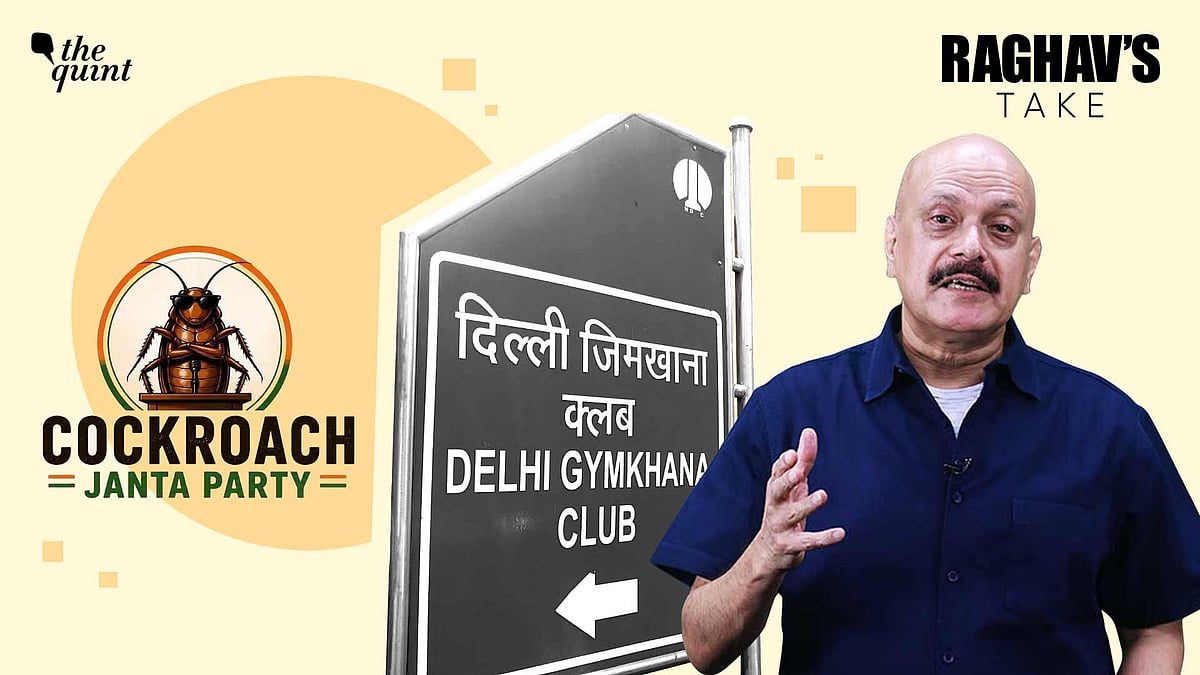
But exactly 12 years after Modi’s tsunami, two strange things happened in the second half of May 2026. In an unguarded moment, India’s chief justice called unemployed youth with fake legal degrees “cockroaches”, who used social media and sensational activism to target opponents unscrupulously. While the chief justice laboriously clarified the limited context within which he had called young Indians “cockroaches”, the damage could not be corked.
India’s youth bulge exploded in angry satire. A Boston-based former Aam Aadmi Party (AAP) activist floated the Cockroach Janta Party on digital media, using sarcasm to protest a status-quoist establishment. India’s young gave a wild and fantastic response. Within a few days, nearly 25 million signed up on Instagram, breaking all previous world records (beating even the legendary Christian Ronaldo!).
Another fire got lit in Lutyens Delhi when Delhi Gymkhana Club (DGC), the iconic century-old bastion of civil servants, military officers, and influential public figures—and their offspring—was instructed to shut and hand the land over to the Modi government, within a fortnight! Besides being a wonderful club with history and pedigree, DGC is entirely peopled by an upwardly mobile middle class. While an exact statistic does not exist, it would be a fair wager that like peers elsewhere, a large fraction of DGC’s members must have been Modi supporters. Now suddenly, their favourite watering hole was being drained and swamped by their hero. For many, it must have been terribly disorienting.
So, what’s the point I am trying to make? An elementary, albeit substantial, one. Prime Minister Modi’s devoted cohorts for 12 unshakeable years—the Hindu/Hindi middle class and youth—have been thrown into confusion by two bans slammed in quick succession, within a week of each other. An outlawing of the “menacingly” burgeoning throng of young cockroaches. And a prohibition on gatherings at DGC.
Perhaps the government should have left cockroaches and DGC alone, at large; and as an exercise in civic hygiene, cleansed all cockroaches in Delhi Gymkhana Club, i.e. a public-spirited display of pest control.