
Is Pakistan Escalating Conflict to Engineer Regime Change in Afghanistan?
As India's ties with the Taliban continue to grow, so does Pakistan's grievances, accusations against the Taliban.
advertisement
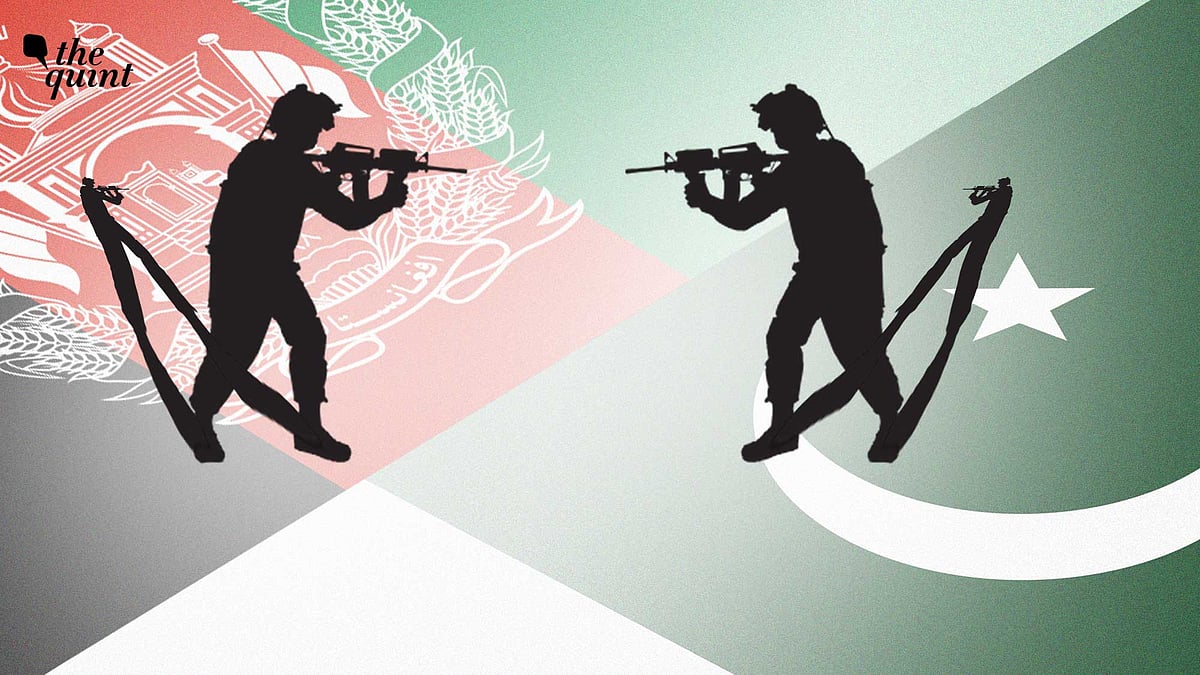
Renewed violence has broken out between Pakistan and the Taliban, after a couple of months of relative calm, and just when a thaw had begun.
Last Sunday, Pakistan conducted air strikes in the border regions of Paktika and Nangarhar. These, it said, were in response to a series of attacks and suicide bombings inside Pakistan. Some were claimed by ISIS-KP (Islamic State-Khorasan Province). Clashes resumed on Wednesday night in the Khyber border region, with exchanges of heavy gunfire at multiple points.
At the time of writing this, the Taliban had announced that they had begun large-scale offensive against Pakistani military outposts along the Durand Line, which included the use of Afghan airforce.
Militant Safe Haven or Strategic Pretext?
Islamabad has repeatedly alleged that militant groups operate from Afghanistan territory. The Taliban deny this claim. They have consistently maintained that they will not allow Afghan soil to be used against any other country and continue to deny the presence of armed groups operating freely within the country.
They point out that the total closure of the border impeded even the movement of goods, let alone people and militants; Pakistan's allegations were, hence, impossible. Such claims and counter-claims have become routine. The Taliban also say that Pakistan has furnished no proof of such claims.
Nevertheless, Pakistan's attacks came at a particularly consequential time. Relative peace had prevailed following a ceasefire brokered by Qatar and Turkiye after the October hostilities, which had broken out between the two in a similar manner and on the same pretext.
In fact, just a few days before Pakistan's operations, the Taliban had returned some captured Pakistani soldiers to Pakistan, while Pakistan had allowed some Afghan goods to be transported to its warehouses. It seemed that bilateral ties were on a mend when Pakistan struck.
Pakistan’s Internal Security Pressures
On the other hand, Pakistan has been embroiled in an ever-escalating and a ruthless conflict with Baloch separatist groups. The region is also bracing itself for a US attack on Iran, which many believe is imminent.
Of course, in the immediate, the renewed conflict helps focus attention away from Pakistan's inability to ensure internal security.
The Regime Change Suspicion
But there is another more incendiary plausibility. Afghans and sources within the Taliban have long alleged that given Pakistan's inability to dictate to the Taliban, it is looking for a regime change there.
Meanwhile, Pakistan continues to allege that the TTP, and Baloch groups, backed by India, are behind all terrorist attacks in Pakistan, even as it faces a surge in militant violence, with over 5,000 terror incidents reported in 2025. As India's ties with the Taliban continue to grow, so does Islamabad's grievances and accusations against the Taliban.
The Taliban earlier have also alleged that as it's diplomatic heft and outreach to countries increase, so does Pakistan's attempts to tarnish its reputation internationally. Reports in Pakistani media consistently focus on the subject of the existence of different militant groups there, many of which the Taliban deny.
Some months ago rumours of a regime change began swirling, again much of it originating from Pakistan. Pakistan has also been engaging with the main Afghan opposition groups like the National Resistance Front and the Afghan Freedom Front (AFF), as well as other opposition groups, all of whom want to see the Taliban overthrown.
Taliban’s Growing Regional Legitimacy vs Global Alarm
When attacks on Chinese nationals working in Tajikistan from Afghan soil mysteriously occurred just when the country had started normalising relations with the Taliban, the Taliban offered joint patrols prevent such attacks in future.
Pakistan seized the opportunity to warn about the dangers of a Taliban-ruled Afghanistan, which was proving to be a threat to its neighbours. However, no other neighbour of Afghanistan has faced any threats from its territory over the past four years, ever since the group took over Kabul.
The latest attacks came when Taliban finds itself somewhat on the backfoot. It's trade and diplomatic relations continue to grow. Kuwait is the latest country to announce it was handing over the Afghan diplomatic mission there to the Taliban. Just before that an Uzbek delegation held talks with the Taliban to promote bilateral trade to $5 billion; Iran has offered cooperation in agriculture and irrigation, while Turkmenistan has been in talks regarding the TAPI (Turkmenistan-Afghanistan-Pakistan-India) gas pipeline, testifying to growing regional cooperation and integration.
However, the Taliban’s recent adoption of a new criminal codex has drawn worldwide condemnation, with allegations of gender apartheid and legalisation of slavery and violence against women. Added to that has been a UN Security Council report this month, which said that international terrorist groups continue to operate freely across Afghanistan, with key leaders of Al-Qaeda and Uyghur militant movements present in the country and, in some cases, expanding their activities with Taliban acquiescence.
Russia has also reportedly warned that 20,000 terrorists continue to remain in Afghanistan, creating a fragile security system. (Needless to say, the Taliban has denied this). All these create a perception of a fragile state, which does not have full control over all its territory, and continues to pose a serious threat to others in the region. After all, no country except Russia has extended official recognition to it. Provoking a conflict with it, at this point of time, together with accusations of shielding terrorists, would add to that perception globally, and create a solid ground for a regime change there.
A Conflict That Could Spill Beyond Borders
There is yet another layer of complexity which was added by Zabihullah Mujahid, the official spokesperson of the Taliban. Soon after Afghanistan launched its offensive, Mujahid told Al Arabiya in an interview that Pakistan's objectives were "....aimed at destabilising the region....." and that this is an "external mission assigned to them by a major power" to create insecurity and ignite conflict.
It is most probable then, as Tam Hussein of the US-based New Lines Magazine, wrote in November, quoting Pakistani military sources, "....the Rubicon was crossed when the Taliban’s foreign minister, Amir Khan Muttaqi, visited Delhi ...........with the Taliban cultivating closer ties with India, Islamabad is already planning regime change..."
India, incidentally, was the only country to condemn Pakistan's actions. Pakistan has also retaliated to the Afghan offensive, which began last night. We may be looking at a prolonged conflict which may not remain localised and may inflame an already fragile region. At the heart of this lies regime change and Islamabad 's desire to control Kabul.
(The author is an award-winning journalist specialising on Eurasian affairs. This is an opinion piece and the views expressed above are the author’s own. The Quint neither endorses nor is responsible for the same.)
- Access to all paywalled content on site
- Ad-free experience across The Quint
- Early previews of our Special Projects
Published: undefined