
Khula Without Consent: Why Muslim Women Still Can’t Exit Marriage Freely
The question is no longer just about religious interpretation, but about the absence of a statutory safety net.
advertisement
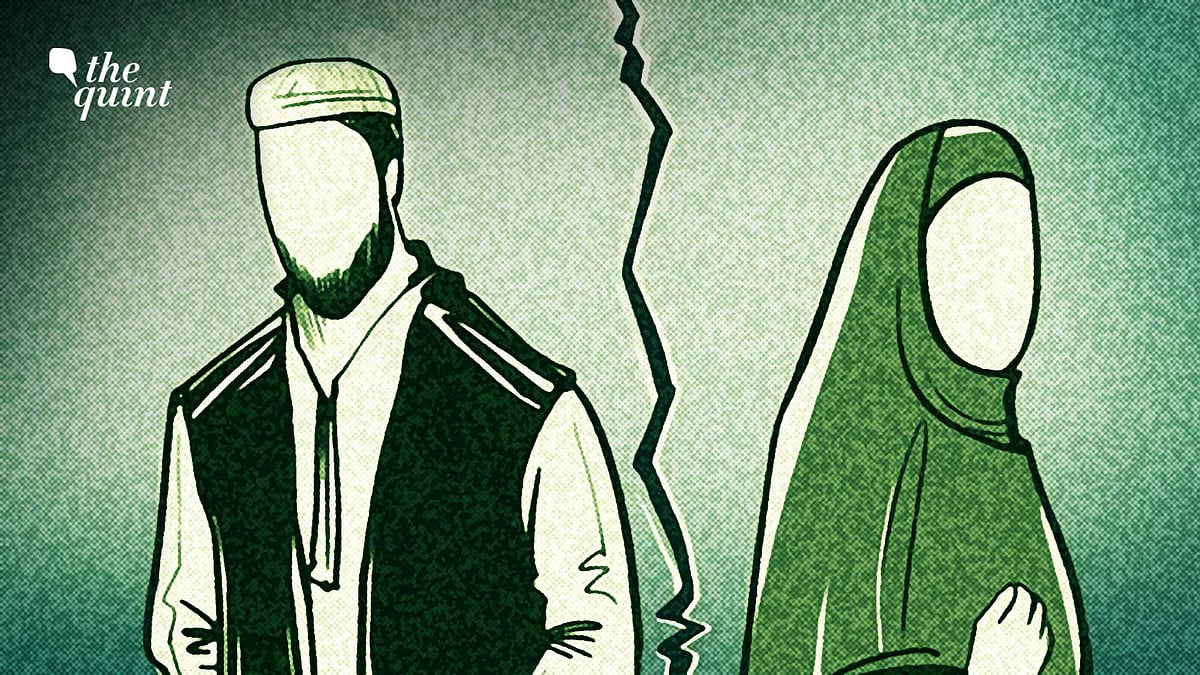
The discourse surrounding Muslim women’s rights in India has reached a pivotal juncture. While the spotlight often focuses on the injustices of instant triple talaq, a more pervasive, silent struggle continues in the shadows: the right of a woman to unilaterally dissolve her marriage through Khula.
Islamic law, in its progressive essence, grants women this right to seek separation. However, the practical realisation of this right in India remains entangled in patriarchal interpretation and procedural deadlock.
The 2021 judgment by the Kerala High Court by the Division Bench of Justice A Muhamed Mustaque and Justice CS Dias stood as a beacon of progressive thought in this landscape until now when the matter has gone into appeal, and is for consideration by the Supreme Court.
The Kerala High Court significantly declared that a Muslim woman's right to terminate her marriage is an absolute right conferred by the Holy Quran, and is not subject to the whimsical acceptance or consent of her husband.
As the Supreme Court prepares to hear the crucial appeal, the question is no longer just about religious interpretation, but about the absence of a statutory safety net. The time has now come to ask that if a woman can seek maintenance under Section 125 of the Code of Criminal Procedure (CrPC) to secure her future, why can she not seek a decree of divorce through a similar summary mechanism when her husband refuses to let go for years?
Understanding Khula in Practice
In Islamic jurisprudence, Khula (derived from Arabic, meaning "to lay down" or "to take off") is the right of a woman to seek divorce from her husband in exchange for a consideration, usually the return of the dower (mehr) or other material gains received during the marriage. Unlike Talaq, which is the unilateral right of the husband to pronounce divorce, Khula is the corresponding right of the wife.
It is rooted in the Quranic verse (Chapter 2, Verse 229), which permits a woman to "ransom herself" from the marriage contract when the parties fear they cannot maintain the limits set by Allah. It is distinct from Faskh-e-Nikah, which is a judicial dissolution granted by a court or Sharia council on specific fault grounds like cruelty or impotence; or Tafweedh-e-Talaq, where the power to divorce is delegated to the wife by the husband at the time of the marriage contract.
Marriage as Contract, Not Sacrament
In many cases, the husband does not agree to give Khula to the wife. She is then left to do nothing but to compromise by withdrawing all the cases filed against the husband under Indian laws. This process not only humiliates the wife, but also dilutes the remedy provided to her even in Islamic law, because the intention of the law was never to make the woman wait, humiliate, and run from pillar to post. The idea was to give her a right to ask for divorce, and in return, she gives up the mehr.
Islamic scholar Professor Hussain, writes in Understanding Islamic Law (Sharia), “Marriage is a contract, not sacrament, as it is in Hinduism and Christianity. However, the contract does have religious overtones. Although it is not strictly essential, in most cases there will be some religious ceremonies associated with the marriage. Also, many of the rules and principles pertaining to marriage are laid down in the Quran and elaborated on in the Sunnah of the Prophet.”
Courts Over Clergy
The Kerala High Court judgment paved the path for women to file for divorce before the courts, rather than approaching the clergies—who are known to make it worse in states like Uttar Pradesh, Madhya Pradesh, Bihar, Maharashtra, and others.
The court observed that the will of the wife cannot be "related to the will of the husband" who may not be agreeing to the divorce.
In a powerful repudiation of the orthodox stance, the bench even noted that the review petition against their original judgment appeared to be "fashioned and supported by clergies and the hegemonic masculinity of the Muslim community who are unable to digest the declaration of the right of Muslim women”.
The Kerala High Court meticulously dismantled the argument that a wife must always seek the husband's consent or approach a qazi (religious judge). It held that while reconciliation is desirable, the procedure adopted in a specific historical context (the famous Hadith of Jamila) cannot become the general law that abrogates the substantive right granted by the Quran.
The court emphasised that a qadi acts as a guardian, and in the modern state, a secular court cannot assume the role of a guardian over an adult, able woman. Therefore, if there is no dispute to adjudicate—if the woman simply wants to exercise her will—the court cannot refuse to recognise her Khula merely because the mechanism for it is absent.
The bench clarified that a Khula is valid if the wife declares repudiation, offers to return the dower, and an attempt at reconciliation precedes the declaration.
Between Judgment and Reality
The court said the Muslim women in India are confronted with a situation where no solution would be available to them to effectuate this right, conferred on her by Quran, if the arguments of the review petitioner are accepted.
"In the absence of any other method in the manner suggested by the counsel for the review petitioner and others, to effectuate the right conferred on Muslim women being prevalent in this country, the court's authority in conferring upon Muslim women the right to invoke Khula at her own will, will have to be respected," the court added.
In my own practice, I have personally encountered numerous cases where the theory of Khula clashes with the patriarchal practice. I have represented women who have been waiting for years, trapped in marriages that exist only on paper, because their husbands refuse to pronounce the word "Talaq" or consent to Khula.
Ex-Parte Justice Denied
These women approach Dar-ul-Qazas or religious bodies, hoping for a resolution. However, what they often face is a system that mirrors the same gender bias it is meant to regulate. In many instances, when the husband fails to appear despite multiple notices, these religious forums refuse to pass even an ex-parte order of divorce.
The woman is left in a legal purgatory—neither married (in essence) nor divorced (in law)—simply because the husband knows that by absenting himself, he can indefinitely prolong her suffering and deny her the freedom to move on with her life. This inaction stands in direct opposition to the Quranic spirit of removing hardship from believers.
Consent Cannot Control Freedom
This is precisely where the analogy with Section 125 of the CrPC becomes not just relevant, but urgent.
It is a piece of social welfare legislation designed to prevent destitution and vagrancy. It provides a summary remedy for wives, children, and parents who are unable to maintain themselves. The beauty of Section 125 lies in its summary nature and its disregard for the husband's obstinacy.
If a husband has sufficient means and neglects to maintain his wife, the court can pass an order for maintenance. The husband cannot defeat the claim simply by refusing to participate in the proceedings or by refusing to "agree" to pay. The law provides a mechanism to enforce the right regardless of his consent. Courts have even held that the purpose of this maintenance is to ensure the "continuity of living" and the lifestyle the wife was accustomed to, not merely to provide bare subsistence.
We must apply this logic to the trauma of a broken marriage.
If a woman can prove that the marriage has irretrievably broken down from her end—that she fears she cannot live within the limits of Allah with this man—why should her freedom be contingent upon his consent?
The Kerala High Court rightly pointed out the absurdity: the husband refuses to give Talaq, the wife moves the court, and then what? The court is not a guardian to pronounce divorce on her behalf. This creates a legal vacuum.
If we can have a statutory mechanism to force a recalcitrant husband to pay money (maintenance) to a wife he refuses to support, we must also have a statutory mechanism to sever a marital tie that he refuses to honour.
Beyond Fault-Based Divorce
The proposed remedy is not about interfering with the Muslim Personal Law; it is about supplementing it with procedural justice.
The Dissolution of Muslim Marriages Act, 1939, provides for divorce on specific fault-based grounds, but it does not adequately address a no-fault, unilateral Khula where the husband simply refuses to cooperate. Just as the courts have expanded the scope of Section 125 to protect the dignity of women, they must recognise that dignity also includes the right to exit a dead relationship.
A civil court, exercising jurisdiction under the secular laws of the land, must be empowered to hold an inquiry, confirm that the woman has returned her mehr or whatever consideration is required, and if satisfied that reconciliation has failed, issue a decree of dissolution. This would not be acting as a qazi, but as a guarantor of fundamental rights and gender justice.
Tahir Mahmood, in his book, Supreme Court on Muslim Law, has rightly argued that unfortunately in India, the so-called ‘Triple Talaq’ had become the common practice in the distant past and remains the only form of divorce by men.
“People are generally ignorant of the lawful talaq procedure mentioned above, and the theologians insist on giving legal effect to the unlawful talaq pronounced by them in ignorance of the authentic law of divorce. The issue before the Constitution Bench of the Supreme Court in this case (Triple Talaq) was the alleged repugnance of the practice of Triple Talaq to various provisions of the Constitution of India.”
Judiciary at a Crossroads
This matter on judicial clarity about Khula is now listed before the Supreme Court for hearing on 22 April. The court’s intervention is crucial, but it must look beyond the narrow confines of theological debate and address the ground reality of institutional failure.
In my view, the Supreme Court may look at the larger picture, and not only what has been written by jurists. There should be a ‘legal’ remedy for instances wherein the women are left to just wait.
It is an open question whether the court will it bow to the pressure of "hegemonic masculinity" and insist that a woman's freedom requires a man's permission slip or it will follow the progressive lead of the Kerala High Court and build a robust, equitable framework that recognises the autonomy of Muslim women?
In doing so, the court need not rewrite the Quran; it merely needs to provide the mechanism that is sorely missing—a mechanism akin to Section 125 CrPC—that allows a woman to reclaim her life, not on the mercy of her husband, but on the strength of her own will, recognised and enforced by the law of the land.
(Areeb Uddin Ahmed is an advocate practising at the Allahabad High Court. He writes on various legal developments. This is an opinion piece and the views expressed above are the author’s own. The Quint neither endorses nor is responsible for them.)
- Access to all paywalled content on site
- Ad-free experience across The Quint
- Early previews of our Special Projects
Published: undefined