
How Israel's Political Fate is Being Decided by US Voters
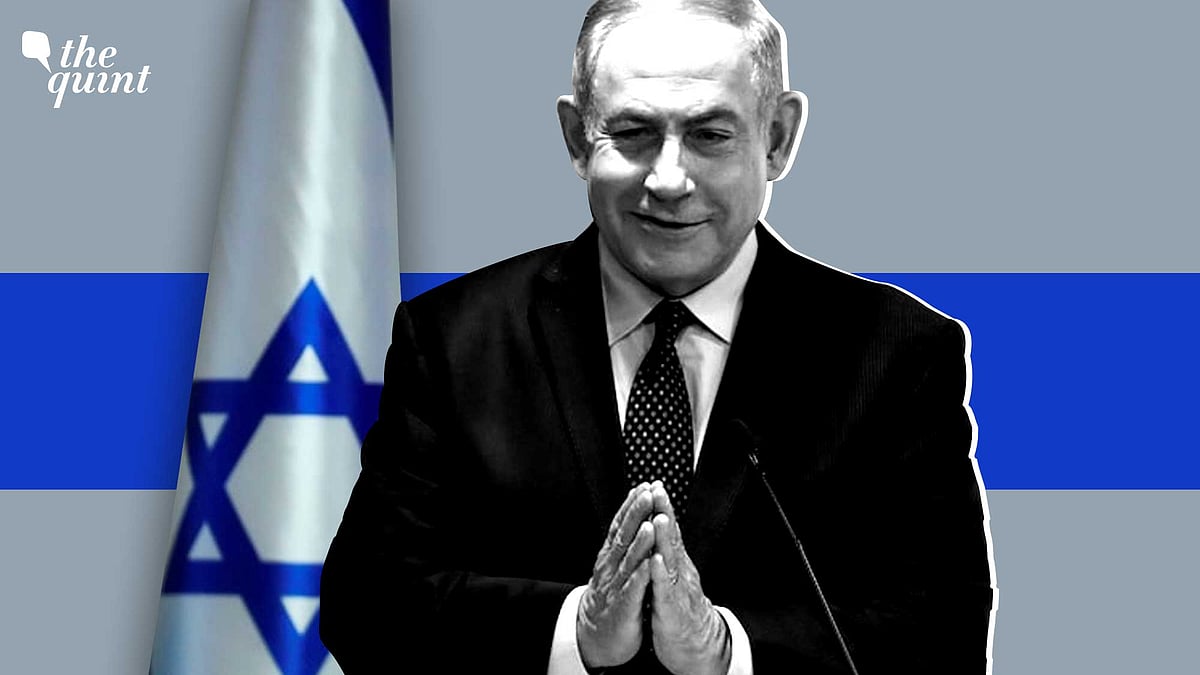
A Democratic victory in the US midterms will undermine Netanyahu’s political leverage, writes Bharat Bhushan.
advertisement
The deadlock in government formation in Israel is unlikely to be resolved soon.
While Benjamin Netanyahu has lost his parliamentary majority (winning 53 seats out of a total of 120), the Opposition alliance led by former army chief Gadi Eisenkot (48 seats) is yet to demonstrate its ability to cobble together a majority. A clear majority requires 61 seats.
The coalition of Arab-led parties scored an unprecedented 19-seat victory. However, the Jewish parties are reluctant as of now to seek their help to form a government, with both Netanyahu and Eisenkot having aggressively ruled out such a prospect during their campaigns.
After the election results, Eisenkot has set out four conditions for the Arab-led parties to join his government, which they would find difficult to meet. They are:
The recognition of Israel as a Jewish, democratic, liberal, and egalitarian state
Accepting the principles of Israel’s Declaration of Independence
Accepting compulsory military service
Recognising Hamas as terrorist organisation and support dismantling of its capacity to govern in Gaza.
Eisenkot Vs Netanyahu
Fundamentally, Eisenkot is a security hawk. He does not present an alternative to Netanyahu’s security doctrine and is as opposed to the creation of a Palestine state as his political rival.
Their differences are more about the conduct of foreign policy—whether it should be transactional and personal, or institutional and bipartisan. And their domestic differences relate to governance, independence of the judiciary, uniform military conscriptions and the conduct of war. In Gaza, Eisenkot wants a defined end-point to the conflict while Netanyahu favours a tactical, open-ended approach. Netanyahu’s governing perspective is far-Right and Eisenkot’s Centre-Right.
When election results are presented to President Isaac Herzog on 4 November, presidential consultation with the political parties for government formation will begin. However, two crucial external factors will also impact government formation.
Democratic Win Could Weaken Netanyahu
First, the Republican Party in the US risks losing control of Congress. Pollsters indicate that the Republicans may lose both the House of Representatives, where Democrats seem almost sure to win a majority, and the Senate, where they are likely to score a very slender majority (51 seats to 49 of the Republicans).
A Democratic victory will undermine Netanyahu’s key political leverage—guaranteed US military cooperation and continuous supply of weapons and diplomatic cover over in Iran.
Netanyahu’s Likud party and its allies would have to recalibrate their support for Netanyahu and decide whether there are any advantages to remaining tied to him. Continuing to do so would entail inheriting the consequences of a deteriorating relationship with a Democrat-controlled US Congress.
On the other hand, Eisenkot could take advantage of this shift. His core foreign policy argument is that Israel needs bipartisan support in the US, which he believes has been damaged by Netanyahu’s transactional and personal dealing, with half the political spectrum in the US turning against Israel.
He would convince moderate Jewish parties, including defectors from Netanyahu’s alliance, that Israel needs a broad-based, Centrist government rather than one relying on Netanyahu-Trump friendship.
The risk of a hostile US Congress, and the prospect of a caretaker administration in Israel, while the country moves towards another year of an election cycle, may not be something the Israeli public desires. Therefore, both the Jewish blocs may be forced to relook at their red lines and move towards an alternative coalition or a unity government.
Trump's Iran Gambit
Another complicating factor would be a renewed attack on Iran by Trump. He has hinted at this and Washington is reported to have warned several Gulf states of such a prospect. Despite losing control of the Congress, Trump still has the legal and operational ability to launch a war as the defeat does not take away his position as the Commander-in-Chief.
Would a weakened Trump become more or less cautious about launching another war? Given his temperament, he may become more inclined to launch a war to show he remains in control. He may choose renewed war under pressure from Netanyahu as well. There are reports that the two have discussed renewed joint military operations.
In case of a short and apparently successful strike, Netanyahu might regain mojo, claiming that joint-US-Israeli operations against Iran have vindicated his stand (Iran must be prevented from acquiring nuclear capability, etc.). Eisenkot and other Opposition leaders may be reluctant to challenge him when the country was at war. The initiative for government formation may then shift to Netanyahu. He could invite some Centrist figures from the Opposition block to join his Cabinet and form a national unity government.
If, however, the Iranian retaliation is robust and the conflict becomes prolonged, then the confidence of Israelis in Netanyahu may be eroded and coalition formation may take a different turn.
Taken together, these factors point towards the formation of a national unity government with the possible rotation of prime ministers from the two blocs. Without external catalysts, the political deadlock may continue, forcing another election next year, with Netanyahu continuing as the caretaker prime minister till then.
(The writer is a senior journalist based in Delhi. This is an opinion piece and the views expressed are the author’s own. The Quint neither endorses nor is responsible for them.)
- Access to all paywalled content on site
- Ad-free experience across The Quint
- Early previews of our Special Projects
Published: undefined