
IndiGo’s Great Meltdown: How One Airline Brought India to a Halt
Customer retention will become the biggest issue for Indigo going forward, writes Sanjay Lazar.
advertisement
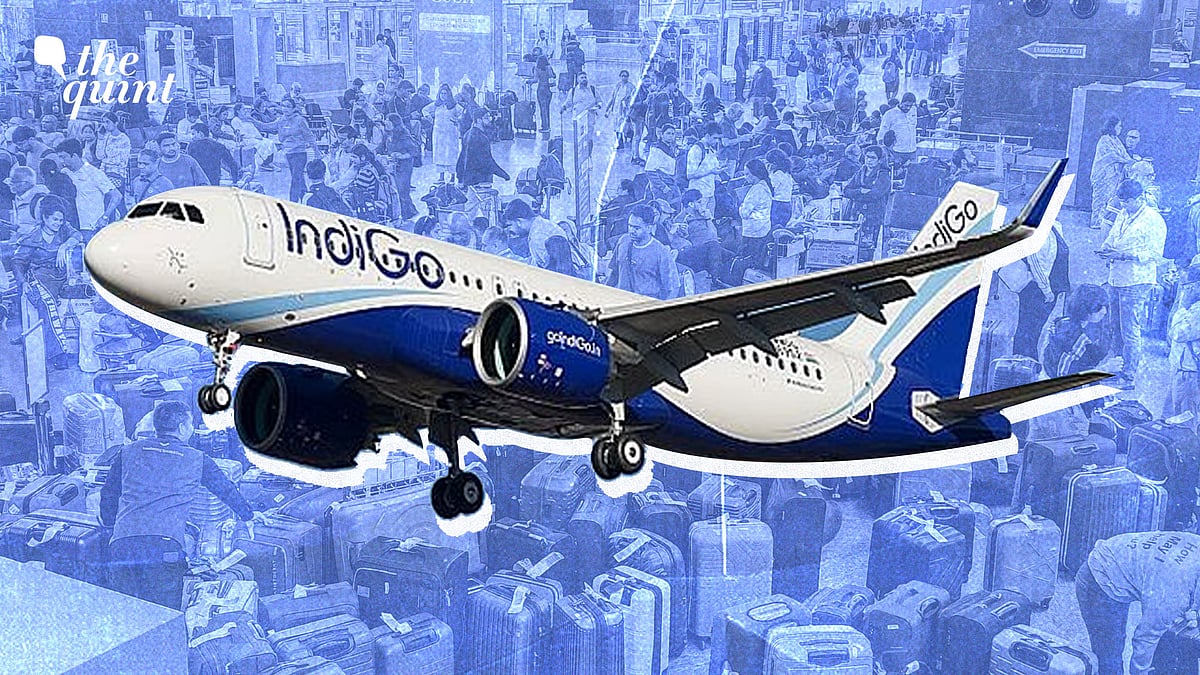
3 December 2025 will now be remembered as the day that India’s aviation collapsed, with IndiGo, the worlds fourth largest airline by market cap, melting down.
Passengers across the country began lining up at airports across India, checking in for their flights and waiting for departures that never came. What followed was chaos, as India’s dominant carrier’s network began collapsing like dominoes. IndiGo is not only India’s largest carrier but was also among the world’s top ten by market capitalisation (until this week’s share crash).
The DGCA on 4 December bent over backwards to accept IndiGo’s demands and grant a waiver until 10 February 2026 over certain clauses of the court-approved DGCA FDTL CAR. The Director General even issued an appeal to all pilot organisations in the country to cooperate during this peak holiday season and ensure the winter schedule ran smoothly.
However, in an absolute shocking move, the Aviation Minister on 5 December came forward to issue a directive staying the entire FDTL regulations issued by the DGCA and the court, throwing the aviation ecosystem into confusion.
Airlines and pilots are now unsure what rules apply — if any do. These orders appeared to come from higher authorities, and the Minister of Civil Aviation has ordered a high-level inquiry to apportion responsibility and punish the errant. Minister Ram Mohan Naidu stated across media that “punishment and penalty are assured”.
Recapping the Nightmare
Alarm bells rang across India, as IndiGo, which controlled 63 percent of India’s network, had clogged up the runways, and passengers had flocked to the terminals and filled them up.
By midnight, more than 350 flights were rumoured to have been cancelled or disrupted. The night time made it worse, as the delays cascaded into one and other, aircrafts did not return, pilots ran out of duty hours, and by Day 2 of the meltdown, more than 1,232 flights were reported cancelled.
The pilots of IndiGo were flummoxed, as they were merely following the newly introduced DGCA FDTL (Flight and Duty Time Limitations) CAR (Civil Aviation Regulation), which came into force on 1 November.
Why Did This Happen?
Pilots and cabin crew globally are governed by FDTL norms, with each country’s regulators setting limits that, broadly, mirror each other. India is a signatory to the ICAO conventions and had to align its FDTL to global standards. India on the other hand, followed some antiquated regulations and this led to much disquiet amongst pilots.
The FDTL battle goes back to 2019, when the Federation of Indian Pilots (FIP) filed a writ petition in the Delhi High Court challenging certain provisions of the FDTL CAR. The matter resurfaced in 2023, and in 2024 the court ordered implementation of the revised CAR. The DGCA argued that airlines needed time, citing pilot shortages, and gave them a year to recruit more pilots.
In early 2025, the matter came up again in court as the DGCA had still not implemented the new CAR. In a contempt petition filed by the Federation of Indian Pilots against the DGCA, the FIP demanded action.
The DGCA then committed to implement phase-1 of the revised DGCA CAR on FDTL by July 2025, and Phase-2 of the revised DGCA CAR by 1 November 2025, after taking concurrence of all airlines for their timelines. That meant the airlines had almost two years from January 2024 to implement the increase in pilots strength etc, the very reason they had sought the first 12 months extension.
The court approved this.
Are These Abnormal Rules?
FDTL rules date back to 1992. As an ICAO signatory, India must harmonise its limits with global safety norms. The revised DGCA CAR aimed to uplift Indian aviation standards using modern fatigue-management principles.
The other misnomer is this is a “new" CAR — it had been in the works for over two years. It was formulated when Jyotiraditya Scindia was Aviation Minister and he had specifically stipulated that India was committed to implementing global safety and fatigue management standards for all pilots and crew in aviation. Airlines have been opposing its promulgation for more than two years now.
This CAR was applicable on all airlines, across the board. So why didn’t Air India, Akasa or Air India Express suffer cancellations, delays, or disruption of this scale?
The other airlines used their two years well and planned pilot recruitments, enhanced training measures, and slotted their schedules as per the framework of the new DGCA CAR and ensured the pipeline of pilots did not dry up. In fact, it was widely reported in the media last year, that Akasa had a problem of plenty as they had recruited heavily and were planning for the new CAR and expansion of routes.
Indigo on the other hand, froze recruitments six months ago and ran an extremely lean operation. This meant less buffer pilots and lower pilot standard force than competitors.
What Is a ‘Standard Force’?
A standard force in aviation parlance is the number of sets of crew required to operate an aircraft over a month. Full-service carriers typically maintain 6.5–7.5 pilot sets per narrow-body aircraft, giving them flexibility during disruptions.
Low-cost carriers run lean at around five sets. That is a very tight ship, as it results in pilots flying much more hours per month. The average utilisation of Indigo pilots is approximately 70 hours on the A-320 family, whereas Air India utilises its pilots at 57 hours average for the A-320 family. It must be noted that the DGCA limit annual limit for pilots is 1,000 hours.
If indeed the shortage was so minuscule, then the disruption could never have been so widespread. Or was it just plain mismanagement, or sabotage of the schedule?
Sources have indicated that the shortage figure could be much higher. This points to a lack of proper surveillance and monitoring by the DGCA.
Schedule and Roster Integrity
Perhaps one of the most important and basic markers of an airline operations is its schedule and roster integrity.
We have it on good authority that Air India, Air India Express and Akasa have tested their winter schedules with the new DGCA CAR rules and are operating them successfully. The Quint reached out to Indigo for comments on the same but they did not respond to queries. This copy will be updated at a response.
Indigo appears to have hugely miscalculated or as some angrily state, “manipulated”, the entire DGCA CAR and chose to try and use the economic route.
Did Indigo Bite Off More Than It Could Chew?
Indigo operated a seven-month summer 2025 schedule with 14,114 flights. For a five-month winter period, it sought approval for 15,014 flights — an increase of 900 flights despite having fewer pilots.
This increased slot operations or seasonal increase in flights is commonly known in airline parlance as slot blocking, to prevent other airlines from occupying or operating those slots, and is meant to drive home their monopoly over the skies.
The DGCA–Indigo meeting on 4 December revealed Indigo had already cancelled 1,000 flights in November. If the regulator knew this, why did it approve an expanded winter schedule? Why not scale it back?
Between 2–4 December, Indigo cancelled 2,000+ flights and another 1,000 on 5 December. On the 5th, it cancelled all flights from Delhi and Bengaluru to stabilise operations.
The DGCA press note post that meeting has stated that indigo will reduce some flights post the 8 December and operate with a reduced schedule until normalcy returns. Indigo, for its part, has stated that it will take until 14 or 15 of December before any semblance of normalcy returns.
DGCA & MoCA (In)Action
An airline that at one time boasted of an almost 90 percent on time record, had crumbled to barely a 20 percent record, which was falling day by day.
In all this, the DGCA and MoCA sat like mute spectators, despite knowing that Indigo had cancelled 1,000 flights in November, and had sought an increase of 900 flights over the winter schedule. Regulatory oversight was either dead, or had failed, or was complicit in the steps leading up to the mayhem.
The DGCA in its statement stated that Indigo cancelled 1,232 flights, with 755 cancellations linked to crew & FDTL constraints (amounting to 61 percent of all cancellations), with 350 more flights cancellations.
The Quint reached out to DGCA for their comments but did not recieve a response. This copy will be updated at a response.
Captain Sam Thomas, the President of the Airline Pilots of India (ALPA), said,
After the entire aviation ecosystem had collapsed, with some airports shutting down and unable to even land planes because of the number of indigo aircraft left marooned without pilots or crew, airfares skyrocketed across India on all airlines and lakhs of passengers were stranded without a hope of getting a flight.
It brings into focus the government’s role in enabling monopolistic behaviour in aviation.
Captain C S Randhawa, the President of the Federation of Indian Pilots (FIP), who was part of the DGCA earlier, told The Quint,
Indigo and the Financial Impact
The current Indigo crisis is among the worst in recent Indian aviation history, and something that has not occurred since the Gulf War impacted aviation over the Middle East.
Indigo is a behemoth that controls 63 percent of Indian aviation. When it sneezes, Indian aviation catches a cold. The crisis wiped off around Rs 25,000 crores of market capitalisation of Interglobe aviation, its parent company, and the stock has been in a freefall.
To answer the conspiracy theorists, there is no owner in the world who would cause such major losses to themselves, merely to change DGCA regulations, which itself would not even cost Indigo even 10 percent of what the airline has lost in value.
Does Anyone Care About Passengers?
Indigo, for its part, issued a profuse apology to all its passengers, apologising for its mistakes and assuring them of a corrective course. That did not seem to convince passengers stranded across the country, though, who had missed important engagements.
Customer trust is a very fragile thread that can snap at any time; hence customer retention will become the biggest issue for Indigo going forward. Another challenge will be rebuilding internal trust as many insiders feel betrayed and exploited.
This brings into focus the lack of proper passenger protection in India, unlike the European nations. India needs a stronger passenger charter. It is time for citizens to come together and litigate or agitate for a stronger passenger charter.
The DGCA must look long and hard at this mayhem, because it has affected economic and passenger activity nationwide, given that Indigo is a dominant player. India is the fastest-growing aviation market on earth, yet we lack adequate an DGCA workforce to police the skies, as well as strong passenger charter. One can only hope the government gives this issue the importance it deserves.
(The author is is an aviation analyst, lawyer, and author, who has spent 40 years in aviation. He can be reached at @sjlazars. This is an opinion piece. All views expressed are the author’s own. The Quint neither endorses nor is responsible for them.)
- Access to all paywalled content on site
- Ad-free experience across The Quint
- Early previews of our Special Projects
Published: undefined