
IndiGo Crisis: When Paying Is Not Enough
The IndiGo disruptions mark a sudden expansion in who is forced to experience deprivation.
advertisement
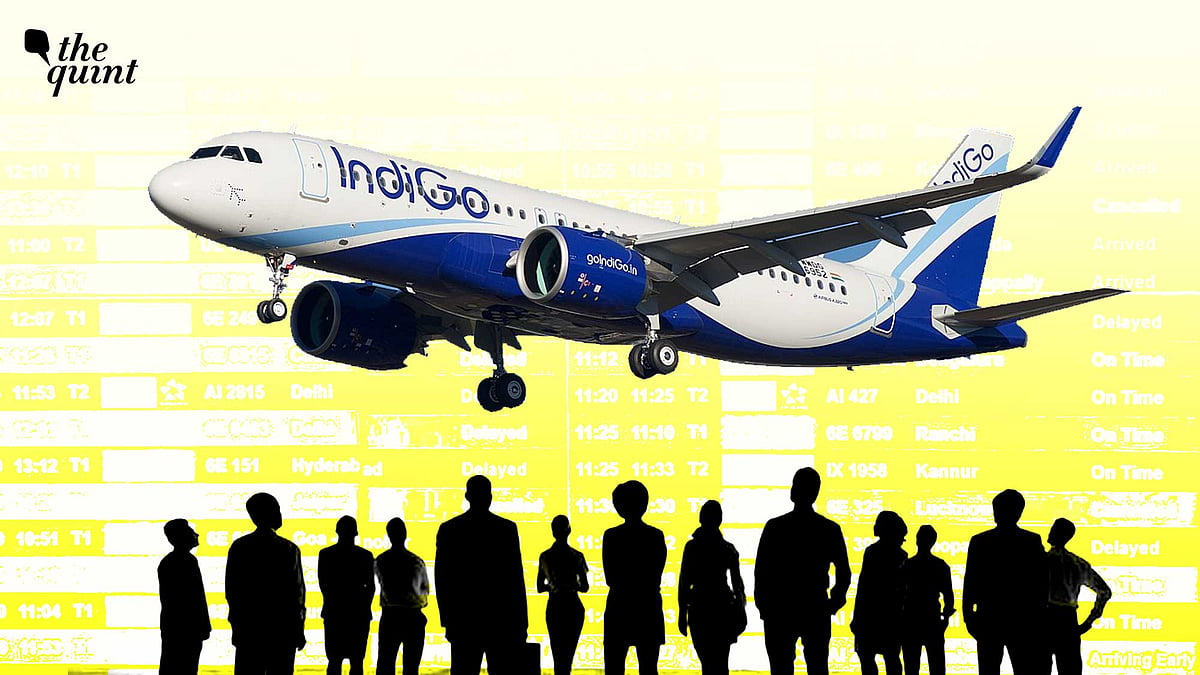
The recent disruption of IndiGo flights across Indian airports has been widely discussed, debated, and described as a case of operational and regulatory failure. But this reading misses the deeper significance of what unfolded.
What thousands of passengers experienced was not merely delay, discomfort, or poor service. It was the sudden collapse of a taken-for-granted freedom: the ability to move with dignity after having paid for it.
Nobel Laureate Amartya Sen’s capability approach helps clarify what was at stake. Sen argued that deprivation is not defined by income alone but by the denial of capabilities, the real freedoms to do and be what one has reason to value. His famous example of the inability to afford leather shoes was never about consumption. It was about dignity, visibility, and social participation. The deprivation lay not in being shoeless, but in being excluded from public life because of it. Capability, in Sen’s framework, is always about whether formal access translates into lived freedom.
Air Travel as Capability, Not Commodity
The IndiGo disruption is a textbook case of such a failure. Air travel in contemporary India is no longer an elite indulgence; it is a routine necessity for employment, education, caregiving, and medical emergencies.
But is this experience truly unfamiliar, or unfolding for the first time in India? We have grown up reading about the gap between having money (purchasing power), the right to purchase, and actually being allowed to use products and services.
Ambedkar captured this long ago in his autobiographical text having money was not enough to secure even basic access to mobility. Amartya Sen’s Capability Approach further helps us see why such moments matter: freedom is not just about income, consumption capabilities or market access, but about the real ability to avail and consume a service.
In his work, he uses the example of being unable to wear leather shoes to show that deprivation is not about purchasing power alone, but about being allowed to wear those shoes in public, which is more often than not an outcome of income or consumption capability. Ironically, classical economists confuse between ability to purchase and the ability to use post-purchase. That's where conventional global economic metrics failed; consumption capabilities do not usually mean social emancipation.
When Middle Class Immunity Breaks Down
What distinguishes the IndiGo episode is not the nature of the deprivation but its distribution. These capability losses usually occur in fragmented, socially segregated ways, affecting groups whose suffering has been normalised and rendered politically invisible.
The airline disruption, however, temporarily exposed the same logic to the petty bourgeois and professional middle classes, those who ordinarily assume that payment, contracts, and consumer status guarantee protection.
When capability denial occurs en masse, affecting socially visible constituencies at the same time, it ceases to be treated as routine hardship and instead appears as a scandal. This explains both the outrage and the confusion that followed.
Many experts framed the episode as a failure of service or governance mismanagement, unable to recognise it as a familiar structural condition. Contemporary policy discourse, which dismisses welfare concerns as “freebies” while treating privatisation as efficiency by default, offers little language to understand such experiences.
Sen’s work is often caricatured as moral indulgence precisely because it unsettles this logic, insisting that markets do not automatically secure freedom. The IndiGo fiasco exposes the poverty of a framework that equates payment with rights and efficiency with dignity.
Mobility as a Precondition of Social Participation
The broader implication is unmistakable. Mobility, like health or education, is no longer just a service; it is a condition of participation in contemporary social and economic life.
When mobility becomes unreliable, opaque, and degrading, it undermines trust not only in companies but in institutions themselves. The IndiGo disruptions, thus, do not mark a sudden decline in service standards; they mark a sudden expansion in who is forced to experience deprivation.
The IndiGo episode matters because, for once, this quiet architecture of impoverishment became visible in the aggregate. What many encountered for the first time is what others have lived with for decades: the realisation that paying is not the same as being free.
(Sharique Hassan Manazir is Assistant Professor of Public Policy at the Kautilya School of Public Policy, Hyderabad. This is an opinion piece. All views expressed are the author’s own. The Quint neither endorses nor is responsible for them.)
- Access to all paywalled content on site
- Ad-free experience across The Quint
- Early previews of our Special Projects
Published: undefined