
India’s Gaming Reset: MeitY's New Rules Fix the Past, But Risk the Future
The real test of this framework will be its implementation, institutional muscle, and willingness to be revised.
advertisement
On 22 April 2026, the Ministry of Electronics and Information Technology (MeitY) notified the Promotion and Regulation of Online Gaming Rules, 2026 as a 26-rule, six-part regulatory architecture that comes into force on 1 May.
The notification operationalises the parent Promotion of Online Gaming (PROG) Act passed by Parliament in August 2025, and it represents India's formal attempt to pick up the pieces of a sector it had, barely eight months ago, largely dismantled.
To understand why these rules matter, one must first reckon with the scale of disruption that preceded them.
From Grey Zone to Government Crackdown
When Parliament passed the PROG Act last August, the real-money gaming (RMG) sector, then the engine of India's Rs 31,938 crore gaming industry, accounting for nearly 86 percent of total revenues, came to an abrupt halt. Dream11, then valued at $8 billion, shuttered its core real-money operations entirely.
Its CEO reportedly told employees there was "no legal pathway" to continue. MPL, with 120 million registered users globally, suspended all money-based play. PokerBaazi, Zupee, WinZO, GamesKraft, Probo, and My11Circle followed suit. Hike, which had pivoted into gaming, shut down altogether. And then, in November 2025, the Enforcement Directorate conducted raids on WinZO, GamesKraft, and Pocket 52 over allegations of fraud, bot-manipulation, and money laundering, a grim coda to years of regulatory ambiguity that had allowed problematic practices to fester.
The 2026 Rules establish the Online Gaming Authority of India (OGAI), a digital-first regulatory body headquartered in Delhi and constituted as an attached office of MeitY. The Authority's multi-ministerial composition drawing joint-secretary level representation from Home Affairs, Finance, Information and Broadcasting, Youth Affairs and Sports, and Law and Justice gives it both inter-agency reach and the inter-ministerial legitimacy that India's previous patchwork of state-level gaming laws never enjoyed.
A Shift Toward ‘Minimal Regulation’
Crucially, the framework adopts a "minimal regulation" philosophy. Most online social games (those not involving real money) can operate without mandatory registration or prior government approval. The determination process, whereby the Authority classifies a game as a prohibited money game, a permissible social game, or an e-sport, is optional for providers and must be completed within 90 days.
For e-sports, registration is mandatory, with digital certificates valid for up to ten years, a longer horizon than initially proposed. User safety provisions are also embedded with welcome seriousness: age verification, parental controls, time restrictions, fair-play monitoring, and counselling support are required safeguards, calibrated to the risk profile of each game. A two-tier grievance redressal mechanism, escalating from service provider to the Authority to the Secretary MeitY, with a 30-day disposal target at the second level, provides structured recourse for users.
Banks and payment intermediaries can be directed by the Authority to block transactions linked to prohibited money games. This enforcement lever closes a gap that had, in practice, allowed some questionable platforms to continue operating by routing payments creatively.
A Ban at the Heart of Reform
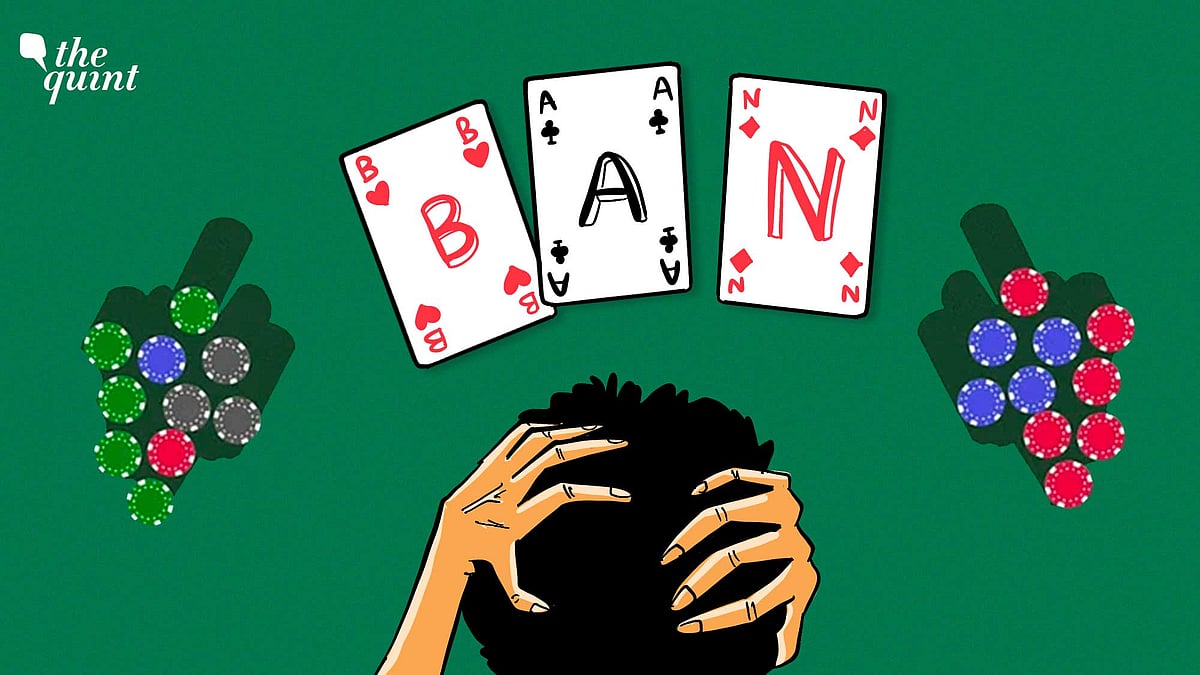
Yet the framework, for all its design sophistication, leaves several structural questions unresolved. The most fundamental is the prohibition on real-money gaming itself.
The PROG Act, as the parent legislation, adopts what legal scholars have called a "prohibitory model", it does not merely regulate real-money games, it bars them categorically, regardless of whether they involve skill or chance. This is a philosophically radical position, one that courts across India had repeatedly refused to adopt, recognising that games of skill enjoy constitutional protection under the right to trade and profession.
Ambiguity, Autonomy, and the Limits of Design
While the light-touch philosophy for social games is commendable, the rules leave ambiguous exactly which categories of social games will require mandatory registration. The provision that registration kicks in for games with "large user bases" or involving "significant financial transactions" without defining either threshold, creates interpretive uncertainty that will need rapid clarification through subordinate guidance or judicial construction.
Third, the OGAI's institutional design, while promising on paper, raises questions of capacity and independence. An authority chaired by an Additional Secretary of MeitY and staffed by government nominees may struggle to function as a genuinely independent regulator.
If the government is serious about positioning India as a global gaming hub, a stated ambition of the Prime Minister, the rules operationalised this week are a necessary but insufficient step. Several things must follow.
The government must swiftly publish clear thresholds for when social game registration becomes mandatory. Regulatory uncertainty is a tax on innovation, and India cannot afford to lose another wave of gaming start-ups to Singapore or Dubai simply because operators cannot predict their compliance obligations.
What Must Come Next
A skills-based carve-out for legitimate competitive formats should be revisited legislatively. The blanket prohibition on real-money gaming, however politically popular, has already cost thousands of jobs and wiped billions in start-up value.
A more calibrated approach distinguishing exploitative gambling mechanics from transparent, skill-based competitions would better serve both consumer protection and economic development.
The OGAI must be adequately funded, staffed with gaming specialists, and given meaningful autonomy. A regulator that lacks technical understanding of live service game economies, loot box mechanics, and in-game asset monetisation cannot classify games intelligently or craft proportionate enforcement responses.
Finally, coordination with state governments, which retain jurisdiction over gambling under the Constitution's Seventh Schedule is a real necessity. Without that coordination, the federal fragmentation that bedevilled the earlier IT Rules 2021 gaming framework will re-emerge under new labels.
The notification of the Online Gaming Rules, 2026, is a genuine step forward. It is measured, consultative, and more sophisticated than the blunt instrument of last August's Act.
The regulatory philosophy is right: protect users from genuinely predatory money games, while giving the country's vast ecosystem of social games and e-sports room to breathe and grow. But the real test of this framework will be its implementation, its institutional muscle, and its willingness to be revised as legal challenges and market realities evolve. The dice, as it were, are still in the air.
(Subimal Bhattacharjee is a Visiting Fellow at Ostrom Workshop, Indiana University Bloomington, USA, and a cybersecurity specialist. This is an opinion piece. The views expressed above are the author’s own. The Quint neither endorses nor is responsible for them.)
- Access to all paywalled content on site
- Ad-free experience across The Quint
- Early previews of our Special Projects
Published: undefined