
From Germany to Bollywood: The Power of Cinema as Propaganda
Propaganda does not always arrive wrapped in ideology; more often, it comes disguised as entertainment.
advertisement
Cinema has always been more than entertainment. In the right hands—or the wrong ones—it becomes a remarkably effective instrument for shaping how people see the world. Few regimes understood this better than Nazi Germany, where film was not merely an art form but a carefully calibrated tool of persuasion.
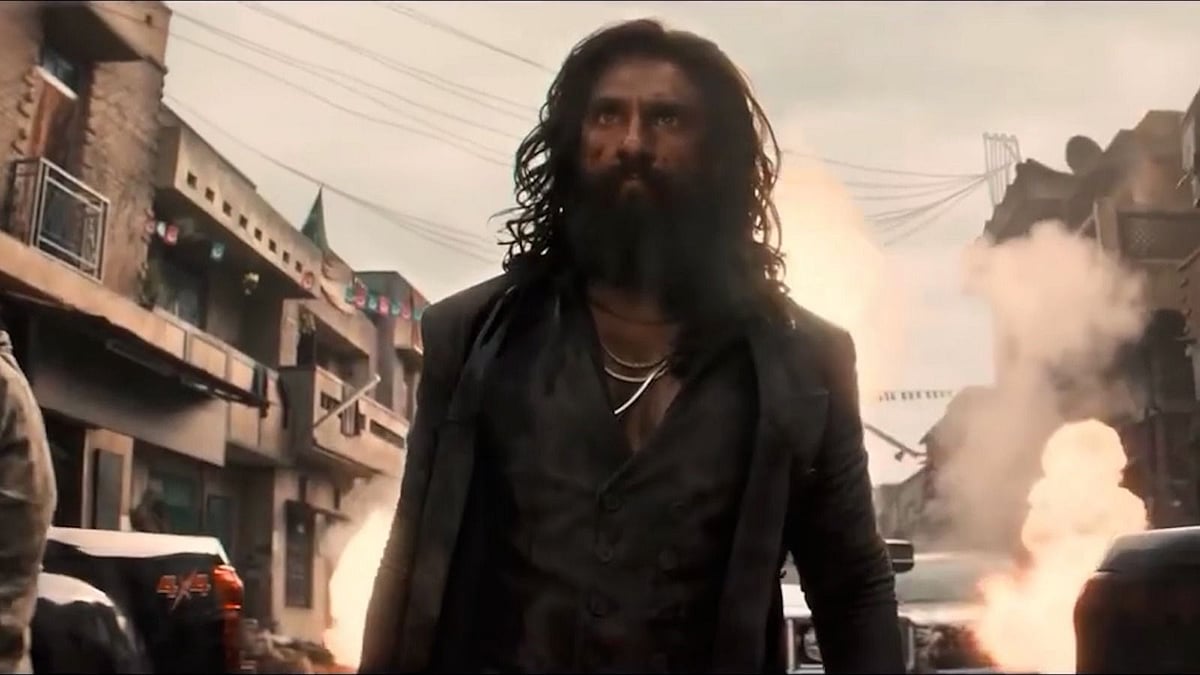
Nearly a century later, echoes of this strategy can be discerned in contemporary film industries, including segments of Bollywood, as suggested by the recent debate around blockbuster films like Dhurandhar: The Revenge.
I spent my teenage years in West Germany in the 1970s, a time when the country was still coming to terms with its past. The shadow of the Third Reich lingered everywhere—in classrooms, in conversations, in public life. What struck me even then was the honesty with which that past was confronted.
How Nazi Cinema Engineered Consent
Our history teacher, Frau Kaiser, would occasionally screen excerpts of these films in class. I remember watching them with a mixture of fascination and unease. I also saw some of them at Die Brücke, an international education centre in Düsseldorf, where young people were encouraged to engage critically with history.
Under the Nazi regime, cinema was centrally controlled by Joseph Goebbels, the Minister of Propaganda, who famously described films as “One of the most modern and scientific means of influencing the masses.” Unlike crude propaganda, which audiences could easily dismiss, Nazi films often embedded ideology within compelling narratives, high production values, and emotional storytelling.
Spectacle, Storytelling, and Subtle Indoctrination
Leni Riefenstahl’s Triumph of the Will (1935) remains the most striking example. Presented as a documentary of the Nuremberg rallies, it is in fact a carefully choreographed spectacle. Hitler appears less as a political leader and more as a messianic figure, descending from the skies to a nation in waiting. The imagery—orderly ranks, ecstatic crowds, monumental scale—creates an emotional universe in which obedience feels natural and inevitable.
More sinister still were films like Jud Süß and The Eternal Jew, which portrayed Jews as corrupt, parasitic and dangerous. These were not fringe productions; they were widely watched and socially endorsed. By the time discrimination hardened into policy, much of the psychological groundwork had already been laid.
Equally important was the context. Germany in the 1930s was a nation nursing deep wounds—humiliated after the First World War, destabilised by economic crises, searching for a sense of purpose. The films did not manufacture these emotions; they amplified them. They offered audiences a narrative of strength, revenge, and renewal.
Echoes in Contemporary Bollywood Narratives
This is where history begins to echo in the present.
Dhurandhar: The Revenge's appeal lies as much in its emotional charge as in its spectacle. Real events, like the IC-814 hijacking, the Parliament attack, and the Mumbai siege, are reimagined as opportunities for decisive retribution. The audience is invited not just to watch, but to feel avenged.
This shift did not happen overnight. Earlier, films such as The Kashmir Files and The Kerala Story signalled a new willingness to foreground politically charged narratives centred on grievance, identity and historical wrongs. Both films achieved significant commercial success, suggesting that they tapped into sentiments already present in the public sphere. Like their Nazi-era counterparts, they did not so much create emotion as validate and amplify it.
Dhurandhar’s narrative expands the field of enemies. Pakistan remains central, but it is no longer alone. Internal dissenters, minorities, activists and political opponents are folded into a broader landscape of threat. Complexity gives way to clarity; ambiguity is replaced by certainty.
The Enduring Power of Persuasive Storytelling
To be clear, India today is not Nazi Germany. It remains a democracy with a plural and often contentious media ecosystem. Bollywood is far from monolithic; many filmmakers continue to challenge dominant narratives. Any direct equivalence would be both simplistic and misleading.
But the methods bear a familiar pattern. The blending of entertainment with ideology, the creation of identifiable enemies, the emotional appeal to grievance and pride, and the elevation of leadership—these are not relics of the past. They are enduring tools.
The lesson, then, is not merely historical. It is ongoing. Propaganda does not always arrive wrapped in ideology; more often, it comes disguised as entertainment—thrilling, reassuring, and emotionally satisfying. By the time the audience rises to applaud, the message has already settled in. Cinema, after all, does not merely reflect reality—it subtly shapes the version of it that audiences come to accept as true.
(The author is a Fellow of the Royal Geographical Society and Explorers Club USA, and Editor of ‘Indian Mountaineer’. He is also the founder of Bharatiya Yuva Shakti, an organisation that ensures good leadership at the village level. He tweets @AkhilBakshi1. This is an opinion piece, and the views expressed above are the author’s own. The Quint neither endorses nor is responsible for the same.)
- Access to all paywalled content on site
- Ad-free experience across The Quint
- Early previews of our Special Projects
Published: undefined