
Boong’s Triumph Highlights Distance Between World Applause and Manipur’s Reality
When a child watches a story that resembles their own fractured world, they realise they are not invisible.
advertisement
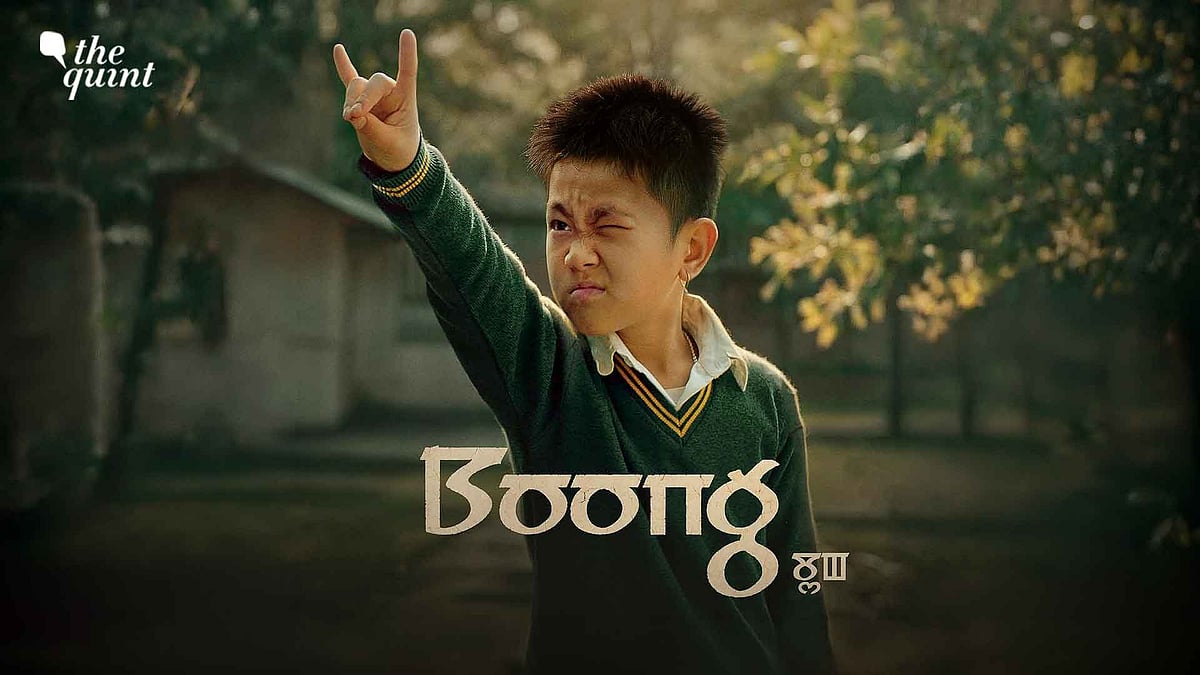
Boong, a Manipuri film, has officially become the first Indian film to win Best Children and Family Film at the 2026 BAFTA Awards. It is a historic moment for the Indian film fraternity, and even more so for Manipur—a state reeling under an unending armed conflict that has displaced over 60,000 people since May 2023.
The irony, however, is stark: only a few hundred or so have seen the film in Manipur so far, let alone the internally displaced children the director so poignantly mentioned in her BAFTA acceptance speech.
The world of children growing up in a conflict-ridden society is infinitely more complex than a simple "search for father journey" that Boong depicts. The film is cinematically well-crafted; the child actors are fresh and heartwarming, and the transgender character is portrayed with quiet power. But someone like me, who has spent nearly three years with children in relief camps and who lived through a troubled childhood myself, cannot help but wish we had the courage of Boong—the courage to travel hidden in a Bolero, cross into Myanmar, and not be lost forever.
I wish we had that kind of agency to fight against fate. But the truth is, we are more broken, more traumatised, and more fearful of the unknown. The truly brave children among us are now child soldiers, living in the deep interiors of the hills and along the porous borders of Myanmar and India. Many have been killed. Many have simply vanished and never returned.
Childhood in Conflict vs Cinema’s Lens
This is where Boong both acknowledges and sanitises our childhood. It offers a cathartic narrative, but a palatable one. It gives us a version of our struggle that the world can bear to watch. But conflict does not produce palatable childhoods. It produces fractured memories, invisible scars, and stolen innocence.
Cinema has long attempted to capture the impact of conflict on children, with varying degrees of honesty. Films like Grave of the Fireflies (1988) remain devastatingly truthful in their portrayal of two siblings struggling to survive wartime Japan, offering no easy redemption. The White Ribbon (2009) explores how violence and authoritarianism poison the minds of children in a small German village on the eve of World War I, suggesting that the seeds of future conflict are often sown in the cruelty endured during youth.
Closer to home, Children of War (2014) confronted the brutalisation of children during the Bangladesh Liberation War, while Buddha Wept in Shame (2012) followed a young boy's harrowing journey through the armed conflicts of northern Iraq.
These films, like Boong, place children at the centre of war. But where they often diverge is in their willingness to sit with the unbearable—to show not just the courage of children, but their breaking. Boong chooses courage over breaking, and in doing so, it gives us hope. But hope, for the children I have met in the camps, is a luxury they cannot always afford.
Most of the IDP children in Manipur have not even heard of Boong. So many people who were part of the film continue to ask me how we can watch the film, I simply said I don't know yet. Will the BAFTA recognition force local actors and authorities to facilitate more screenings even in theatres in Manipur? Let us wait and watch.
Sanitised Hope, Lived Trauma
Lakshmipriya Devi, the director of the film, dedicated the win to the children of the region, expressing hope that all internally displaced children, including the film's child actors, “regain their joy, their innocence, and their dreams” and that peace be returned to Manipur.
But Manipur has never really had peace in the last 70 years or so. A frontier region at the intersection of South Asia and South East Asia has been battling with complex forms of conflict throughout history. From Arunachal Pradesh to Manipur, the region has been under heavy militarisation, cross border conflicts, internal micro conflicts, persistent insurgencies to name the least. There is no peace, there is only a call for peace. Peace is an exhausting word for us.
And it does not return on its own, it is fought for, negotiated for, imagined into existence.
It has also given the team a noble cause they can call themselves a part of: storytelling from an underrepresented region and the noble task of making that happen, something Farhan Akhtar and the production house will proudly vouch for. And so be it. But the lives of people here in Manipur, how does Boong change?
Cinema as Witness, Not Escape
Cinema is not merely entertainment in conflict zones; it becomes testimony. It becomes memory. It becomes resistance.
A film may not disarm a soldier, but it can disarm prejudice. It may not redraw borders, but it can redraw perceptions. It can create a shared emotional space where dialogue becomes possible. It can humanise those who have long been reduced to statistics and headlines.
The film has been screened just once in Manipur at the 2nd Eikhoigi Imphal International Film Festival in Imphal in 2025. I had the privilege of watching it there. It was a cinematic experience for Manipur, borne out of expansive sets, locations, star cast and crew. At a budget of 8 crores, it perhaps is the most expensive Manipuri film till date. Long before the BAFTA recognition, Boong was already a much anticipated film. The award may have amplified its reach, but its heart was always rooted here.
Can the fraternity bring the film back to Manipur again? So that the very people who were part of it and whose story it represents can watch it, to begin with. Storytelling is a powerful art and Boong is an enigmatic child character.
Our children deserve to watch it for themselves. Our children who hold guns out there patrolling borders also deserve to have a say in choosing what story represents them. The parents of our children who mourn the loss of their child deserve to share this historic moment of a BAFTA award from a state that not even every Indian knows or has heard of.
Imagining Peace Before Negotiating It
What can Boong mean for Manipur? It can mean visibility. It can mean dignity. It can mean that our stories are worthy of global platforms. It can tell every child in Manipur that their pain is seen, their laughter matters, and their dreams are not too small for the world stage. And beyond Manipur, it can speak to children across the world caught in conflict — from borderlands to war zones — reminding them that they are more than victims of geography and politics. They are protagonists of their own stories.
And cinema, most importantly, must speak louder — loud enough that leaders are compelled to choose people over power, to choose dialogue over domination, to choose peace over violence. Because sometimes, before peace is negotiated in conference rooms, it is first imagined on screen.
(The author has a decade of transformative queer activism, community work, research, writing and consultancy, and is founder of Matai Society, Manipur. This is an opinion piece. The views expressed above are the author's own. The Quint neither endorses nor is responsible for the same.)
- Access to all paywalled content on site
- Ad-free experience across The Quint
- Early previews of our Special Projects
Published: undefined