
The Real Stakes of the AI Impact Summit Go Beyond This Week
The AI Summit is a chance to prove that global AI coordination can remain cooperative without becoming coercive.
advertisement
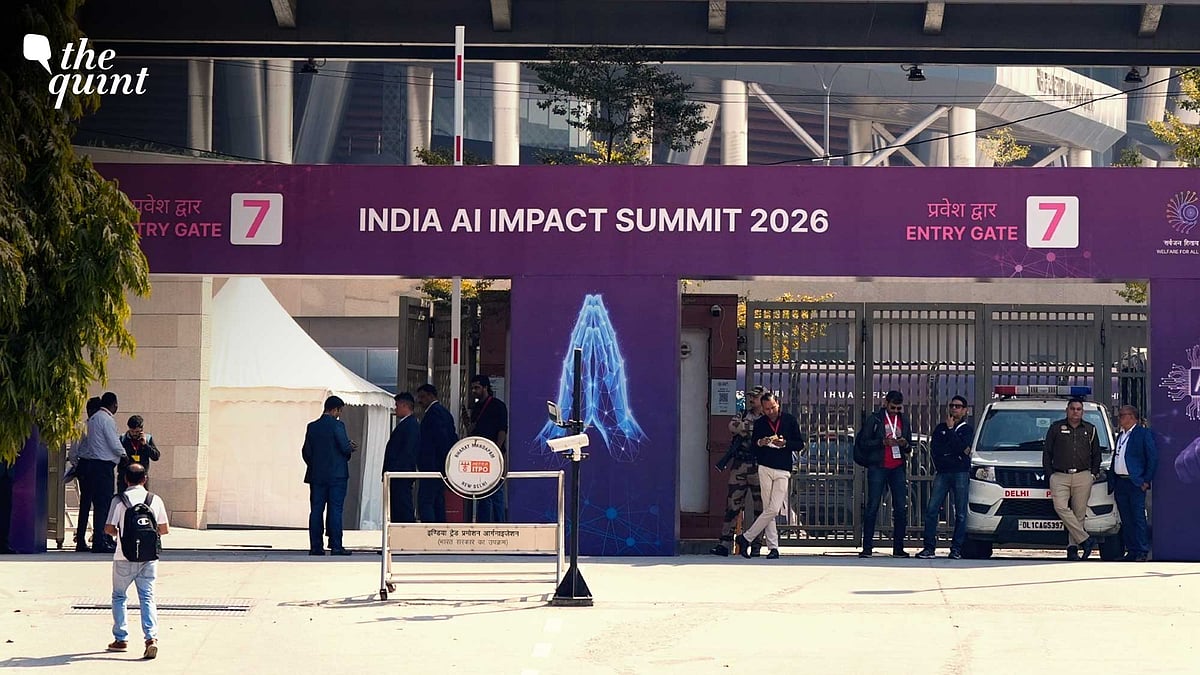
The AI Impact Summit 2026—being hosted by India from 16 to 20 February—is the largest AI policy gathering in the country’s history.
The scale alone demands attention: there are more than 700 planned panel discussions, closed-door roundtables, research exchanges or deliberations, around 400 exhibitors from 30 countries in the summit’s AI Expo, and a packed diplomatic and industry calendar that extends beyond the main venues into aligned events across New Delhi.
The summit has also drawn attention from 20 heads of state and government representatives, alongside delegations from 45-plus countries and leadership from major international organisations and global tech companies. Anyone that is involved in AI policy, markets, or deployment has their eyes set on New Delhi this week.
However, the real impact is the implementation discipline that will entail after the summit.
From Talk to Implementation
This context matters because India is positioning the summit itself as an event of action and implementation.
In practical terms, the priorities are shifting. Stakeholders now must ask what works at scale (and reliably) for everyone. That shift applies across sectors: finance, healthcare, agriculture, education, energy, or public services.
India enters this moment with institutional groundwork that gives the summit unusual credibility. The IndiaAI Mission, with its Rs 10,372 crore outlay, has already moved beyond intent into infrastructure and capability building: 38,000-plus GPUs onboarded, 27 data and AI labs established with many more identified, and a pipeline of indigenous foundation models under development.
These are not symbolic statistics. They represent a strategic attempt to reduce entry barriers for researchers, startups, and public-interest deployments while strengthening technological capacity. They also explain why global actors are treating New Delhi as a serious venue for setting direction, not just hosting discussion.
Designing Cooperation: Sutras and Chakras
The summit’s architecture matters as much as its attendance. Its three Sutras (People, Planet, and Progress) lay out the normative frame. Its seven Chakras (themes) convert that frame into workstreams that governments, firms, researchers, and civil society can actually execute together.
Countries need people with skills to use AI at work, in government, and in classrooms.
AI must work for everyone, including different languages and persons with disabilities.
Systems must be reliable and safe so people can trust them.
Researchers need to work together across borders and share scientific tools.
Additionally, governments must solve real constraints like power, computing capacity, and infrastructure.
AI resources (such computing capacity) need to be affordable.
Lastly, all of this must lead to visible gains in jobs, public services, and everyday welfare.
A truly meaningful output from the summit would be a practical package of voluntary, non-binding, sovereignty-respecting cooperation tools that countries can agree upon. Such a model does not demand uniform law or a single global regulator.
It seeks directional convergence around internationally acceptable standards and guidelines, shared playbooks, and replicable use cases. It is also a more realistic path in a fragmented geopolitical environment.
The Post-Summit Test
The core test post-summit is simple: governments need to turn announcements into outcomes that people can actually see. Success for New Delhi and other participating countries will depend on sustained execution over the coming years.
Countries will need to expand real access to compute, connectivity, and research infrastructure for universities, startups, and public institutions, because access determines who can build and who gets left behind. They should also put in place credible trust frameworks, including sector-specific guidance, because adoption will stall if citizens and institutions do not trust AI systems.
Policy should then connect to deployment through procurement and implementation pathways, because pilots alone do not transform services. Finally, governments should align AI growth with energy and infrastructure realities, because unmanaged scale can create power, cost, and resource stress that slows progress for everyone.
A Defining Global Opportunity
If these steps progress, this summit will stand as a genuine inflection point in AI’s diffusion journey, globally. If they stall, the world will drift toward deeper concentration of compute, model capability, standards-setting authority, and of economic viability.
It is a chance to prove that global AI coordination can remain cooperative without becoming coercive, plural without becoming chaotic, and ambitious without being exclusionary.
It has assembled leaders, firms, researchers, and institutions at uncommon scale. Now the burden shifts from convening to execution. If countries operationalise this agenda, AI can narrow global divides and strengthen cooperation.
(Sarmad S Ahmad is Senior Associate and Rutuja Pol is Partner, Government Affairs at Ikigai Law, a law and public policy firm with a sharp focus on technology, innovation, and new-age businesses. This is an opinion piece and the views expressed are the author’s own. The Quint neither endorses nor is responsible for them.)
- Access to all paywalled content on site
- Ad-free experience across The Quint
- Early previews of our Special Projects
Published: undefined