'Belonging': 40 Yrs Covering Congress, Veteran Journalist Reads Sonia’s Silences
Sonia Gandhi’s memoir Belonging explored by Javed Ansari through revelations, silences and stories she left untold.
advertisement
For years, her story was told by everyone but her. For years, she refused to respond to or even acknowledge the narratives about her. For years, she remained one of India’s most scrutinised political figures, her personal life watched as closely as her political journey.
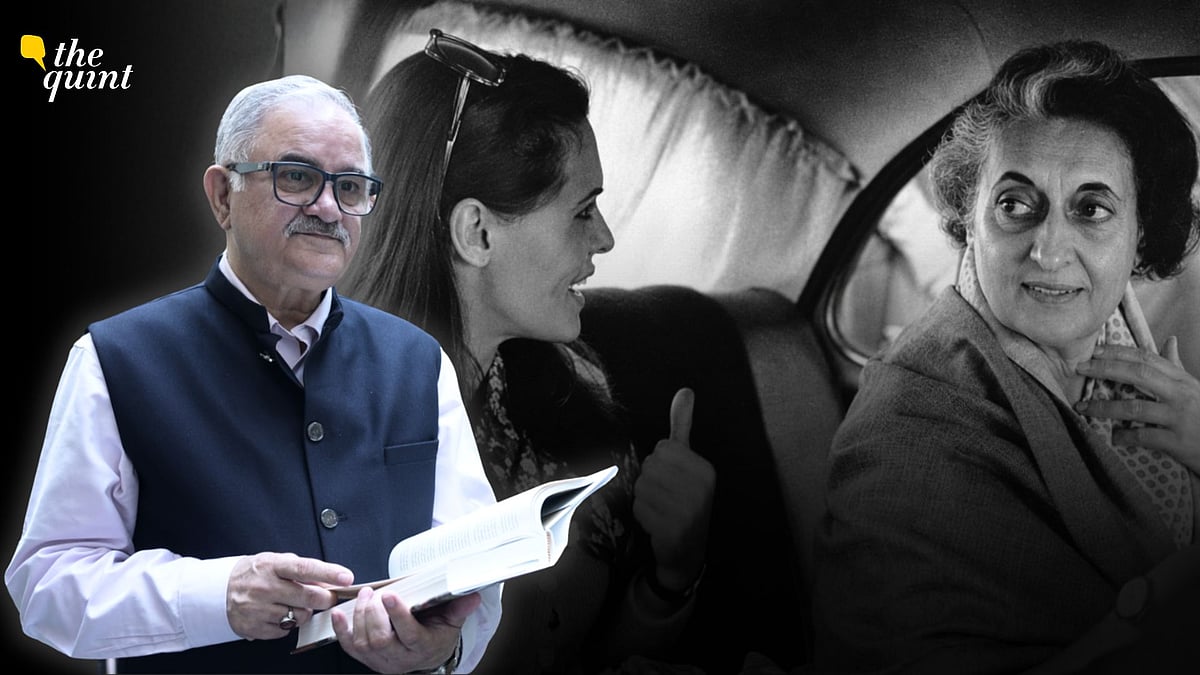
So when Sonia Gandhi’s memoir, Belonging: A Journey of Love, was announced, it was bound to take the nation by storm, including Javed Ansari, a veteran journalist who has watched the Congress party for 40 years and covered Sonia Gandhi’s tenure as party president.
“Just put yourself in her position. Suppose you were sent to a foreign country. If you and I were sent to, say, Tamil Nadu or Assam or some part of the country, and asked to begin life again, learning the language, getting used to the food, the customs, the dialect, the way of life there. It takes a lot out of a person, especially when you’re young, you’re just in your 20s,” Ansari said.
The story is a fascinating one indeed. But does the memoir do it justice?
From the Emergency and the 1984 anti-Sikh violence to the assassinations of Indira Gandhi and Rajiv Gandhi, Sonia recalls what happened and what was said within the Gandhi family during those years. But there’s also a lot that remains missing from the book.
“The fallout with Mr Bachchan, the reason behind the fallout. Why did Arun Singh leave? Arun Singh was Rajivji’s friend from school. What happened with Arun Nehru?” he said.
On Badi Badi Baatein, Ansari reads between the lines of Sonia’s memoir.
We are here to talk about the most anticipated book I think of the past 50 years this book by Sonia Gandhi, the memoir, Belonging.
I was reading somewhere it has crossed the sales of Harry Potter?
Yesterday, the publisher the Harper Collins chief announced in his introductory speech they have already done over 2 hundred thousand copies. The initial print order was only for a lakh and they have already sold 2 lakhs It is by far the bestseller of the year and who knows in a couple of weeks she might go on to set a record of sorts.
Very intriguing read, I'll be honest, because its also a personality around whom there has been so much anticipation, there have been so many stories being told by others.
But when somebody like Sonia Gandhi sits to pen down her memoir, you really look forward to it. Nobody has been able to ignore it. The BJP has not been able to ignore it, They have held several press conferences.
The amount of publicity the BJP has generated for the book, if Harper Collins and Sonia Gandhi, they would have had to spend tons of money and even then they wouldn't have been able to match this publicity, the pre-launch publicity.
And even now, every Tom, Dick and Harry from the opposition, from those opposed to the Congress party, particularly the Gandhi family, they're having a go. I'm not so sure if all of them have read the entire book. They're picking, cherry picking stuff. The book is doing, from all accounts, is doing very, very well.
It's understandable. It's an honest attempt, an un-disguised attempt to show that she belongs here, that she's totally assimilated, integrated herself into the Indian culture. And it is a fact. She was taking lessons and, you know, somebody used to not just come and teach her Hindi, but also she was reading the Gita. And that gentleman was helping interpret it for her. Because Gita, like other religious books, may not have made for very easy reading, especially for a newcomer. So she was being put through her paces. So it's understandable.
She, you know, she's more Indian than most of us in the way she carries herself, in the way she dresses up, the way she conducts herself, the way she speaks.
The first family that she lived with after she came to India was actually Mr. Amitabh Bachchan's.
Yes, because Amitabh Bachchan and Rajiv Gandhi were very close, very close friends. It was Amitabh and then Mr Arun Singh, who was Minister of State for Defense in Rajiv Gandhi's government. They were very close, all three of them.
Mrs Gandhi was pretty traditional in that sense. And she says that, you know, you can only live in the house once you're married into it. So she was put up with Amitabh's mother, Teji Bachchan ji. And she looked after and she acknowledges it. She used to call her her Indian mother.
She refers to him as Amit in the book.
Yes, that is intriguing. I was going to come to that, it is intriguing. It's common knowledge they had a falling out after the Bofors controversy. In fact, Rajiv Gandhi, much against Mr. Bachchan's initial unwillingness, persuaded him to contest from Allahabad. He contested and won handsomely in 1984. He was an MP for a few years, a year and a half or close to two years.
But Amitabh, I was watching a recent interview of his. Mr. Bachchan said, "Look, from day one, I realized that I was a misfit."
She has in a lot of detail narrated how she lived in the Bachchan household for several weeks.
In fact, in one of her interviews, if I'm not wrong, to Vir Sanghvi, one of those television interviews, she mentioned the fact, Amitabh Bachchan, and that parting hurt, that he was the closest ,and that hurt. And then, of course, Arun Singh.
She refers to her in the book as also Teji aunty.
Teji Aunty, so she was very, they were very close. The Bachchans and the Gandhis, they go back to their, both families, their ties go back to Allahabad.
And this was before Mr. Bachchan became a Bollywood star?
Oh, yes. In fact, Indira Ji wrote a letter of recommendation for Amitabh Bachchan to Mr. K. Asif, if I'm not wrong. Saying that, you know, this is a young bright boy. See if you can find some work for him. So she wrote a letter recommending him.
Her initial days in India with the Gandhi family seemed so far away from politics, as well as the Indian culture, the Indian food. She has also mentioned how in order to learn Hindi, there was an institution at Green Park where she would go with a friend on a scooter, with this friend called Sabina. From there to what she is in this country today, as this political figure, it has been a massive journey as we have seen through the book.
You know the amount she has travelled, I mean, the distance she has covered in terms of adaptation in trying to assimilate into, and integrate herself into to the Indian culture, to Indias' way of life is not easy. Now, we can all say, "oh she just did that." But it must have been a hell of a struggle.
Just put yourself in a position. Suppose you were sent to a foreign country. If you and I were sent to say Tamil Nadu or Assam or some part of the countrym and asked to begin life again, learning the language, getting used to the food, the customs, the dialect, the way of life there. It takes a lot out of a person especially when youre young youre just in your 20s. In her early 20s she had come here.
And then your daughter-in-law of the Prime Minister.
And you come, and the spotlight is on you, because you're married to the most important Indian household, the Gandhi-Nehru family. So every move of hers, every move that she made, every gesture was minutely scrutinized. And she was very self-conscious.
In India, we hosted this Indian International Olympic Association meeting here during Mrs Gandhi's time, and it was held at to be Gyan Bhavan, So there were lots of heads of state. I was one of the volunteers there, I was attached to the Duke and Duchess of Luxembourg. And they called on themat Mrs Gandhis official residence. So, I remember, because I was sitting in the car with them, and we reached the porch. Can you imagine, you reach the Prime Minister of Indias residence? I had never in my wildest dreams imagined. But its not about me.
So Mrs Gandhi, Rajivji and Soniaji, they came out. And you could see that she was, and there were cameras and all that. But she was very, she would always try and shy away from the camera. Didnt like herself being focused. And never engaged with the media, never engaged too much with politicians as well.
And its not that she was arrogant or something, she was being aloof. Its that she was shy. She was self-conscious She didnt want to put her foot wrong. Anything, any mistake that you make. If she wore a particular saree, then it would be commented on. If she wore a particular dress or combed her hair in a particular way, you know how it is, given the nature of our beast, we are very inquisitive.
And she would have never thought how life would turn out right? Because the political hierarchy was clear. There was Mrs. Gandhi who was there, Sanjay was there, Then Maneka was there.
You know life never plays. Life is not a script. It never plays according to the script. There are ups and downs. And now, you know, I have more years behind me than ahead of me. So I can be wise. I have also never imagined that, you know, there will be turns and twists.
Nobody could have imagined that her life would take such a twist. She was she was a very private person. Her world revolved around Rajiv Gandhi and her two children. Suddenly... Rajiv Gandhi also imagined a life, a small world with his wife and children. And they were at one time contemplating moving out, renting an apartment to get away from the spotlight. But then events took a turn, Sanjay Gandhi died in an air crash, tragic air crash. And Mrs Gandhi then leaned on her elder son.
Most of the instances most of the major events that have been mentioned from before the 90s all of them have been narrated from a very outsiders perspective of an insider.
There is a particular evening they've described when they knew, that Indira was on the cusp of declaring emergency. On the same dinner table there was Sanjay Gandhi who said, "They are out there to destroy you," Indira "said you are right." Rajiv Gandhi said that "but resignation is something that will be favorable to Ma in the long run."
This is a conversation that is happening in front of Sonia. So she has also insinuated that Rajiv was not completely agreed upon the concept of declaring an emergency.
There are a lot of people in history, Indian history is complete, that they, people laud the act of renunciation. You know, when you resign, after a while, there is loss of power and all that. But when you walk away with something, you're saying is, you know, the Indian word for it is tyag.
And also that every time you try and take repressive measures, you try and push people to the wall, there's a rebound factor, then these things tend to rebound against you. And perhaps Rajiv was coming from that. If she resigned after a while, she would, there would be sympathy for her, there would be takers for her. Whereas if you are, if you put everybody in jail, then this will be, and this will be held against you. And that was Rajiv in retrospect, although he was an outsider to politics, he hadn't entered politics then. And Rajiv in retrospect was correct.
In the narration of the emergency period, a lot of blame to an extent is being placed more on Sanjay Gandhi. The fact that Indira had to put an end to demolition of slums only after she was shown the actual picture, and she visited a slum herself, and before that she didnt know what was happening. Or even the forceful mass sterilization and the consequences of it, unless and until more and more people didnt tell her, she didnt know what was happening.
There's a particular conversation Sonia has mentioned from after they lose power, and they move to another house. And that house, Sonia Gandhi has mentioned a conversation between Maneka, Rajiv, and Indira Gandhi, where Rajiv Gandhi is furious, saying to Sanjay that "you are responsible for this" and Maneka does not like what he says. So Indira says to Maneka "can you say this is wrong?"
Many who are criticizing the writing are saying that blame is being shifted away from Indira to Sanjay in this matter.
This is her work. Memoirs are, if I write my memoirs, it will be my version of events of how I see events. I'm sure Maneka will have another version. And when Maneka, if Maneka comes out with that, you know, people will say that she's trying to whitewash.
But the fact is that Sanjay Gandhi and Rajiv Gandhi were chalk and cheese. You know, Rajiv was modest, was more understated. Sanjay was abrasive. Sanjay could be very abrasive and tough and all that. And it's also a fact that Sanjay Gandhi's, the sterilization program, the demolition. I was just watching a clip of Sanjay where he says that, "a lot of people come to me saying make us a minister. Say, okay, we'll give you a position. But you have to bring two, do nasbandi ke cases aap laiye, Plant X number of trees." A lot of things. Well meaning, but very poorly, very badly executed.
He was impatient. He didn't want to. If there are illegal buildings, demolish them. Literally realizing that, you know, there were poor people there. How do you relocate them? If you remove the roof over somebody's head, tomorrow somebody comes and demolishes this, where will I go? So Sanjay Gandhi's was a very rough and dready way of doing things. He was very aggressive. Rajiv Gandhi was totally different. And I'm willing to, I have no reason to doubt this version of events
Theres a lot that has been said about Maneka as well. There are a lot of things that have been alleged and claimed about Maneka's political ambitions So especially after Sanjays death or even in the runup to Sanjays death for example after Sanjays death the first birthday of Varun Gandhi was celebrated at Vasundhara Raje's house which Indira Gandhi was not aware of And then Indira Gandhi was upset about it. The falling out was very clear It has always been publicly recorded
Have there been any public instances of the two families ever coming together at any point since Maneka Gandhi left the family for good
Maybe at some marriage in the Nehru-Gandhi family. I have a faint memory that there was some marriage in Dehradun, I think B.K. Nehru's niece or grand-niece or somebody. They must have come together.
Look, there is absolutely no denying the fact that there is no love lost between the sisters-in-law. If you speak to Maneka Gandhi privately, you see the kind of things people who have spoken to her have told me, the kind of things she may have to say. But there is also a fact that Mrs Sonia Gandhi, even Rajiv ji when he was alive, Sonia Gandhi and both Rahul and Priyanka were very, very fond of Varun, Feroz Varun Gandhi. They were very fond of him. Of course, politics has taken them on two-sided roads. It's understandable that Maneka would have wanted, may have had political ambitions. Because she, as Sanjay Gandhi's wife, felt that the vacuum left by his, the void left by his death should actually be filled by his wife.
Sonia Gandhi has mentioned how, ahead of Indira Gandhi's assassination, there were several other attempts that were either planned or made or known to the family.
She writes of the fact that there was grenades were found.
Grenades were found in the room next to the kitchen.
I have, this is the first time I have read about this.
So I think this was weeks ahead of the assassination. And there was also an incident where the vehicle that was bringing Rahul and Priyanka Gandhi home from school was rammed into by another vehicle. These are not really publicly known attempts.
I think I've read somewhere about this vehicle ramming. But the grenade part was shocking, I mean, a shocker.
This is the first time she has mentioned in detail the day of Indira Gandhi's assassination, how she was the one in the house, how she was the one who was in the back seat of the car with her, where she was trying to talk to Indira Gandhi, and she was not able to respond because there were just 30 bullets, and how she did not realise for so long that her own clothes were soaked in Indira Gandhi's blood, and how somebody else had to get clothes for her.
A lot of these memories that she has mentioned, she has made it a point to make it clear that she does not remember most of it because she was in such a state of shock.
Must be, I mean, it's understandable. When something like this happens, your mother-in- law, who happens to be the Prime Minister of India is suddenly gunned down in broad daylight, and there's nobody else in the house except. It was, it's understandable that it must have come as a shocker because she had imagined a life totally different. First, which she had to first concede given when Rajiv got drafted into politics. Then later as we go on, you know, the fact that he had to take up prime ministership in such traumatic circumstances. His mother had just died. That morning she was gunned down and by the evening he was sworn in as prime minister. Rajiv Gandhi was somewhere in Bengal when he heard this news and he waited for it to be confirmed by BBC radio. And the district magistrate told him that you have to, there's a plane being sent and you have to rest back.
And I remember Pranab Mukherjee telling me that, you know, it took him a long time. I mean, he always, they always had this sense of dread that somehow, something bad is going to happen. Even Mrs. Gandhi had because she took, she went on a trip to Kashmir before that, and after that, just a day before her assassination, she'd gone to Orissa where she gave that speech that every drop of my blood...
Jab Tak Saas Hai Seva Mein Hi Jayegi. That very prominent, famous statement of hers.
Yeah, so they had this sense of dread. So, Rajiv Gandhi just waited for, to get it from an unimpeachable source, BBC radio then confirmed that.
The entire period of 1984 riots that she has mentioned, that she has narrated from her perspective. She said "I didnt realize the intensity of the riots and what had happened until years later because I was just not in a state" etc. The writings about Rajiv from that period a lot of it is being seen as absolving him of any wrongdoing. She has mentioned a lot of quotes by Rajiv Gandhi from that period urging people to keep calm. But that one particular statement that is usually cited about a large tree. That's not there in the book right?
Jab Bada Ped Garta Hai Toh Dharti Hilti Hai. It's not there in the book. It was made at, if I'm not wrong, at a rally at India Gate. It was really, really unfortunate. I think, I don't know, later a lot of congressmen have given it, tried to explain it, that he meant something else. He was not very comfortable in those days with the language, with Hindi, which is a fact. He was, I remember his first speech as Prime Minister that evening when he addressed the nation. So he was reading from a prepared text, yet finding it very, he was very halting, finding it very difficult.
But that notwithstanding, the fact is that it was a very, very unfortunate. I think this is one of the darkest chapters in India's history. What happened, after Mrs. Gandhi's assassination and the aftermath. What happened in 1984 should never, never have happened and should never happen in India again
Do you think somebody like her was really that oblivious to what was happening right in that chapter?
Not just her, I mean, what about all the others? The Home Minister? Mr. Narasimha Rao was the Home Minister in those days. What about all the others? She was not Prime Minister. She was not even a part of government. There was an entire government there. What happened? What were they doing? What was the Home Minister of India doing?
There are lots of instances in the book she has spoken about the RSS One of the first instances she has mentioned is when she came across a letter by Indira to Nehru from Indira Gandhi's younger days where she said that RSS is like the Brown Coats of Germany, and their rise is something very which is very interesting ,not in a very positive way of course.
Several other instances Sonia Gandhi has directly blamed the RSS and the Jana Sangh ecosystem of that time, be it peddling narratives about the Gandhi family, be it starting rumours about, her be it attacking her on her Italian descent. She has said that JP was somebody who was influenced by the RSS and was being used as a pawn by the RSS despite being family friends with Indira Gandhi for a very long time RSS finds a mention on a lot of instances
RSS is a very influential. Absolutely. RSS is a very well organized, by far the most organized organization in this country. They have been at it for 70 years. So absolutely, as far as their clout is concerned, they may not like to talk. They may want the world to see it differently. But it is there. And it is also a fact that JP was at one point in time very close to the Nehru-Gandhi family. He disagreed with a lot of things that Mrs. Gandhi was doing towards the end after the Nav Nirman Andolan and the student movement took shape in Bihar. They started drifting apart. And at one point of time, the Jana Sangh, you know the workforce to say, the critical mass for this. Part of it was also provided by the RSS to the JP movement. And that famous speech of JP's where he called on the police, the paramilitary and the army, armed forces to disobey orders from the government. It was asking for rebellion.
This was at Ramlila Maidan, and it was few hours before the Emergency was declared?
Yes.
What is her view of Prime Minister Modi according to her own writings in this book?
If you ask me, my honest opinion, I think she's pulled her punches, where Prime Minister Modi is concerned. And the feeling is mutual. They're not particularly fond of each other. Again, totally different worldview. He has made it abundantly clear in the way he talks about them. The derisive manner in which he talks about them. Their dislike is also abundantly clear.
But why do you think she pulled the punches here? It was her memoir, I dont think she's going to pen another one?
You know, she's always been very proper, very dignified in the way she conducts herself. And these memoirs are very much in keeping with her personality.
He is, whether we like it, whether some people like it or not, he's Prime Minister of India. So therefore, Prime Minister of India, by virtue of being Prime Minister of India, you know, deserves a certain amount of... And she also accepts the fact that given that, you know, he's risen, given his background, family background, he's risen from the ranks. So, she also accepts that fact. I don't know how much the BJP will accept, you know, facts about the Nehru-Gandhi family or another Congress leader
She's also mentioned her visit to Gujarat after the riots, where she was a part of a delegation that met people at the refugee camps, etc. But even in that narration, she hasn't really spoken about Prime Minister Narendra Modi.
It is true, she was absolutely traumatized after. I know of people who had met her. I met her a couple of times when the riots were happening, after the riots were happening. She was absolutely traumatized. Apart from which she organized a lot of relief trucks from outside, I don't know if you remember, but huge relief convoys were dispatched. The Modi government was not allowing relief boats to come in because Rajasthan borders Gujarat, and there was a Ashok Gehlot-led Congress government there. So they facilitated it through the land route and all that. She was absolutely horrified with what had happened. And she was not alone. A lot of people. I remember late Prime Minister Chandrashekharji also.
She has alleged that Mr. Vajpayee was discouraged by people from within his own party to dismiss Prime Minister Modi.
Yes, absolutely. He wanted to sack him.
And after a few days, they were holding the BJP national executive meeting in Goa. And they all flew down there. It was expected that he'll be, that Mr. Modi would be asked to leave. But Mr. LK Advani and Pramod Mahajan, and a lot of the youngsters rallied around against. But it was principally Mr. Advani's vigorous defense of Narendra Modi, that Mr. Vajpayee couldn't. Mr. Vajpayee had to change his mind.
These are all known political adversaries. But there's a very interesting incident she's mentioned on the Shimla CWC meet, where she finished her final address as the president. And even after that was done, the meeting continued. She asked one of her associates as to what are they discussing. Reluctantly, the person said that they're discussing who will lead the party in the next election. And in that moment, she said she realized that "I had worked with these people for so long, over the years. Now it had already been five years since I was leading the party. I had gone to every state. But still I'm being treated as an outsider."
Which is not an outsider. I happened to cover that. The Shimla Conclave. They were examining the wisdom of whether they should project, because the Vajpayee government, and the BJP wanted it to be a binary between Mr. Vajpayee and Sonia Gandhi. And the Congress was examining, looking at options on whether they should allow that to happen. Or should they go ahead and project Mrs. Gandhi? What are the ways they could have? And ultimately, it's one of the few times she asserts herself. She walks into that meeting.
She walked into that meeting and she said, I am the president. I will lead it and we will form a coalition government if the need comes.
And that required a tremendous... You know, Congress always believes it's the natural party of governance. A lot of people in the Congress, even now, would like to delude themselves. You know, believe that because they were the largest party in the country, therefore it is their right. But she realized early on that the Congress cannot on its own defeat the BJP. Persuading Congress, senior congressmen, to agree to the idea of a coalition was a tough task. She was in Shimla and thereafter she slowly began that process. Brought them together and soon thereafter, just before the elections.
Another remarkable thing of her is her ability to distinguish between the personal and the political. If you remember, Mr. Sharad Pawar, Tariq Anwar, Purno Sangma, had split on the foreign issue in 1999. They went on to form the NCP. But she didn't think twice. She rang up Mr. Pawar, drove to his house in Talkatora Lane. Spent an evening there, persuaded him. Walked across to her neighbor Mr. Ram Vilas Paswan's house. She spoke, picked up the phone and spoke to Mr. Karunanidhi. Karunanidhi's party, the DMK was at one time accused, or was clearly was accused of being sympathetic to the LTTE, which was responsible. So there was a lot of baggage. Yet she spoke to him, persuaded him.
And above all VP Singh. VP Singh was the one who helped defeat her husband, and VP Singh, she says that "he withdrew security, perhaps if the SPG had not been withdrawn, my husband would have not been assassinated, would have not died." Yet politically she was willing to work with him.
Who were some people within the Congress that she felt betrayed by? There is one particular section on page number 367, I think, where she said "this person shall remain unnamed because they turned disloyal later." Who are some of the people in the Congress who she felt damaged by at that point especially after she took over as the Congress President?
Probably the NCPs. All those who went on to because they deserted her there by when she says deserted they are the ones who left and formed another party but thereafter her relations with Mr. Pawar have improved considerably.
Were there any other players in the mix who were eventually sidelined by her because of her lack of trust in them?
There was a certain distancing certainly with Mr. Narasimha Rao. Sitaram Kesri of course he passed away. She also lost some very valuable colleagues Rajesh Pilot, Jitendra Prasada, Madhavrao Sindhia. She leaned heavily on Madhavrao Sindhia, she was LOP, he was the deputy leader, she was obviously it was her first time she wasn't very well versed in the nuances of Parliamentary. Madhavrao Sindhia was a great help.
What are certain stories according to you, and in all your experience of covering the Congress, especially Sonia Gandhi's period in the past 25 years, that have not made to the book?
The fallout with Mr. Bachchan, the reason behind the fallout. Why did Arun Singh leave? Arun Singh was Rajivji's friend from school. What happened with Arun Nehru?
There is no mention of him, there's absolutely no mention of him in the book.
There is absolutely no mention of him. They felt tremendously betrayed by him. He was family.
A lot of people also blame him a lot for the events during the 1984 riots.
Look Rajiv Gandhi... I mean this is not in defense of Rajiv Gandhi but the fact is, Rajiv Gandhi, when he joined politics was extremely, was inexperienced. He was very simple and straightforward.
Arun Nehru had been in the party for a while and Arun Nehru, a lot of people now hold him responsible for the unlocking of the Babri Masjid, and stuff like that also. but look he's dead and he's not around to defend himself and probably one reason because he was family so she doesn't but the fact is that they're not particularly fond of him for what he did.
In 1999 when Mrs. Gandhi was contesting the Amethi elections and Priyanka was managing her election and I had gone to cover it. I used to work for India Today. I had gone to cover it. I spent considerable amount of time covering that. What a campaign Priyanka ran. The highlight for me was that.
Arun Nehru was contesting from Raipureli. So I asked her, I said will you be campaigning outside the constituency? She says Raipureli will be difficult to resist and then three days before the election or two days before the election she went and campaigned. In one speech, I remember she was with us and we were sitting there, and she says "he's a backstabber. He used to call himself family."
She is considered the person who has influenced at least two to three Prime Ministerial positions, at least that is how it is perceived. She denies that in her book. She said she had never had any role to play in any decision making, especially with Mr. Manmohan Singh. Why do you think she has spoken so less about her political stint through the entire book? Because the book, the first three to four hundred pages are majorly centered pre-90s that is before she took over.
Many who are reviewing the book say there is a lot more that could have been said from the time that she took as the Congress President, because she influenced the recent times of Indian politics.
Look, I do not for a moment believe all the stories that she used to ask for files, and files went to her. But be by virtue of being the NAC chairperson, her voice carried even if she was not NAC president, her voice would have carried a lot of weight. They used to recommend right to work, right to food, right to information. There is a lot of these pro-people populist measures. MNREGA, the crowning glory she considered and a lot of people believe that that was a very that was her crowning glory MNREGA where they provided you know jobs for the labor class. So a lot of that the inspiration came from her but the decision was the government's and she doesn't want to take away credit from me. She is that kind of person. She doesn't want to claim credit.
Even in her earlier speeches, "our government", was always "our government." And she held Dr. Saab, Dr. Marmohan Singh in tremendous esteem.
I know of one instance from Mr. Natwar Singh in the early days soon as the government was formed used to address even in cabinet meetings sometime address the prime minister by name Dr. Singh. She got to know of it at a party meeting at her house, she says "he's the prime minister of each and one of us. He's India's prime minister and he's my prime minister and the prime minister of Congress Party." She put Mr. Natwar Singh in those days was very close to her. She put him in his place.
Do you remember your first interaction with her?
Yes, my first interaction with her was soon after she has taken over as President. So, there was this process. She started meeting journalists who were covering the Congress Party. My chance also came with her. Very nice. She was very, there's that long green sofa in her room. She was sitting on one end and so we got talking. And more than this thing, she was very "where are you from," spoke about where I had studied. I was fortunate I got to meet her on more than one occasion. In fact several occasions. She was always very warm, always very affectionate, always
She wouldn't give much away by way of stories. She is very and I've met her or I've traveled with her once to Gujarat for the elections. Then to Hyderabad and Ballari for election. I met her of course.
Ballari was her first election as well.
Yes. If she if there was something she didn't want to answer or she used to quietly deflect if you ask or if you probe too much. No, ma'am, but. She says "you know of the decision, how is the process important." So the intricacies of who told you this, how did you arrive, who opposed it, and all that. She said "no no you know, you're interested. The news is this."
Where do you think the book falls short?
Oh it's fine. I mean, I didn't expect. This is very much in keeping with her character. I've known her reasonably well, and I can it's very much in keeping with her character.
Do you not think she could have said a lot more about a lot of things her criticism of the BJP, like you said, the pulling of punches when it comes to Mr. Modi?
Like I said she, you know, he's the Prime Minister of India. And politically they oppose, they continue to oppose him, and she opposes him in parliament and outside. Rahul of course is front and center of this opposition to Mr. Modi. So then, she just believes that being Prime Minister...
She has, I think, this can just be my observation, but she has spoken quite more about Priyanka than Rahul in the book. Was it because he was mostly abroad and Priyanka chose to stay here? Because even in the immediate after hours of Rajiv Gandhi's death she has detailed how it was Priyanka.
Priyanka actually she took charge she took charge. The then government was dilly-dallying for reasons that if they go to Chennai to fetch Rajivji's body there might be a security hazard but Priyanka said "nothing doing, if you're not providing an aircraft we will charter one, but we will go."
Even in the 1999 election like you said Priyanka was the one running the campaign.
Priyanka is the one with. Priyanka spent more time with her mother than Rahul. Rahul stayed abroad, but I don't think there is any discord there.
Her critics say that she didn't allow Priyanka in public perception. Priyanka was the one who was was the more political one, because Priyanka has a people's connect. Priyanka's way of communicating, if you meet her, even if you met Priyanka Gandhi for the first time you come away with the distinct impression feeling that, oh you've known her for 20 years. She's her people's connect, her man-management skills are very good.
I've seen the way she communicates with rural folks and all that she immediately she speaks very well in Hindi. So, everybody thought that she was the natural choice to be the political, not Rahul Gandhi, but then Rahul Gandhi came.S o opponents used to say she's doing it out of love for her son, you know, the Indian mentality that the male heir.
Anybody who who believes that Rahul and Priyanka, there'll be a clash, look in politics you can never rule out anything. But I'll be very, very surprised if there's ever going to be. Priyanka will always play a support, will never do anything to undermine, subvert. Her role will always be a supporting one to Rahul. She believes, and they all believe, that he's the one. He's the face. So if you see the way they work together, they make a very good team.