
‘A Lesson For Us All...’: Father of Kashmiri Teens Beaten by Mob in Uttarakhand
The attack has caused a political uproar in J&K, with experts and leaders calling it a part of a regular pattern.
advertisement
During the autumn season, Muhammad Yasin Ganai, 45, harvests walnuts with his wife and two sons. The family of four cultivates a small plot of land on the terraced mountainscapes of Kralpora, a pastoral village at the fag end of Kupwara district in North Kashmir.
The village is hemmed in by the densely forested mountains on three sides, paving the way to the Pakistan-occupied territories beyond.
In winters, the family typically rents a place in the pilgrimage city of Paonta Sahib in Himachal Pradesh to earn a little extra cash by hawking Kashmiri shawls. Ganai’s sons, 19-year-old Mohammad Danish and Tabish Ahmad, who's a year younger, wander through town after town in Himachal Pradesh and Uttarakhand. This arrangement lasts for about four months.
This winter, however, the Ganai family was met with a different reality.
Mob Attack at Vikasnagar
The incident unfolded at a local market where the two brothers had stopped outside a local tea stall, hoping for a quick snack.
“When the owner did not return their requests for chips, they tried to walk away from the store. The grocer then called them names, and hurled Islamophobic expletives. He called my sons 'terrorists'," claimed Ganai, speaking to The Quint over phone from their rented accommodation in Paonta Sahib.
He said that an argument broke out, following which a mob of four people, including a woman, assembled and grabbed the brothers and hit them with iron cudgels.
Tabish was hit on his head, and was bleeding. Danish saw him collapse on the ground, his father added.
Ganai said that following the assault, the boys were taken to the district hospital in Vikasnagar by the locals.
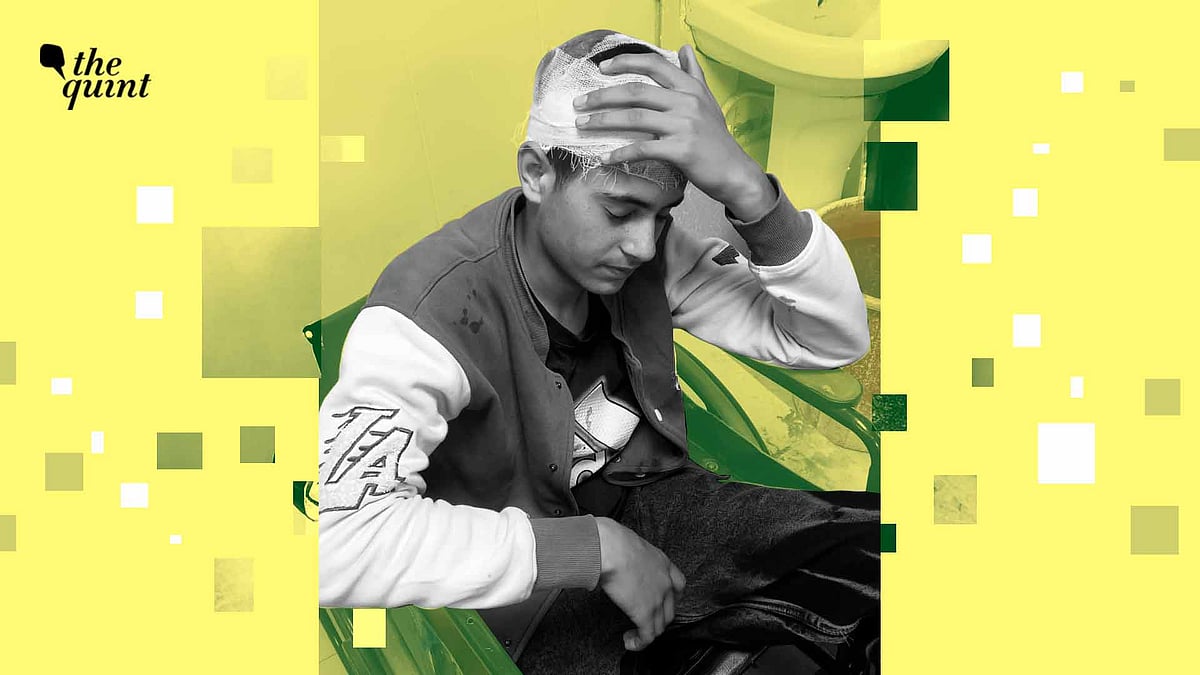
Tabish was discharged from Government Doon Medical College Hospital, Dehradun, on 29 January. Pictures that went viral on social media showed Tabish in black jeans and chestnut-colour blazers. His whole head was seen wrapped in bandage, reeling from his injury.
Charges Filed, Outrage Continues
On 29 January, Senior Superintendent of Police (SSP) Dehradun Ajai Singh said the police had nabbed Sanjay Yadav, the prime accused in the case. The police have slapped charges under sections 117 (2) (causing grievous hurt) and 352 (offense of intentional insult with intent to provoke a breach of peace) of the Bharatiya Nyaya Sanhita (BNS).
A senior police official in Uttarakhand said that the investigation into the incident was ongoing, and that more sections would be added based on the statements of the victims.
Official sources in J&K police told The Quint that they have not filed any case in the incident as it did not happen in their jurisdiction.
Meanwhile, political activists and student leaders in J&K have decried the attack as part of a pattern of repeated violence, signalling that they have "all the hallmarks of being orchestrated". Activist Nasir Khuehami insisted that such attacks were par of a wave of hysteria was allegedly being stoked against Muslim vendors from J&K, which intensified in wake of the Pahalgam attack.
On 22 December, Bajrang Dal activists had allegedly assaulted 28-year-old Bilal Ahmad in Udham Singh Nagar district of Uttarakhand.
Last year alone, at least 16 Kashmiri shawl-vendors left Uttarakhand after two of their colleagues were thrashed on the Mall Road in Mussoorie. The assault took place just days after the deadly Pahalgam attack that left 22 tourists dead.
Khuehami, who is a spokesperson for the J&K Students Association, said he received calls from Muslim Seva Sanghatan, an Uttarakhand-based advocacy group, informing him about the assault. They shared pictures of the wounded teenagers on his WhatsApp after which he posted those on his X handle.
“A section of the national press was also allegedly complicit in this. Night after night, we have these prime-time debates where Kashmiri Muslims are vilified without evidence,” he said,
Blaming certain sections of the media for villifying Kashmiris, Sahil Parray, a youth leader in Kashmir, part of an ongoing movement for rationalisation of the controversial reservation policy, said that such incidents also had a lasting impact on the youth.
Political leaders from across the spectrum have also denounced the assault on Kashmiri shawl vendors, calling it a part of a regular pattern that “must stop.”
Chief Minister Omar Abdullah rang his Uttarakhand counterpart, Pushkar Singh Dhami, urging him to find the culprits and take legal action against them.
After the Violence, Loss Remains
Meanwhile, back in the valley,Tabish's family remains in shock. A Class X student at Government Higher Secondary School (GHSS) in Warsun village in Kupwara, Tabish had wanted to join his brother out of sheer excitement, his father told The Quint.
“He had never travelled long distances for hawking before. He just wanted to see how it works,” Ganai said. “But we deeply regret his decision now.”
“The incident has become a lesson for all of us,” he said. “We have never wronged anyone. We are as Indian as anyone else. No one should be discriminated against on the basis of religion.”
Ganai said that his sons were also dispossessed of their money and their merchandise was also missing when they regained consciousness.
“Close to Rs 22,000 were on their person at the time of assault,” Ganai said. “They have been stolen. And the goods worth Rs 70,000 are missing.”
(Shakir Mir is an independent journalist whose work delves into the intersection of conflict, politics, history and memory in J&K. He tweets at @shakirmir. He tweets at @faizanmirtweets.)
- Access to all paywalled content on site
- Ad-free experience across The Quint
- Early previews of our Special Projects
Published: undefined