Delimitation or Seat-Chori? Real Story isn't States, it's the Maps
The real concern is gerrymandering, or redrawing of boundaries by the Delimitation Commission to benefit the BJP.
advertisement
(Exposing the manipulation of India's electoral institutions is a key focus area in The Quint's reportage. Become a member and support our work.)
Many people are missing the point on the Delimitation Bill that the Modi government is set to re-introduce in a Special Session of Parliament on 30 November. The focus has disproportionately been on the share of each state, which is the main concern for parties like the DMK.
The real issue that will impact political equations is the redrawing of the electoral boundaries by the Delimitation Commission.
There are three reasons for this.
The manner in which it was carried out in two states where delimitation of seats has already taken place: Assam and Jammu and Kashmir. In both states, boundaries were redrawn in a way that helps the BJP. In short, gerrymandering.
The selective use of population as a criteria.
The composition of the commission.
Delimitation in Assam and J&K
The basic principle of democracy is 'one person, one vote'. By extension, delimitation means that every seat has approximately the same number of voters.
If equitable division was the principle, each Lok Sabha seat in Assam should have 17.5 lakh voters. But in the Muslim-majority Dhubri seat, around 10 lakh extra voters were added. This means that the value of a vote in Dhubri is lesser than in other seats in Assam.
The extra 10 lakh voters added to Dhubri previously belonged to the Barpeta seat. The strategy was to move the Muslim-majority areas of Barpeta into Dhubri, making Barpeta a Hindu-majority seat overnight.
When the results came in, it was no surprise that the NDA won the seat for the first time in the 2024 Lok Sabha elections.
Selective Use of Population Criteria
Different standards were used in Assam and Jammu & Kashmir to change the boundaries of seats. In Jammu & Kashmir, the criteria of population was used to reduce the proportion of seats for the Muslim-majority Kashmir region and increase the proportion for the Hindu-majority Jammu region.
For example, the Anantnag Lok Sabha seat was reduced in population, and Muslim-majority areas in Jammu were added, even though the entire Pir Panjal mountain range lies between these two regions.
In Assam, the seats for Muslim-majority areas were reduced, despite a higher population, as we saw in the Dhubri example above.
The seats in Assam have been divided in a way that doesn't make geographic or demographic sense. Read this thread by information security and legal expert Srinivas Kodali to understand this.
The government seems to have divided seats in such a way that suits its own political calculations.
This can be understood through an important concept from US politics: gerrymandering.
What Is Gerrymandering?
Gerrymandering is the deliberate manipulation of electoral district boundaries to give one political party or group an unfair advantage, often resulting in strangely shaped districts. If one looks at the maps of seats in Assam, it is a classic case of gerrymandering.
There are two components to gerrymandering: packing and cracking.
Packing is the concentration of Opposition voters in a small number of seats. With this, the Opposition party wins these particular seats with large margins but loses everywhere else. Dhubri in Assam is a perfect example of packing.
Cracking: This strategy spreads Opposition voters across many seats. By doing this, the party in power keeps a majority in as many districts as possible. Barpeta Lok Sabha seat is an example of cracking.
Who Will be in the Delimitation Commission?
Under Clause 3(2) of the Delimitation Bill, 2026, introduced in the Lok Sabha on 16 April 2026, the proposed Delimitation Commission was to consist of three members, all appointed by the Central government:
Chairperson: a sitting Supreme Court judge
Ex-Officio Member: Chief Election Commissioner or an election commissioner nominated by the CEC
State Election Commissioner (SEC) of the concerned state
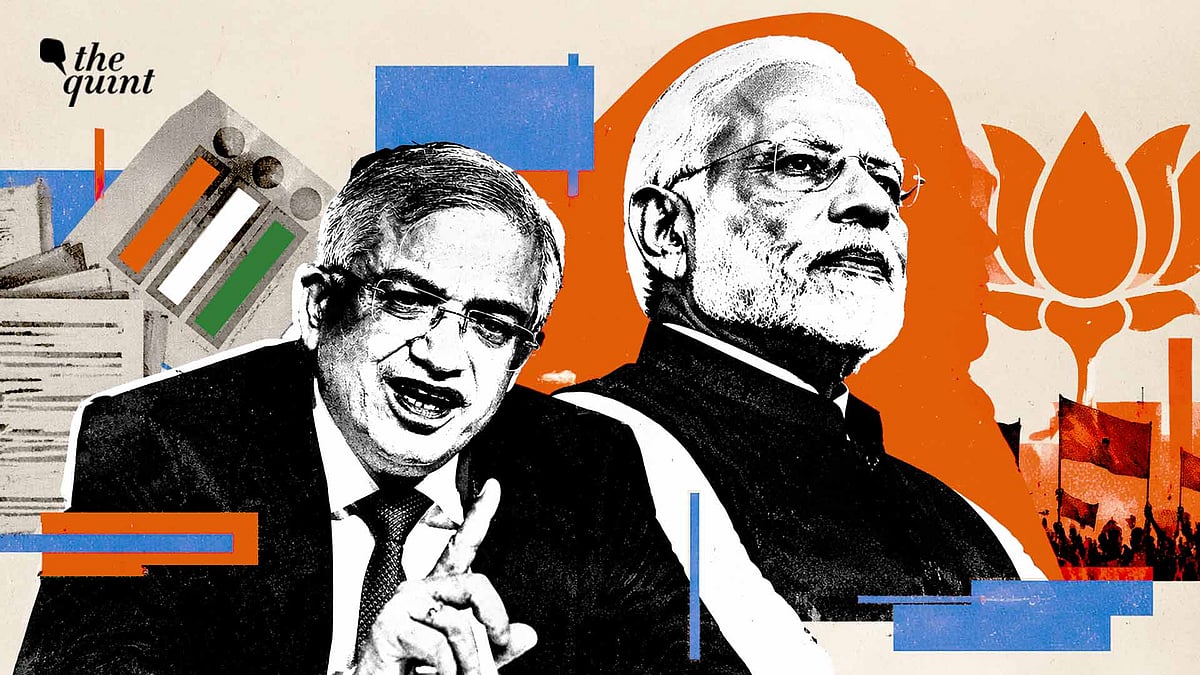
The rules in the 2002 Delimitation Act were the same. But this is likely to become a cause of concern for the Opposition due to the allegations against current CEC Gyanesh Kumar.
Far from being removed, the Delimitation Bill will give Gyanesh Kumar far more powers than before. But it's not just about Kumar.
During the delimitation in Jammu and Kashmir, Opposition parties had accused the commission headed by Justice (Retd) Ranjana Desai of drawing boundaries in way that helps the BJP.
(A version of this story had been published in April 2026 when the goverment had last introduced the Delimitation Bill. This story is being updated and published afresh in light of new developments)