QBullet: Salman Acquitted, Headley’s Pardon & Rahul-Modi Handshake
Here’s a round up of the top stories of the day, fresh off the Press.
advertisement
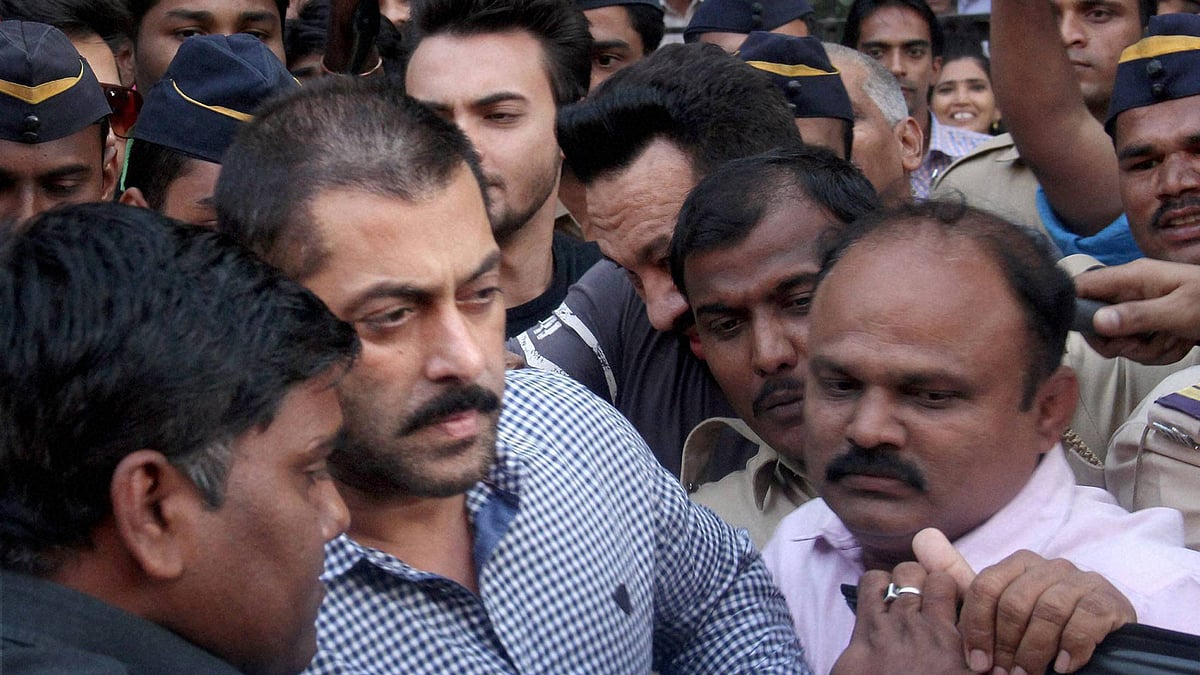
Salman Khan Acquitted by Bombay HC, Twitter and TV Erupt in Debate
On May 6, 2015 a Bombay Sessions Court convicted Salman Khan in the 2002 hit-and-run case. But it was not a verdict meant to stand.
The Bombay High Court’s Justice AR Joshi has demolished all the reasons Additional Sessions Judge DW Deshpande had given for convicting Salman Khan. In his judgement, Justice Joshi has held that the prosecution has failed to conclusively prove who was driving the car on that fateful night, and hence, the entire case against Khan collapses. He refused to believe the prosecution’s charge that it was not Ashok Singh but the Bollywood star who had rammed the Toyota Land Crusier into Bandra’s American Express Bakery.
Primetime television debated the verdict as well. On CNN-IBN, the big question was whether it was correct of the Judge to completely disregard constable Ravindra Patil’s statement, while on Times Now, a battery of lawyers blamed the police for shoddy work.
And while Salman’s Bollywood co-stars and fans have flooded Twitter with joyous messages, there were a quite a few jokes at his expense as well.
For all the news, views and updates on the verdict, click here.
2. David Headley is Pardoned, But Will His Testimony be Enough?
David Coleman Headley has received a conditional pardon from a Mumbai court and turned a witness for the prosecution in the 26/11 Mumbai terror attacks case. Headley, a key conspirator in the attacks could shed light on the role his ‘handlers’ played as well as implicate the degree to which the Pakistani military and intelligence were involved in the attacks.
However, there is still a question on whether Headley will give the Indian authorities the whole truth, argues C Uday Bhaskar in an article in The Quint.
Firstly, Headley is an experienced operative, having worked for the USA’s Drug Enforcement Agency and Pakistani intelligence before turning ‘jihadist’. With his background, he can likely use deception well.
There is also another caveat.
You can read the full story here.
3. India-Pakistan Talks: The View From Rawalpindi
The resumption of the dialogue between India and Pakistan is being seen by many as ‘turnaround’ by the Modi government. However, what is truly significant is the imprint of the Pakistan Army in the country’s foreign policy, argues Suhasini Haider in an opinion piece in The Hindu. It is not PM Nawaz Sharif but rather General Raheel Sharif and his officers that are dictating foreign policy.
4. If We Negate Parliament, Question Mark on Democracy: Narendra Modi
The furore over the National Herald case escalated further on Thursday with Congress members completely paralysing the Rajya Sabha for the third day. Finance Minister Arun Jaitley attacked the party, saying India has not accepted the diktat that the ‘Queen’ is above the law – a sharp, but veiled dig at Sonia Gandhi.
At an event organised by Dainik Jagran the PM spoke about the necessity of allowing Parliament to function. He emphasised the importance of discussion and debate in a democracy and also said the poor are the ones who suffer the most when legislation is stalled.
5. What a Harvest, Mr Pawar!
Sharad Pawar seems to have achieved the impossible. Sonia Gandhi and her son Rahul shared a stage with PM Narendra Modi at an event to mark the veteran Maharashtra leader’s birthday which will fall on Saturday. President Pranab Mukherjee and Vice-President Hamid Ansari were also present at the event.
The Prime Minister praised the veteran politician’s networking skills, which were evident by the fact that he could get bitter political rivals on the same stage despite leading a decimated Nationalist Congress Party (NCP) in Maharashtra.
You can read the full story in The Telegraph.
6. Kejriwal Weighs Delhi Exit, Punjab Entry
Arvind Kejriwal plans to contest the Punjab Assembly elections as the chief ministerial candidate for the Aam Aadmi Party (AAP), according to a report in The Telegraph. And if you’re wondering what his plans for Delhi are then look no further than his trusted lieutenant Deputy CM Manish Sisodia.
The report also quotes AAP sources as saying that Kejriwal had asked Nitish Kumar and Mamata Bannerjee for advice, and both suggested he throw his hat in the Punjab race.
7. SC to Mull Ban on Diesel Cars in Delhi to Tackle Growing Menace of Pollution
The Supreme Court (SC) is considering a ban on diesel-run cars as they are more polluting than their petrol counterparts, according to a report in the Times of India. This is just one of the measures suggested in the Bhure Lal Committee report on pollution in the city. The court has also suggested that trucks shouldn’t be allowed to use Delhi as a transit route to other destinations, even if they pay taxes.
A two-judge bench, alarmed at the toxic levels of pollution, also asked the Centre and Delhi government to agree to a common minimum programme to tackle the problem.
8. Ghost Villages in Rajasthan ‘Given’ Electricity
There are villages in the Nagaur region of Rajasthan that have no residents, just empty houses and fallow fields. However, according to the rural electrification app under Prime Minister Narendra Modi’s pet project Deen Dayal Upadhay Gram Jyoti Yojna, all three are electrified, according to the Times of India.
9. Advisory to Channels on Superstitious Content
No more witches and female exorcists on Indian TV, says the Broadcasting Content Complaints Council (BCCC), a self-regulatory body established by broadcasters. Following complaints from viewers, the BCCC has sent out a strong advisory to leading TV channels asking them not show women in such roles.
The order is binding on all channels.
The order may well spark a debate on ‘freedom of expression’.