Pathankot Attack: Who Took the Decisions and Who Didn’t
A detailed investigative report explains who was really in charge of the situation during Pathankot attack.
advertisement
When Home Minister Rajnath Singh deleted his premature 2 January tweet on completion of the Pathankot air base counter-operations, days before the actual conclusion, we got a hint of how critical decision-making processes on national security issues is strongly centralised, with the powerful National Security Advisor Ajit Doval.
Even Defence Minister Manohar Parikkar complimented the “security forces for swift and effective response” later the same day.
The Cabinet, which includes the MHA and MoD, two key ministries which were involved in the operation to neutralise the attacks, remained “as ignorant as the public of exactly what happened” according to a detailed Indian Express investigative report.
Here are the key highlights of the report filed by four reporters of the national daily:
1. Doval Haunted by Memories of Kandahar Hijacking
In 1999, Doval was in the Intelligence Bureau and it was his task “along with his Intelligence Bureau colleague Nehchal Sandhu, the Foreign Service’s Vivek Katju, and the Research and Analysis Wing’s Anand Arni, to negotiate the hostage swap.” Masood Azhar, one of the released terrorists, went out to establish the Jaish-e-Mohammad, the Pakistan-based group that is linked to the Pathankot air base attack.
2. No Lessons Learnt From 1999
In 1999, a crucial opportunity was lost at the Amritsar airport when Punjab Police failed to receive authorisation for storming into the Indian Airlines IC-814. Communication breakdown, aggravated by the fact that the phone numbers of local police and airport decision-makers had changed, worsened chances of any early rescue efforts.
3. Ministers Kept Out of Loop in 1999 and 2016
In 1999, the hostage swap came under criticism, especially by then Home Minister LK Advani and Defence Minister George Fernandes, for being kept out of loop in the critical decision-making process.
In 2016, things don’t seem very different.
In the aftermath of the Pathankot attack, the Indian Express report says, “The Prime Minister finally called a Cabinet meeting on 6 January, where Parikkar briefed his colleagues. Notably, Rajnath Singh was away – an absence that many in government read as an expression of displeasure.”
The Quint’s Chandan Nandy had earlier observed,
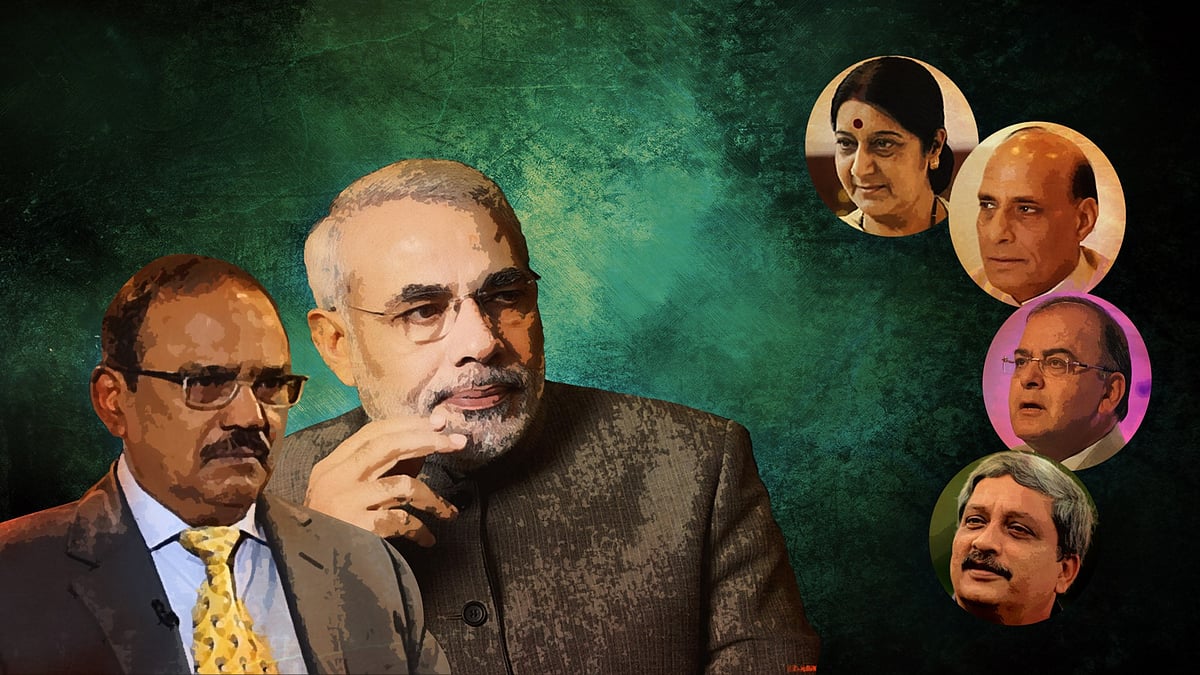
The CCS includes Prime Minister, Home Minister Rajnath Singh, Defence Minister Manohar Parrikar, External Affairs Minister Sushma Swaraj and Finance Minister Arun Jaitley.
4. Warnings Ignored?
On the first day of the new year at 7.30 am, the Punjab government informed the Central government as well as security agencies about the infiltration of terrorists into Pathankot, reports The Quint’s Poonam Agarwal. Punjab’s deputy Chief Minister Sukhbir Badal later met Home Minister Rajnath Singh requesting him to enhance security at the Punjab International Border.
This clearly shows that the internal security agencies were aware of the possible terror strike at least 20 hours before it actually took place. A senior official of the Ministry of Home Affairs has confirmed that he was informed about the terrorists in the early hours of 1 January. He also admitted that major security lapses occurred during the Pathankot terror operation.
The Indian Express report also suggests that intelligence was share by the state with the Centre and adds,
5. Battle Stations!
According to the report, eight hours after initial information and six hours after officers in Delhi were made aware, “Doval chaired a meeting with the chiefs of the three armed forces, and the Director of the Intelligence Bureau, at 3.30 pm.”
The final trigger was a call made from Punjab Police Superintendent of Police Salwinder Singh’s cellphone. Singh was abducted and car-jacked the previous night.
6. Where the Defence Minister Comes in
According to the report, “it wasn’t until after 3.30 am on the morning of 2 January that Defence Minister Manohar Parikkar came into play”. Parrikar immediately flew back to New Delhi from Panaji and met with the service chiefs, Defence Secretary G Mohan Kumar and NSA Doval to discuss events on the ground.
However, the report quotes an official familiar with the meeting,
Parrikar later met with Prime Minister Modi on 3 January in Karnataka on the sidelines of a Hindustan Aeronautics event and spoke about the ongoing assault for the first time.
Parrikar visited the Pathankot air base and briefed the media on 5 January.
7. Fight for Control
Doval “was forced to step in on at least two occasions, to resolve feuds over overall control between the Army and National Security Guard.”
Criticism over choosing NSG over the Army has been echoed by many veterans including former Norther Command Army Commander Lt General HS Panag (Retd.).
8. No Efforts to Explain Cost the Govt
There was a clear lack of effort by the government to explain what was happening on the ground. This led to ambiguity and the perception of lack of surety.
The Indian Express report, which has four bylines, concludes,