Nihang Sikhs vs Administration: What Really Led to Uttarakhand Standoff?
There are competing narratives around both the Nagarsu standoff and the altercation in Karnaprayag.
advertisement
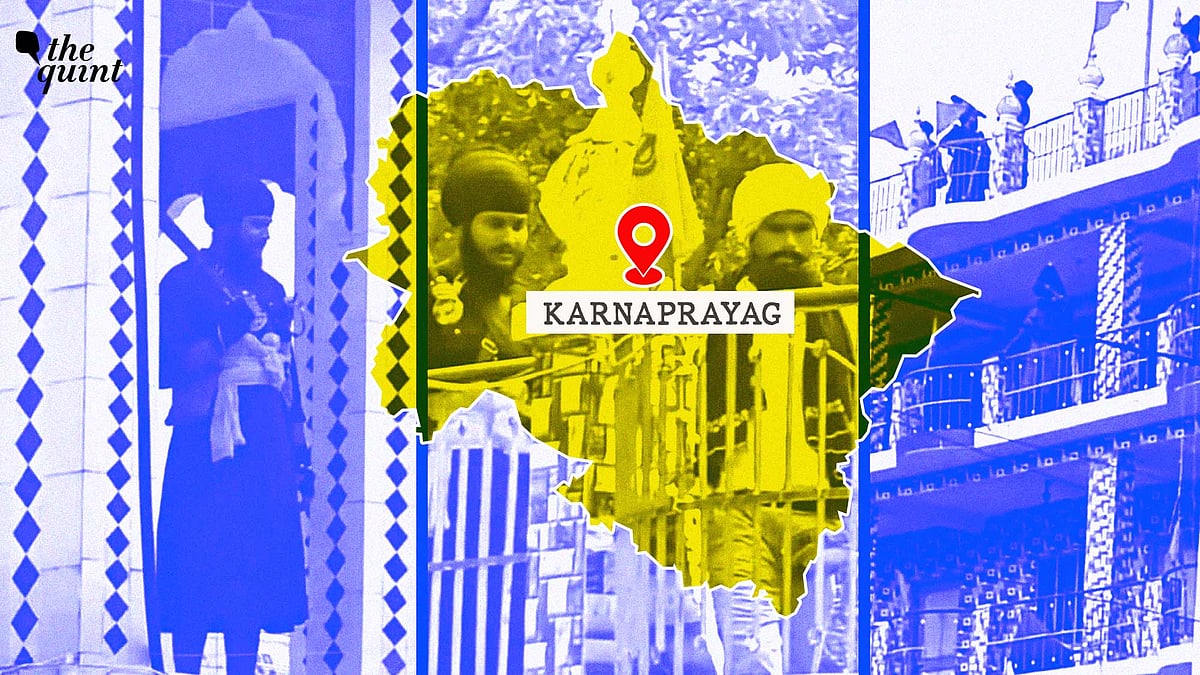
After two days, the "standoff" between the administration and a group of Nihang Sikhs at a gurdwara in Uttarakhand's Nagarsu has reportedly ended. According to the district administration, a group of Nihang Sikhs had "occupied" the roof of a gurdwara on 21 June in protest against the arrest of four Nihangs in connection with an altercation in Karnaprayag on 16 June.
The district administration had deployed companies of the Indo-Tibetan Border force and additional police personnel in Nagarsu. There are competing narratives around both the Nagarsu standoff as well as the altercation in Karnaprayag.
The Official Version: A Parking Dispute That Turned Violent
According to officials quoted in the media, the trouble began near Panch Puliya after a disagreement about where a vehicle should be parked. Police say the confrontation escalated quickly, with swords and kirpans drawn, leaving five injured, one of them a Sikh pilgrim. Four Nihang Sikhs from Punjab were arrested soon after.
State Home Secretary Shailesh Bagauli later stated that a fair investigation had been ordered and warned against framing the incident as a communal conflict. "It would be inappropriate to frame the matter as a religious dispute," Bagauli said, adding that action would be taken against those attempting to give the incident a communal colour.
The Sikh Organisations' Version: 'One-Sided' Policing
Sikh religious leaders have challenged both the police account and the state's handling of the incident.
The most prominent intervention came from Akal Takht officiating Jathedar Giani Kuldeep Singh Gargaj, who described the police response as "highly condemnable and apparently one-sided." According to Gargaj, Sikh youths were booked under serious charges, subjected to what he termed "custodial excesses," and "publicly paraded after their turbans were removed."
Paramjit Singh Sarna and leaders associated with the Delhi Akali Dal also raised concerns about the treatment of Sikh youths after the clash. According to statements circulated by the group, representatives were sent to Uttarakhand Chief Minister Pushkar Singh Dhami and senior police officials seeking a fair inquiry into the incident.
Gargaj stated that the reported removal of turbans after arrest raised concerns that went beyond routine policing and touched upon questions of religious dignity. He also offered a competing account of how the clash began."Information received by me suggests that local residents first attacked Sikh youths and the latter used their kirpans in self-defence," he told The Times of India.
This claim directly contradicts the police narrative.
The Larger Context
Karnaprayag lies on the route to Hemkund Sahib, an important pilgrimage site for Sikhs. Many pilgrims have claimed that of late, they have been facing hostility from a section of the locals, over matters such as langar. The locals allegedly criticised the practise as it means pilgrims seldom purchase from local food vendors. Some pilgrims have also accused local miscreants of damaging drinking water taps to force them to buy mineral water bottles at "inflated rates". Parking-related disputes are common due to inadequate space.
Locals, on their part, allege that the show of arms by Nihangs "creates fear".
All these seemingly minor issues snowballed into a larger dispute following the Karnaprayag incident. Sikh organisations say the issue wasn't just the alleged bias of the administration, some locals even put out videos inciting hate against Sikhs.
Locals carried out a protest and blocked roads for a few hours demanding a ban on the Hemkund Sahib pilgrimage itself.
The alleged hostility from locals must also be seen in the context of the larger anti-outsider sentiment in parts of Uttarakhand. According to the Association for the Protection of Civil Rights, calls for Muslim residents and traders to "leave" have been made in towns like Purola and Gairsain.
There have also been demands that the area surrounding certain holy sites be declared as being restricted for Hindus.
Watch this documentary by The Quint to know more about such campaigns.