Constitution Amendment Bill to Link Women's Quota to Delimitation Defeated in LS
Women's quota bill fails to pass in Lok Sabha amid strong opposition.
advertisement
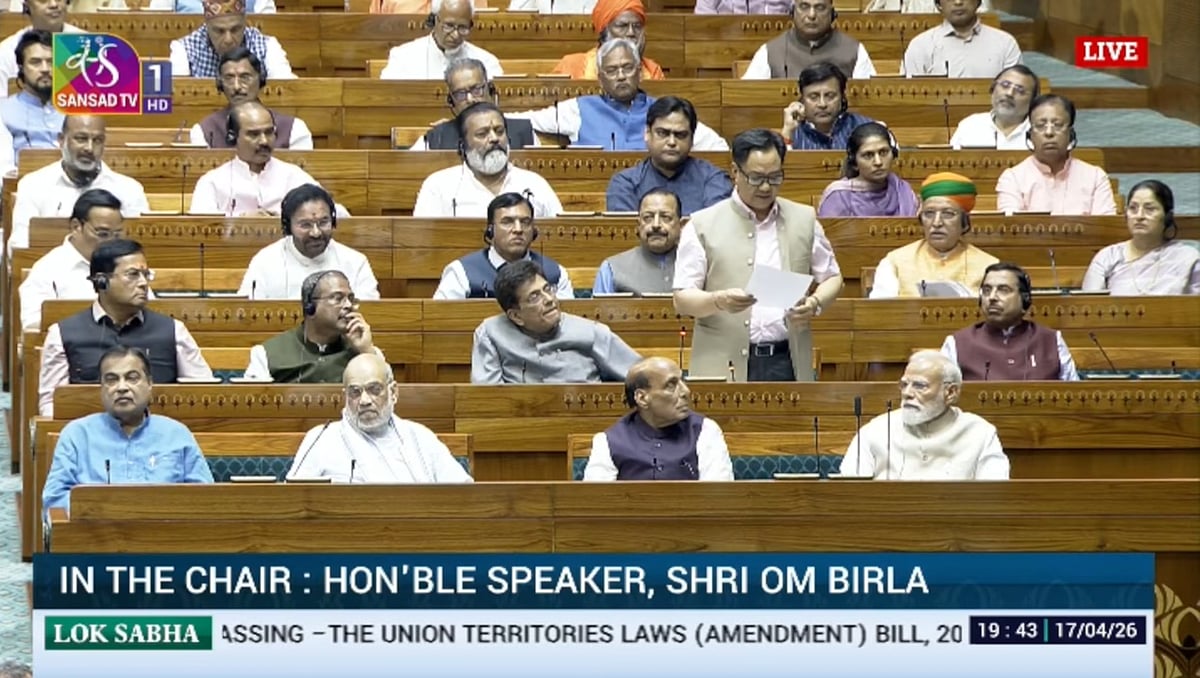
The women's quota bill, which sought to reserve 33% of seats for women in the Lok Sabha and state legislative assemblies, was put to a vote in the Lok Sabha on 17 April 2026. Despite last-minute efforts by the government to secure support, the bill did not achieve the required two-thirds majority, resulting in its defeat. The outcome followed days of debate and significant opposition from several parties, particularly over the bill's linkage to the delimitation process and concerns about its implementation timeline.
According to The Indian Express, the National Democratic Alliance (NDA) was short of the two-thirds majority needed to pass the constitutional amendment. Voting figures revealed that the Noes stood at 185 and the Ayes at 251 out of 436 members present, leaving the NDA 67 MPs short of the required 360 votes in the 540-member Lok Sabha. The united opposition, which objected to the bill's linkage with delimitation, played a decisive role in the bill's defeat.
As reported by Hindustan Times, the opposition's primary objection was the government's decision to tie the implementation of women's reservation to a future delimitation exercise based on the next census. Several opposition leaders argued that this approach would delay the actual reservation for women and could alter the balance of representation among states. The government maintained that the linkage was necessary for proper implementation, but this did not convince the majority of opposition MPs.
As highlighted by The Hindu, Congress leader Rahul Gandhi stated during the debate that the bill was "nothing to do with women empowerment" and accused the government of attempting to change the electoral map while bypassing a caste census. He asserted, "This is nothing short of an anti-national Act. Under no circumstance are we going to allow you to do this. The entire Opposition is going to defeat the attempt of yours to attack the nation state and deprive the Dalits and OBCs of their rightful place in society."
Coverage revealed that Prime Minister Narendra Modi had appealed for consensus, urging all parties to support the bill and warning that women across the country would not forgive those who opposed it. Despite these appeals, opposition parties remained firm in their stance, citing concerns over the timing and the potential impact of delimitation on state representation.
Opposition leaders, including Priyanka Gandhi Vadra, argued that the bill's provisions could undermine democratic principles. Reporting indicated that she questioned why the reservation could not be implemented within the existing 543 Lok Sabha seats and criticised the use of 2011 Census data for delimitation. She stated, "If this Bill is passed, democracy will be finished in the country."
During the debate, several MPs from southern states and other opposition parties expressed apprehension that the proposed delimitation would reduce their representation in Parliament. Analysis showed that arguments against expanding seats to accommodate women's reservation often focused on concerns about regional balance and the risk of fragmenting the core objective of gender representation.
In the lead-up to the vote, the government issued a notification bringing the 2023 Act into force on 16 April, but this move did not sway the opposition. Following reports, opposition leaders described the notification as a "desperate attempt" and maintained that the bill's design and sequencing required further institutional conversation and consensus.
"Bring that old bill back right now and we will help you pass it for implementation from this second. That is the women's bill and this is something else," Rahul Gandhi said in the Lok Sabha.
Despite the defeat, the debate highlighted the persistent demand for women's representation and the complexities involved in achieving consensus on constitutional amendments. Further details showed that opposition parties were willing to support immediate implementation of the original 2023 bill, but not the amended version linked to delimitation.
Note: This article is produced using AI-assisted tools and is based on publicly available information. It has been reviewed by The Quint's editorial team before publishing.