'Unacceptable': Trump Rejects Iran's Response to US Peace Proposal
Tensions remain high in the region, with military posturing continuing around the Strait of Hormuz.
advertisement
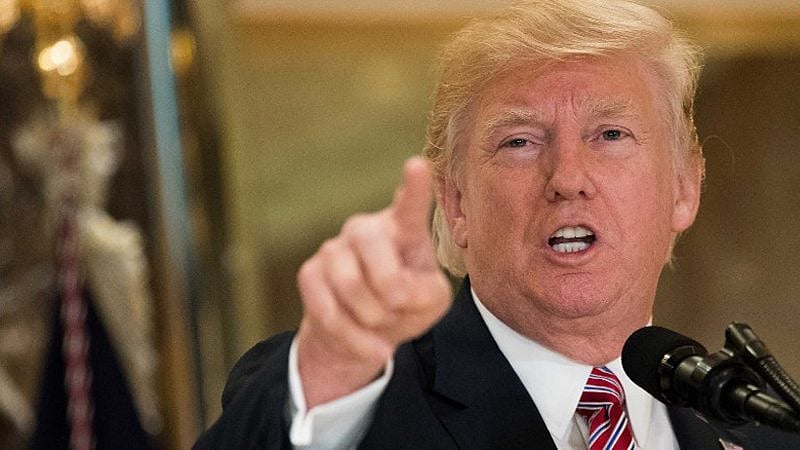
United States President Donald Trump has rejected Iran’s latest peace proposal, describing it as 'unacceptable'. The proposal, delivered through Pakistani mediators, aimed to end ongoing hostilities and address maritime security in the Gulf. Tensions remain high in the region, with both sides exchanging threats and military posturing continuing around the Strait of Hormuz.
According to Hindustan Times, President Trump is expected to press Chinese President Xi Jinping on the Iran issue during his upcoming visit to Beijing. The summit, while focused on trade and economic matters, will also address concerns over Chinese support for Iran, particularly regarding oil revenues and dual-use goods.
As reported by The Guardian, US Secretary of State Marco Rubio stated that Washington was awaiting a serious response from Iran to its ceasefire proposal.
Trump, speaking at the White House, indicated he expected a letter from Tehran but later dismissed the Iranian response as insufficient to meet US demands for a comprehensive agreement.
Coverage revealed that Iran’s reply was relayed to the US via Pakistan, following a US memorandum outlining a 14-point framework for reopening the Strait of Hormuz and initiating further nuclear talks.
However, Israeli Prime Minister Benjamin Netanyahu warned that the conflict would persist as long as Iran retained its stockpile of highly enriched uranium.
As highlighted by Financial Express, President Trump reiterated that the US would take military action if anyone attempted to access Iran’s buried uranium stockpiles.
He stated, “If anybody gets near the place, we will know about it and we’ll blow them up.” Trump also emphasized that US surveillance and military readiness remain robust in the region.
“If anybody gets near the place, we will know about it and we’ll blow them up,” Trump said, underscoring the US stance on Iran’s nuclear facilities.
Reporting indicated that Pakistan confirmed the delivery of Iran’s response to the US proposal but did not disclose further details about the content or US reaction. The diplomatic channel through Islamabad remains active, but substantive progress has not been achieved.
Further details showed that Iran’s proposal focused on a permanent halt to hostilities and maritime security, particularly in the Gulf. Iranian state media described the proposal as an initial framework, not addressing broader political disputes at this stage.
As noted in an article by The Hindu, the US military recently disabled two Iranian oil tankers attempting to breach an American blockade, further straining the fragile ceasefire. The US continues to await a formal and acceptable response from Iran regarding the peace proposal.
Analysis showed that Iran’s Islamic Revolutionary Guard Corps has issued new threats, stating that missiles and drones are locked on US targets in the region. Iranian officials maintain that they are reviewing the US proposal but remain sceptical of American intentions, warning against further escalation.
“IRGC missiles and aerospace drones are locked on American targets in the region and aggressor enemy ships,” General Sardar Mousavi stated, reflecting the heightened military alert.
At the end of the week, the ceasefire remains tenuous, with both sides exchanging accusations of violations and no clear path to a comprehensive peace agreement. The situation continues to evolve as diplomatic and military developments unfold.
Note: This article is produced using AI-assisted tools and is based on publicly available information. It has been reviewed by The Quint's editorial team before publishing.