Suvendu Adhikari Sworn In As West Bengal’s First BJP Chief Minister
Suvendu Adhikari sworn in as West Bengal’s first BJP Chief Minister at historic Kolkata ceremony.
advertisement
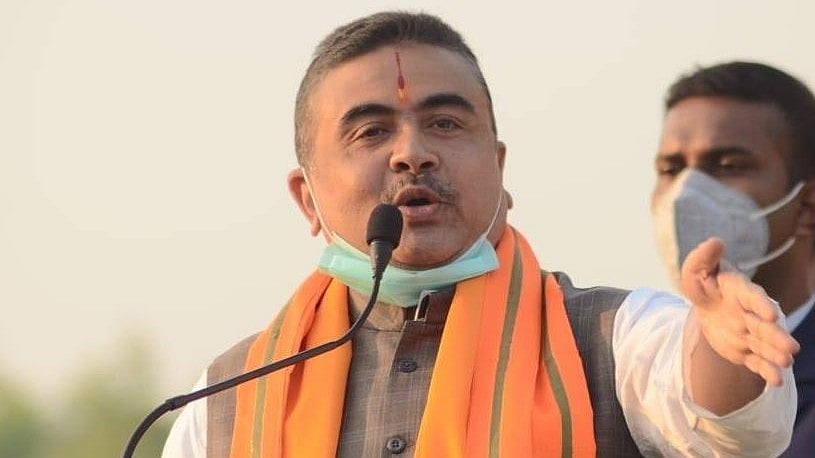
Suvendu Adhikari was sworn in as the first Bharatiya Janata Party (BJP) Chief Minister of West Bengal on 9 May 2026 at the Brigade Parade Ground in Kolkata. The ceremony marked the end of the Trinamool Congress’ 15-year rule, with the BJP securing 207 seats in the 294-member Assembly. Five other BJP legislators also took oath as ministers during the event, which was attended by Prime Minister Narendra Modi, Union Ministers, and Chief Ministers of NDA-ruled states.
Governor R.N. Ravi administered the oath of office and secrecy to Suvendu Adhikari and the new ministers. The ceremony was held at the Brigade Parade Grounds, a venue historically significant for political rallies in Bengal. The BJP’s victory marked a significant shift in the state’s political landscape, ending decades of resistance to saffron politics.
As reported by Deccan Herald, the event drew thousands of BJP supporters to Kolkata, with the city’s streets adorned with party flags and cutouts of national leaders. The swearing-in was described as the beginning of a new era, with Suvendu Adhikari promising to fulfil every commitment made in the BJP manifesto. Prime Minister Narendra Modi congratulated the new Chief Minister and his cabinet members during the proceedings.
Coverage revealed that the BJP’s win followed a high-stakes election held in two phases, with results announced on 4 May 2026. Outgoing Chief Minister Mamata Banerjee initially refused to resign, alleging electoral irregularities, but the Governor dissolved the Assembly, paving the way for the new government. The ceremony was notable for its scale and the presence of senior political figures from across the country.
The atmosphere at the Brigade Parade Ground was festive, with large crowds gathering from early morning as detailed by eyewitness accounts. Attendees included people from various parts of West Bengal and other states, many of whom travelled long distances to witness the historic occasion. Traditional Bengali foods and cultural displays were prominent, and the event coincided with Rabindra Jayanti, the birth anniversary of Rabindranath Tagore.
"This is a historic day. I came to vote, but I promised myself that I would return for the oath-taking ceremony if the BJP came to power. They did, and I am back!" said a supporter, reflecting the sentiment among many attendees.
Analysis showed that Suvendu Adhikari’s political journey has been marked by significant milestones. He began his career in the Congress’s student wing, later joining the Trinamool Congress (TMC) and playing a key role in the Nandigram movement. After serving as a minister in the TMC government, he switched to the BJP in December 2020. Adhikari’s victories over Mamata Banerjee in both Nandigram (2021) and Bhabanipur (2026) were pivotal in establishing his leadership within the BJP.
The new cabinet includes Dilip Ghosh, Agnimitra Paul, Ashok Kirtania, Nisith Pramanik, and Kshudiram Tudu, who were also sworn in as ministers according to the list. The portfolios for these ministers are expected to be announced in the coming days. The BJP’s legislative party had unanimously elected Suvendu Adhikari as its leader prior to the swearing-in.
Security was heightened across Kolkata, especially at the Brigade Parade Ground and the residences of key political figures, to ensure the smooth conduct of the ceremony as reporting indicated. The event was attended by saints, seers, industrialists, film personalities, and supporters from diverse backgrounds, highlighting its significance in Bengal’s political history.
"Today marks the end of decades of misrule and the beginning of a double-engine era of development, peace, and prosperity. The era of 'Sonar Bangla' officially begins," Suvendu Adhikari stated during the ceremony.
The BJP’s victory was described as a tribute to the party’s founding figures, with references to Dr. Shyama Prasad Mukherjee and the fulfilment of long-standing aspirations for political change in West Bengal as details emerged. The event was projected as a defining moment for the state, with expectations of a new phase of governance and development.
Note: This article is produced using AI-assisted tools and is based on publicly available information. It has been reviewed by The Quint's editorial team before publishing.