SC Says Peaceful Protest Is a Right, Lists NEET Police Excesses Case for July 28
The Chief Justice of India, Surya Kant, and a bench of Justices have scheduled the hearing for 28 July.
advertisement
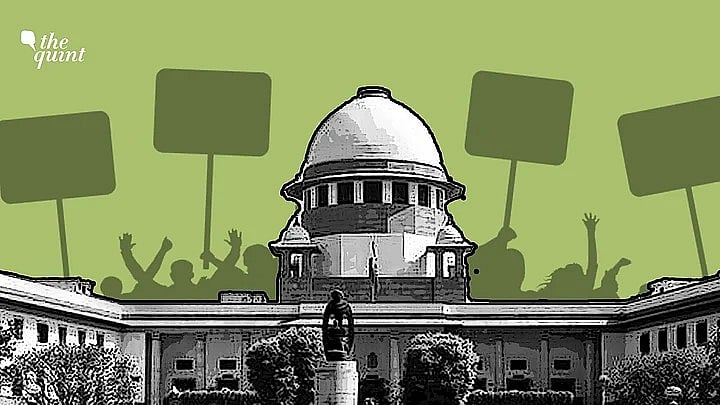
The Supreme Court of India is examining petitions concerning alleged police excesses, including lathi charges, during the July 2026 NEET protest in Delhi.
The matter involves claims of excessive force used by Delhi Police and Central Armed Police Forces against students participating in the Sansad Chalo march on 20 July.
The Chief Justice of India, Surya Kant, and a bench of Justices Joymalya Bagchi and V Mohana have scheduled the hearing for 28 July 2026.
According to Live Law, the petitions seek registration of FIRs against Delhi Police and CAPF personnel for the alleged use of excessive force, specifically referencing the events of 20 July when tear gas and batons were reportedly deployed against student protestors.
As reported by The Hindu, Chief Justice Surya Kant emphasised that the Constitution guarantees the right to peaceful protest and stated, “So long as it is a peaceful agitation...merely because there is agitation, there cannot be [police excesses]. If there is excess committed, it should be independently examined.”
Justice Joymalya Bagchi highlighted the need for adequate protective equipment for police personnel managing large crowds, noting that injuries to both police and protestors must be treated with equal concern as proceedings continued.
As highlighted by The Indian Express, the Supreme Court reiterated that the right to peaceful, lawful protest is “absolutely guaranteed under the Constitution.” The bench stressed that uniformity in protocol across states is necessary, stating, “Discipline is integral to the democratic process.”
During the hearing, judicial observations clarified that mere agitation cannot justify a lathi charge, and the court’s concern extends beyond Delhi to similar incidents nationwide.
Midway through the proceedings, the bench called for a uniform protocol to regulate police response during demonstrations, with the Chief Justice remarking, “There should be a protocol in place. Uniformity in protocol is required. Merely because there is agitation, it does not mean there should be a lathi charge.”
“Right to peaceful protest is absolutely guaranteed. That cannot be denied. Merely because there is agitation cannot justify police excess,” Chief Justice Surya Kant stated.
Further details emerged as coverage revealed that the Supreme Court is considering petitions seeking pan-India guidelines to ensure peaceful protests are allowed and to prevent unjustified police action.
The bench also acknowledged the importance of self-evolved discipline during protests and the need for proper space and safeguards for both protestors and police personnel.
In addition, ongoing legal scrutiny includes calls for independent examination of any alleged excesses and the establishment of clear protocols for managing large gatherings, with the next hearing set for 28 July 2026.
“Just because there is an agitation does not mean there should be lathi charge. Self-evolved discipline is needed which is essential to democratic process,” the Chief Justice remarked during the session.
Note: This article is produced using AI-assisted tools and is based on publicly available information. It has been reviewed by The Quint's editorial team before publishing.